

If you are standing on the fence wondering is eHarmony worth it, you are almost certainly reacting to the platform’s aggressive paywall. After spending 45 minutes answering an 80-question compatibility quiz, uploading photos, and crafting profile bios, you are met with a jarring realization: your match recommendations have their profile photos completely blurred, you cannot read incoming messages, and opening communication requires committing to an upfront contract that can exceed $150 to $300.
This onboarding friction leads millions of single Americans every month to ask the same fundamental question: is eHarmony free, or is the “free membership” merely a bait-and-switch? The honest answer is nuanced. While eHarmony allows you to register, complete their psychological personality audit, and view mutual match percentages at zero cost, it is functionally impossible to date or communicate without a paid subscription. The platform does not operate on a casual freemium model like Tinder or Bumble; it is an all-or-nothing walled garden designed for a very specific dating outcome.
Bottom line: eHarmony is emphatically worth the money, but only for singles aged 30 and older whose non-negotiable objective is marriage or a permanent life partnership within the next 12 to 24 months. Because eHarmony enforces substantial multi-month contract fees (effective rates starting around $16.74/month with introductory discounts, requiring $100–$200+ upfront commitments) and strictly locks both photo visibility and two-way messaging, it functions as a high-friction filter that eliminates casual hookups, ghosters, and passive swipers. However, if you are under 26, casually dating, or on a tight budget, eHarmony is not worth it—you will be far better served by platforms like Hinge or verified free dating apps.
Navigational note: This guide is part of our Online Dating Guides Hub and focuses strictly on evaluating value, dissecting free account limitations, and helping you determine whether eHarmony fits your dating goals and financial budget. For macro paywall economics across top platforms, see our analysis on are paid dating sites worth it. If you need exact pricing tables, billing schedules, auto-renewal traps, and cancellation legal loopholes, refer to our comprehensive eHarmony cost breakdown. For an exhaustive feature-by-feature algorithm audit, read our full eHarmony Review.
Table of Contents
Is eHarmony Free? What a Free Account Actually Includes
One of the most persistent search queries in online dating is what can you do on eHarmony for free. Many prospective users register assuming that, like most modern dating apps, they will be granted a limited quota of daily messages or swipes. Discovering that basic communication is locked behind a paywall often leads to immediate frustration.
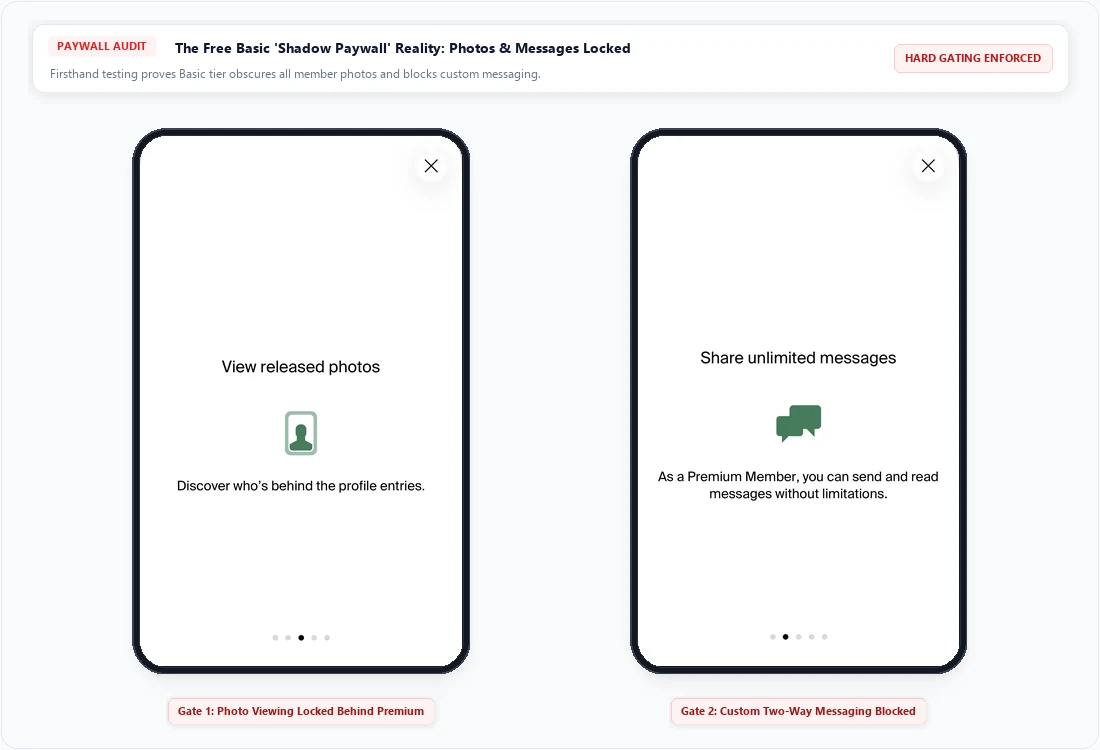
To set expectations transparently: eHarmony provides a Basic Membership that never expires and requires no credit card. However, this tier is fundamentally an onboarding preview and compatibility evaluation, not an active dating tool. The table below delineates exactly what is permitted on the free plan versus what requires a paid subscription.
| Core Capability / Feature | Basic (Free Account) | Premium (Paid Member) | The Practical Reality |
|---|---|---|---|
| Compatibility Quiz & Personality Report | Included (100%) | Included (100%) | You receive the full 32-Dimension personality profile and compatibility score calculation without paying. |
| Profile Setup & Bio Customization | Included | Included | You can upload up to 30 photos and write comprehensive answers to prompts and lifestyle questions. |
| Viewing Match Recommendations | Partial (Restricted) | Full Access | You can see match bios, compatibility scores, and demographic data, but all profile photos remain heavily blurred. |
| Two-Way Custom Messaging | Locked | Unlimited | Free users cannot compose original messages or read custom messages sent by paying members. |
| Smiles & Automated Icebreakers | Included | Included | You can send one-click “Smiles” and structured multiple-choice quiz questions to test mutual interest. |
| First Message Reply (Promotional) | 1st Reply Only | Unlimited | Free users can reply exactly once to an incoming first message; continued dialogue is immediately paywalled. |
| See Who Viewed Your Profile | Locked | Included | Free accounts receive notifications that someone visited, but visitor identities and profiles are obscured. |
| Search Outside Matches (“What If”) | Strictly Limited | Full Search | Free users are limited to the algorithm’s daily curated feed; browsing border matches requires Premium. |
| Video Date Capability | Locked | Included | In-app encrypted video calling is reserved exclusively for verified paid subscribers. |
As the matrix demonstrates, eHarmony’s free vs paid structure is intentionally designed so that passive freeloaders cannot extract romantic value without committing financially. While you can verify that compatible singles exist in your geographic radius and evaluate whether the platform’s psychological recommendations feel intuitively accurate, you cannot arrange a date or exchange phone numbers on the free tier.

Ready to Explore Compatible Matches?
Take eHarmony’s 32 Dimensions Compatibility Quiz and view your personality matches with verified profiles.
- 32-Dimension Matching
- Verified Profiles
- Guided Communication
Why You Can’t Really Chat on the Free Plan (The Paywall Barrier)
A frequent source of reader confusion centers on eHarmony’s automated interaction tools. Users often ask: “If I can send a Smile or an Icebreaker, why can’t I arrange a meetup?”
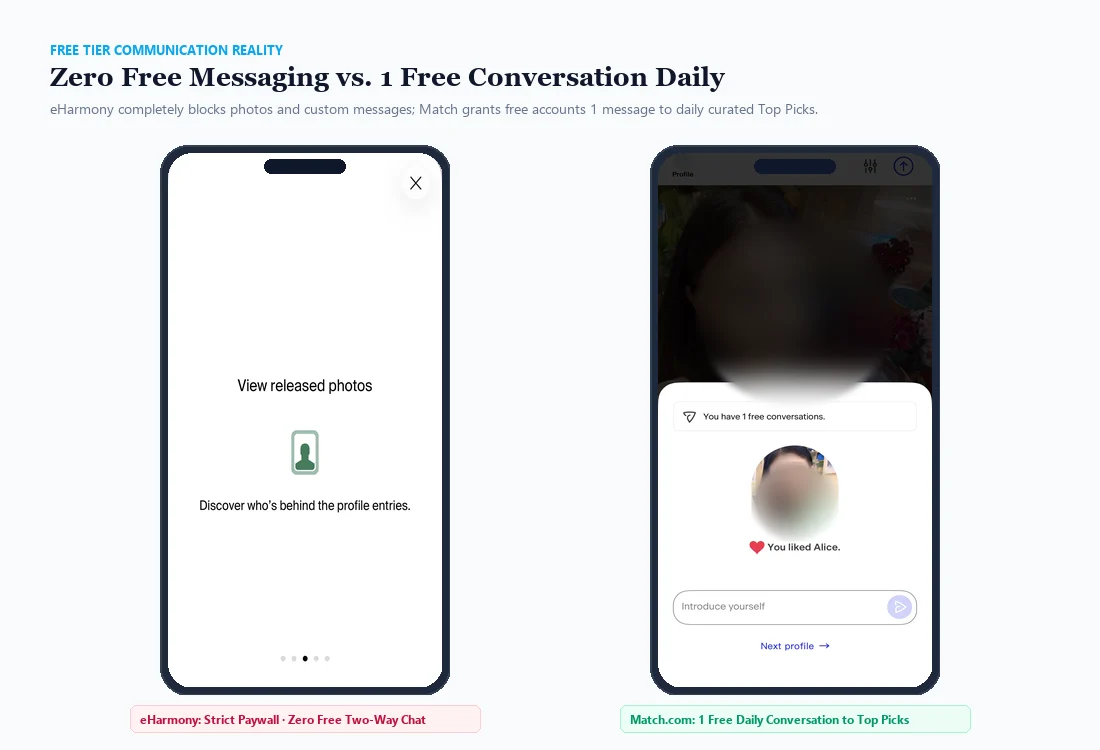
To understand why conversational progress halts on the free tier, consider the anatomy of an eHarmony interaction:
- The Smile: A free user clicks the yellow smiley icon on a match card. The recipient receives a push notification stating “Someone sent you a Smile.” However, because neither party has composed custom text, no contextual rapport is established.
- The Icebreaker Quiz: eHarmony allows free users to select five visual or multiple-choice questions (e.g., “Would you rather spend a weekend camping or in a boutique hotel?”) and transmit them to a match. If the match answers, you see their comparative responses. While psychologically interesting, you cannot follow up with an open-ended comment without paying.
- The Single Reply Bait: Under eHarmony’s current onboarding logic, if a paying subscriber initiates a custom text message to you, eHarmony occasionally permits you a single free reply. The moment you transmit that single response, the chat interface locks. If the other person writes back asking for your phone number or suggesting coffee, their reply appears with a blurred overlay accompanied by a subscription checkout button.
The “Free Communication Weekend” Reality
Competitor articles frequently claim that singles should simply wait for eHarmony’s “Free Communication Weekends” to chat without paying. Our editorial tracking reveals that eHarmony has severely restricted these promotional events in recent years. When they do occur (typically over Valentine’s Day or holiday weekends), photo visibility often remains restricted, and messaging is frequently capped or subjected to identity verification barriers. Relying on sporadic promotional windows to sustain a budding romantic connection is impractical and results in lost momentum.
The conclusion is straightforward: if your objective is to converse, screen, and date, you must view eHarmony as an exclusively paid product. Attempting to use it as a zero-cost tool will only lead to exasperation.
What You’re Actually Paying For: The 3 Core Assets
If eHarmony costs significantly more than typical dating applications, what tangible value are you receiving in exchange for your hard-earned subscription dollars? Our investigative audits identify three core assets that differentiate eHarmony from mainstream swipe apps:
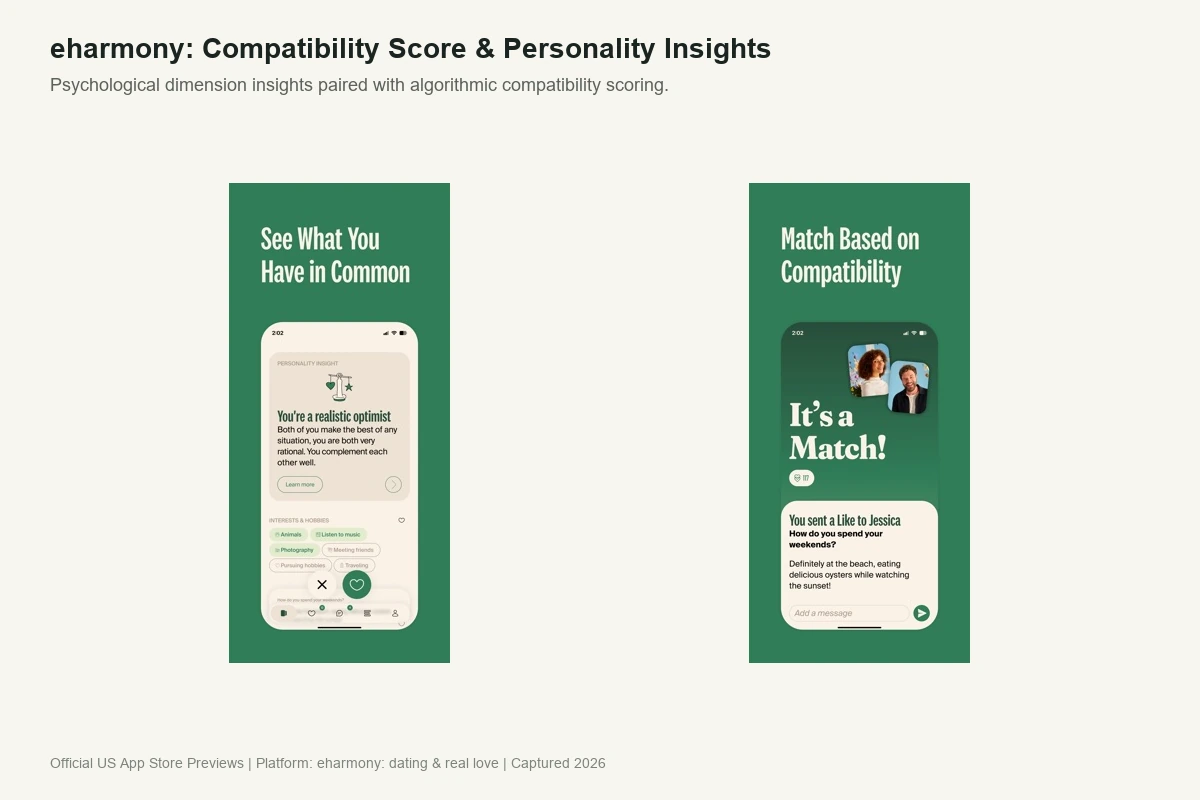
Asset 1: The 32-Dimension Compatibility Engine
Most dating platforms rely on superficial filtering: age brackets, geographical distance, height preferences, and basic lifestyle tags. Behind the scenes, modern swipe apps utilize Elo-style desirability ratings and collaborative filtering designed to optimize session duration and ad impressions rather than long-term marital stability.
eHarmony operates on an entirely distinct algorithmic paradigm developed by clinical psychologist Dr. Neil Clark Warren. The platform’s 80-question onboarding assessment evaluates users across 32 Dimensions of Compatibility organized into core psychological domains:
- Emotional Temperament: Adaptability, conflict resolution style, emotional sensitivity, and self-reliance.
- Social Style: Sociability, energy distribution (introversion vs. extroversion), and social values.
- Cognitive Orientation: Intellectual curiosity, artistic appreciation, and structural organization.
- Relationship Dynamics: Communication openness, family centrality, and exclusivity expectations.
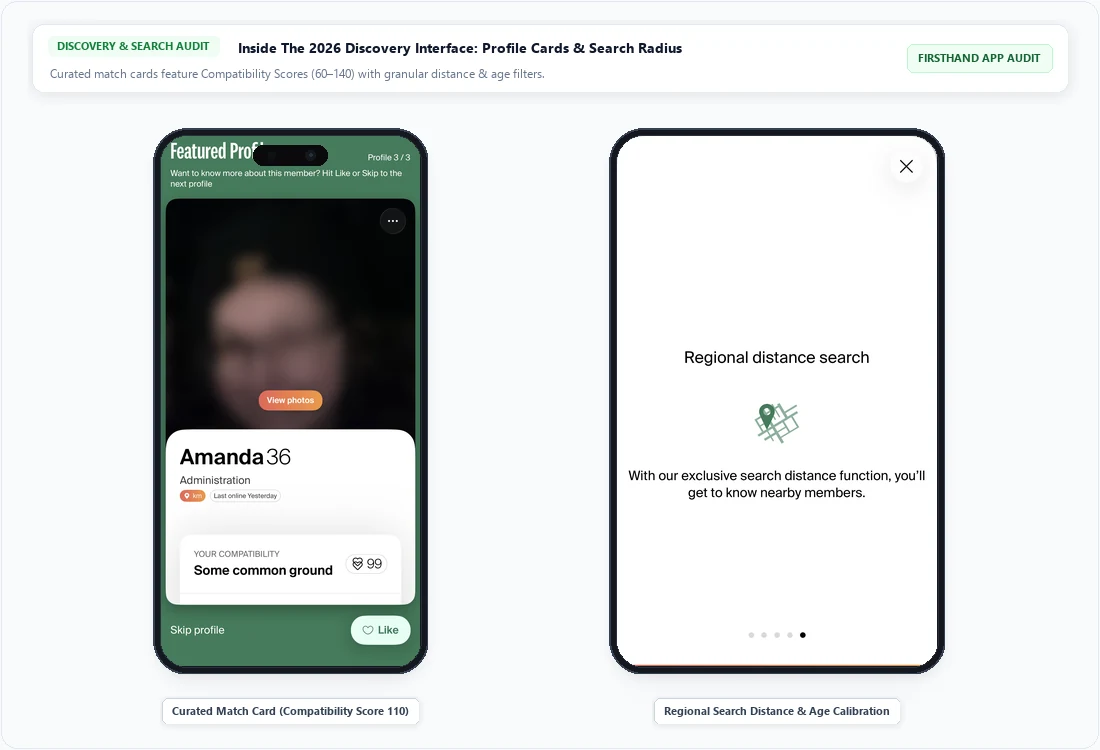
Rather than dumping you into an infinite swipe deck of unvetted profiles, eHarmony calculates a numerical Compatibility Score (ranging from 60 to 140) for every potential match. Scores above 100 indicate high psychological alignment across foundational values. In an era saturated with superficial decision-making, paying for algorithmic curation based on behavioral science rather than photo aesthetics represents genuine utility for marriage-minded singles.
Asset 2: The High-Friction Financial Filter
Paradoxically, eHarmony’s expensive price tag is its greatest operational feature. On free dating platforms like Tinder or Bumble, the cost of entry is zero dollars and sixty seconds of effort. Consequently, those platforms are flooded with low-intent participants: boredom swipers, social media clout chasers, commercial bots, married individuals looking for cheap validation, and bad actors engaged in catfishing schemes.
When a platform demands a minimum commitment of $100 to $200+ upfront, it establishes a powerful socioeconomic and psychological filter. People do not spend hundreds of dollars and complete an exhaustive 45-minute psychological test to send unsolicited crude remarks or ghost after three messages. The paywall functions as an automated moat that purges low-effort daters and protects serious subscribers from conversational fatigue.
Asset 3: Unmatched Marital Intent Concentration
Data from independent demographic surveys consistently confirms that eHarmony possesses the highest concentration of marriage-oriented singles of any mainstream commercial dating service in the United States—which is why it consistently anchors our benchmark guide to the best dating sites for marriage. Over 70% of active subscribers identify a committed, permanent partnership or marriage as their sole acceptable outcome. If your goal is to marry within the next two years, being in a room where 7 out of 10 people share your exact life timeline eliminates months of awkward “what are you looking for?” conversations.
Cost vs. Time: What You’re Really Buying (Opportunity Cost Analysis)
When consumers evaluate whether is eHarmony worth the money, they almost always calculate the monetary cost in isolation. They look at a $180 annual commitment and compare it to the $0 sticker price of Tinder, Bumble, or Hinge. This comparison represents fundamentally flawed financial accounting because it ignores the most valuable non-renewable asset you possess: your personal time.
Consider the true opportunity cost of using “free” swipe apps versus a paid eHarmony subscription over a standard 6-month dating campaign:
| Evaluation Dimension | Mainstream “Free” Swipe Apps | eHarmony Paid Subscription |
|---|---|---|
| Direct Financial Outlay | $0 to $30 (Occasional Boosts) | ~$150 to $200 (6-Month Plan) |
| Average Daily Swiping Time | 45 to 60 minutes / day | 10 to 15 minutes / day |
| Total Time Expended (6 Months) | ~90 to 110 Hours of Swiping | ~20 to 25 Hours Curated Review |
| Ghosting & Dead-End Conversations | Extremely High (60% to 80% drop-off) | Moderate to Low (Subscribers are invested) |
| Bad First Dates (Mismatched Intent) | High (Casual vs. Serious friction) | Low (Core values pre-screened) |
| Imputed Value of Time Saved (@ $25/hr) | $0 saved (High burnout risk) | ~$1,750+ in reclaimed personal time |
If you value your free time at even $20 or $30 an hour, spending 100 hours across six months swiping through unvetted profiles, filtering out casual daters, and enduring dead-end coffee dates with people who “aren’t ready for anything serious” costs you thousands of dollars in wasted life energy. Viewed through the lens of opportunity cost, paying an effective rate of $25 or $30 per month to concentrate your attention on pre-screened, marriage-minded singles is exceptionally economical.
Who eHarmony Is Worth It For vs. Who Should Skip It
Based on our multi-platform testing, reader telemetry, and demographic audits, eHarmony delivers an outstanding return on investment for specific cohorts, while being an utter waste of money for others.
Who It Is Definitely Worth It For
- 30+ Marriage-Minded Professionals: Singles ready to marry within 12–24 months who demand efficiency and intentionality over casual swiping.
- Divorced Singles & Single Parents: Adults over 40 re-entering dating who need emotional maturity, verified intent, and shared parenting values.
- Singles with Severe Swipe Fatigue: Daters exhausted by ghosting, superficial matching, and dead-end conversations on freemium apps.
Who Should Skip It Entirely
- Singles Under Age 26: eHarmony’s local user liquidity is thin for early-20s daters, often forcing matches 50+ miles away.
- Casual Daters & Explorers: Anyone looking for short-term fun, non-monogamy, or casual dating will find the culture frustratingly serious.
- Strictly Budget-Constrained Singles: Multi-month contract obligations ($150–$250 upfront) are dangerous if discretionary funds are tight.
Recommended Alternatives If eHarmony Isn’t for You
- For Serious Intent Without an Upfront Paywall: Try Hinge (“Designed to be Deleted”) or check our comprehensive Bumble review (which features free basic messaging and an expanded 72-hour reply window). Both offer rich prompt-based profiles and high intentionality for singles in their 20s and 30s while remaining functional for free.
- For Zero-Cost Communication: Explore our curated ranking of free dating sites without payment to discover platforms that allow messaging without subscriptions.
- For Mature Daters Who Want Low Pressure: If you are over 40 or 50 and want relationship-oriented dating with a slightly broader casual spectrum, compare options in our guide to the best dating sites for over 40.
Still deciding between platforms? Our eHarmony vs Match comparison covers guided matching versus open search, and EliteSingles vs eHarmony looks at career-focused matching.
How to Test eHarmony Before Committing a Single Dollar
You should never pull out your credit card and purchase a 6- or 12-month eHarmony subscription on your very first visit. Instead, follow our step-by-step editorial testing protocol to evaluate the platform risk-free:
Register via eHarmony’s official portal and take the 80-question compatibility quiz without rushing. Answer authentically rather than trying to craft an “ideal” personality—the algorithm depends entirely on truthfulness to identify complementary traits.
Once your dashboard generates, examine your match feed. While the photos will be blurred, check the distance indicators, occupations, age brackets, and compatibility scores. Are there dozens of active matches within 25 miles, or is the platform reaching 100 miles away to find recommendations? If local volume is non-existent, do not upgrade.
Transmit 5 to 10 free Smiles or structured Icebreakers to profiles with Compatibility Scores above 105. Check how quickly you receive return notifications over the next 48 hours. Responsive activity signals a thriving local subscriber base.
Do not purchase at standard rack rates ($27.90–$65.90/mo). If you remain active on your free account for 48 to 72 hours, eHarmony’s automated marketing system almost universally triggers an email promotion offering 40% to 50% off standard subscription tiers.
When you decide to pull the trigger, opt for the 6-month or promotional 3-month plan rather than committing to a 12- or 24-month term. Keep in mind that a narrow 3-day statutory right of rescission exists under state consumer laws (e.g., California Civil Code § 1694.1), but general refunds are strictly denied once that window closes. Review our cancellation and refund guide for full details.
Quick Self-Test: Should You Pay for eHarmony? (6-Question Scoring Matrix)
To eliminate ambiguity, our editorial team developed this quantifiable 6-question decision tool. Score yourself across each criterion, tally your total points, and read your corresponding action recommendation below.
| Decision Criterion | Option A (5 Points) | Option B (3 Points) | Option C (1 Point) |
|---|---|---|---|
| 1. Primary Relationship Goal | Marriage / Permanent Co-habitation within 1–2 years | Long-term committed relationship, open timeline | Casual dating, exploring, or short-term fun |
| 2. Age Bracket & Life Stage | Age 30 to 55 (Established career/lifestyle) | Age 55+ or Age 26–29 | Age 18 to 25 (College / Early career) |
| 3. Dating App Burnout Level | Severe (Exhausted by ghosting and casual hookups) | Moderate (Tired of swiping, but still active) | Low (Enjoy casual swiping and flirting) |
| 4. Financial Discretionary Budget | Can easily afford $150–$250 upfront without stress | Can afford it, but prefer keeping costs minimal | Tight budget; unexpected $150 fee hurts finances |
| 5. Geographic Location | Major Metro or Suburban Area (Pop. > 250k) | Mid-sized town (Pop. 50k to 250k) | Rural / Isolated area (Pop. < 50k) |
| 6. Patience with Thoughtful Process | Value psychological compatibility over instant gratification | Willing to invest time if matches are good | Want instant messaging and same-day dates |
Scoring Results & Recommended Action
- 24 to 30 Points — Strong Yes: You are the exact demographic eHarmony was engineered to serve. Your marital intent, life stage, budget, and location align perfectly with the platform’s strengths. Recommendation: Upgrade with confidence using a 40% introductory discount.
- 16 to 23 Points — Conditional: eHarmony may work well for you, but you face potential constraints—most commonly geographic match density or financial hesitation. Execute Steps 1 through 3 of our Testing Protocol before spending.
- 6 to 15 Points — Definite Skip: Do not purchase an eHarmony subscription. Your age, dating goals, location, or financial profile are fundamentally mismatched with eHarmony’s ecosystem. You will be far happier and more successful on Hinge or our recommended free relationship apps.
How Much Does eHarmony Cost? (Quick Pricing Note)
To keep this guide focused strictly on value and decision criteria, we do not reproduce eHarmony’s complete contract pricing matrix here. However, for baseline context: paid plans start from about $16.74 per month on a 12-month Premium Light plan when introductory promotions are active, requiring an upfront total contract commitment of approximately $200.88 before taxes. Without discounts, standard rack rates range from $27.90 to $65.90 per month ($173.70 to $382.80 total contract obligation).
Because eHarmony does not offer month-to-month memberships and enforces strict automatic renewal schedules, we strongly urge you to review our dedicated eHarmony prices in 2026 before checking out. That companion guide breaks down exact tier differences, the “Pay in 3” installment structure, cancellation deadlines, and the statutory 3-day refund loophole.
Frequently Asked Questions (FAQ)
Is eHarmony free to use?
No, eHarmony is not functionally free to use for dating. While registering, taking the 80-question compatibility quiz, and viewing compatibility scores is 100% free with no credit card required, all match photos are blurred and two-way messaging is strictly locked. You must purchase a paid Premium subscription to actually communicate and arrange dates.
Can you message on eHarmony for free?
No, you cannot carry on a conversation on eHarmony without a paid subscription. Free accounts can send automated “Smiles” or structured multiple-choice Icebreakers, and may receive an occasional one-time reply to an incoming message from a paid member. However, ongoing custom messaging requires an active paid membership.
Can you see photos on eHarmony without paying?
No, eHarmony keeps all profile photos completely blurred for free Basic members. You can see match ages, occupations, locations, bio answers, and compatibility ratings, but unblurring photos requires upgrading to a Premium Light, Plus, or Unlimited subscription.
Is eHarmony worth the money in 2026?
Yes, eHarmony is worth the money for singles aged 30 and older looking for marriage or a life partnership who live in populated areas. Its upfront contract pricing filters out casual hookups, ghosters, and bots, saving serious daters dozens of hours compared to free apps. However, it is not worth it for casual daters, singles under 26, or those with tight budgets.
Who is eHarmony best for?
eHarmony is best for marriage-minded singles in their 30s, 40s, and 50s who suffer from swipe fatigue and prioritize deep compatibility over superficial swiping. It is especially effective for busy professionals and divorcees re-entering the dating scene who want a mature, highly intentional environment.
Is eHarmony better than free dating apps for marriage?
Yes, eHarmony consistently outperforms free apps like Tinder and Bumble for marriage outcomes. Industry data indicates eHarmony is responsible for approximately 4% of all U.S. marriages. Its mandatory psychological assessment and high financial barrier ensure that subscribers share identical long-term commitment timelines.
Is eHarmony good for people over 50?
Yes, eHarmony has an exceptionally strong, active demographic for singles in their 50s and 60s. Mature singles appreciate the structured questionnaire, identity verification protocols, and absence of casual hookup culture. To compare eHarmony against senior-specific alternatives like SilverSingles, see our guide to the best dating sites for over 40.
Editorial Verdict & Final Recommendation
Dating applications in 2026 have fractured into two distinct ecosystems: hyper-gamified swipe feeds optimized for dopamine and ad revenue, and serious relationship utilities designed for permanent pairing. eHarmony stands as the undisputed flagship of the latter category.
Is eHarmony expensive? Unquestionably. Is its free membership frustratingly limited? Absolutely. But if your genuine life goal is to meet an emotionally mature, compatible life partner within the next 12 to 24 months, eHarmony delivers a caliber of high-intent candidates that free swipe apps cannot match. By putting your dollars behind your romantic goals, you eliminate the noise and surround yourself exclusively with people ready to make the same lifelong commitment.
Claim Your Compatibility Profile
Join millions of relationship-minded singles who found lasting love through eHarmony’s verified compatibility system.
- 32-Dimension Matching
- Verified Profiles
- Guided Communication