

By your early thirties, dating burnout hits differently. It is rarely about a lack of options. It is about how much time, mental energy, and emotional bandwidth you waste discovering that the person across the screen wants an entirely different life than you do. Finding the right dating platform is not about finding an app with millions of casual users—it is about finding a service that enforces transparency and profile depth upfront.
An app cannot fix modern dating culture, and paying for a premium subscription will never make someone emotionally ready for commitment. What the most effective dating apps for serious relationships can do, however, is provide structural friction that filters out low-effort swipers so you stop wasting weeks on fundamentally incompatible connections.
For this comprehensive guide, we audited the current account onboarding flows, profile mechanics, and paywall boundaries across Hinge, eharmony, Match, Coffee Meets Bagel, Bumble, and Tinder. We did not grade them on marketing slogans or self-reported success claims. We evaluated the real mechanics: what they require you to fill out, how effectively they filter casual intent, and where each platform actually fits in a serious dating search.
Editorial Bottom Line: When comparing platforms for long-term commitment, Hinge is the sharpest modern baseline for profile-first dating and meaningful conversations; eharmony remains the premier structured filter for marriage-minded singles ready to invest upfront; Match provides unmatched self-directed keyword and lifestyle search control. Coffee Meets Bagel offers curated pacing with strict location signals; Bumble lets you screen intent at high volume; and Tinder works for serious relationships only if you have the patience to filter out 90% of the casual noise yourself.
Quick Comparison: Best Dating Apps for Serious Relationships
Here is how the top six contenders compare across core strengths, free tier usability, pricing realities, and relationship filtering mechanisms:
| Platform | Best For | Free Tier Usability | Pricing Reality | Key Serious Dating Mechanic |
|---|---|---|---|---|
| 1. Hinge | Top Pick Best Overall Balance | 8 daily likes with free custom comments & unlimited messaging | Free core; Hinge+ from $29.99/mo; HingeX from $49.99/mo | Mandatory 6 photos + 3 prompts; likes tied to specific content |
| 2. eharmony | High Intent Marriage & Long-Term Commitment | Personality test results & match browsing; communication locked | $35.90–$65.90/mo (6, 12, or 24-mo plans) | 80-question Compatibility Quiz; high paywall filters casuals |
| 3. Match | Granular Control Self-Directed Search & Filters | Full profile browsing & 1 free daily Top Pick reply | $21.99–$39.99/mo (Standard & Premium 3 to 12-mo plans) | Detailed lifestyle filters (children, faith, habits, education) |
| 4. Coffee Meets Bagel | Low Fatigue Curated, Values-Led Matching | Curated noon drop of Suggested Bagels; free mutual chat (7-day timer) | Free core; Premium from $34.99/mo + Beans currency | Strict GPS verification; 7-day chat expiration prevents pen-pals |
| 5. Bumble | Verified Volume Intent-Led Filtering at Scale | Free matching & messaging (women initiate within 24h / Opening Moves) | Free core; Boost (from $39.99/mo) / Premium (from $69.99/mo or $32.99/wk) / Premium+ (from $99.99/mo) | Biometric photo verification; explicit relationship goal badges |
| 6. Tinder | Broad Reach Maximum Reach & Density | Full free matching & two-way messaging (daily swipe limits apply) | Free core; Gold from $18.99/week (as low as $5.83/wk on 6-mo plan); Plus & Platinum vary by age/region | “Long-Term Partner” hub filter inside Explore tab |
Note on Pricing: Rates reflect verified standard public plans at the time of publication. Actual pricing may vary slightly based on ongoing platform promotions, user location, and billing term length.
What Actually Makes Dating Apps for Serious Relationships Effective?
When you are evaluating dating apps for serious relationships, total user download counts matter far less than structural friction. Swipe-focused apps are engineered to maximize swipes per minute; serious platforms are designed to force deliberate thought before two people connect. In our evaluations, three specific architectural features separate effective relationship tools from mindless distraction:
- Non-Negotiable Profile Depth: If an app allows a user to upload a single mirror selfie, leave their bio empty, and immediately start swiping, it will inevitably become dominated by casual boredom. The most effective platforms require multiple photos and mandatory written prompts, ensuring daters reveal personality, conversational rhythm, and lifestyle preferences upfront.
- Explicit Relationship Intent Badges: Asking someone “what are you looking for?” on date three is an agonizing waste of time. Leading platforms now force users to state their relationship intent—whether “Life Partner,” “Long-Term Relationship,” or “Marriage”—directly on the profile header, allowing daters to filter out incompatible goals immediately.
- Communication Frictional Barriers: Platforms that require personalized introductory comments (like Hinge) or substantial compatibility quizzes (like eharmony) dramatically reduce lazy “Hey” openers and low-effort copy-paste spammers.
1. Hinge: Best Overall Balance for Serious Dating
Hinge is our top overall pick for adults in their twenties and thirties looking for lasting partnership. Its interface makes it virtually impossible to treat candidates as two-dimensional trading cards, centering interaction on personal prompts and authentic lifestyle snapshots.
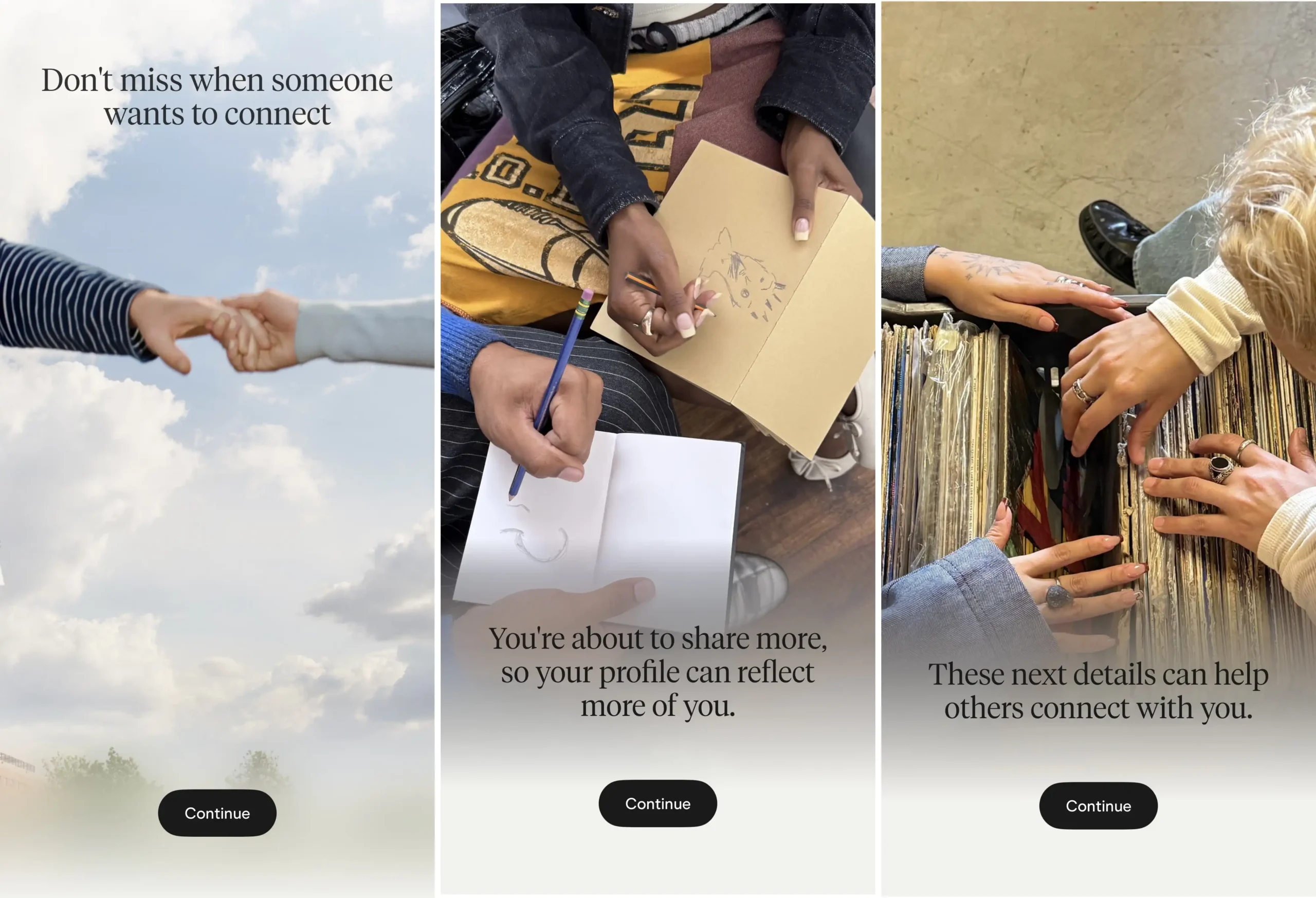
Unlike traditional swipe platforms where users endlessly swipe right or left on a single photo, Hinge requires every like to attach directly to a specific photo or written prompt. Even better, free users can type a personalized comment alongside every like. This single mechanic fundamentally shifts initial dynamics from physical appraisal to conversational engagement.
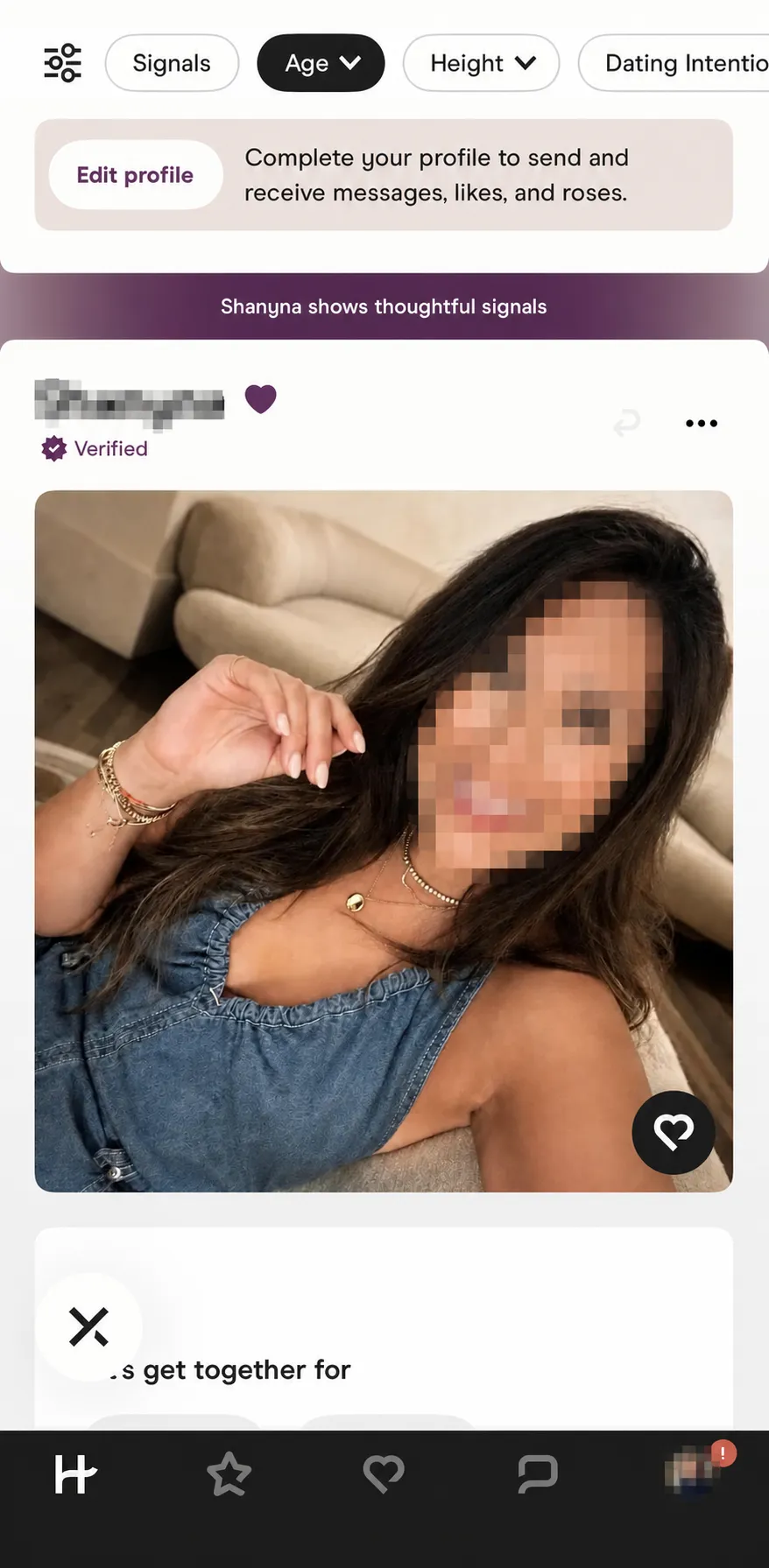
Hinge’s relationship intent badge is prominent and informative, offering options like “Long-Term Relationship,” “Life Partner,” or “Figuring Out My Dating Goals.” Crucially, free users receive 8 likes per day, which renews at 4:00 AM local time. This deliberate scarcity forces daters to review profiles carefully rather than power-swiping through hundreds of people in a single evening.
Pros
- Mandatory 6 photos and 3 prompts establish meaningful context before matching
- Free users can send personalized introductory comments with every like
- Highly active user pool of educated 25-to-40-year-olds looking for commitment
- Clear lifestyle indicators (family plans, political beliefs, drinking habits) visible upfront
Cons
- Strict limit of 8 free likes per day requires discipline
- Standout feed locks curated high-intent profiles behind paid “Roses”
- User density thins out significantly in rural areas outside major metropolitan centers
2. eharmony: Best for Structured, High-Commitment Matching
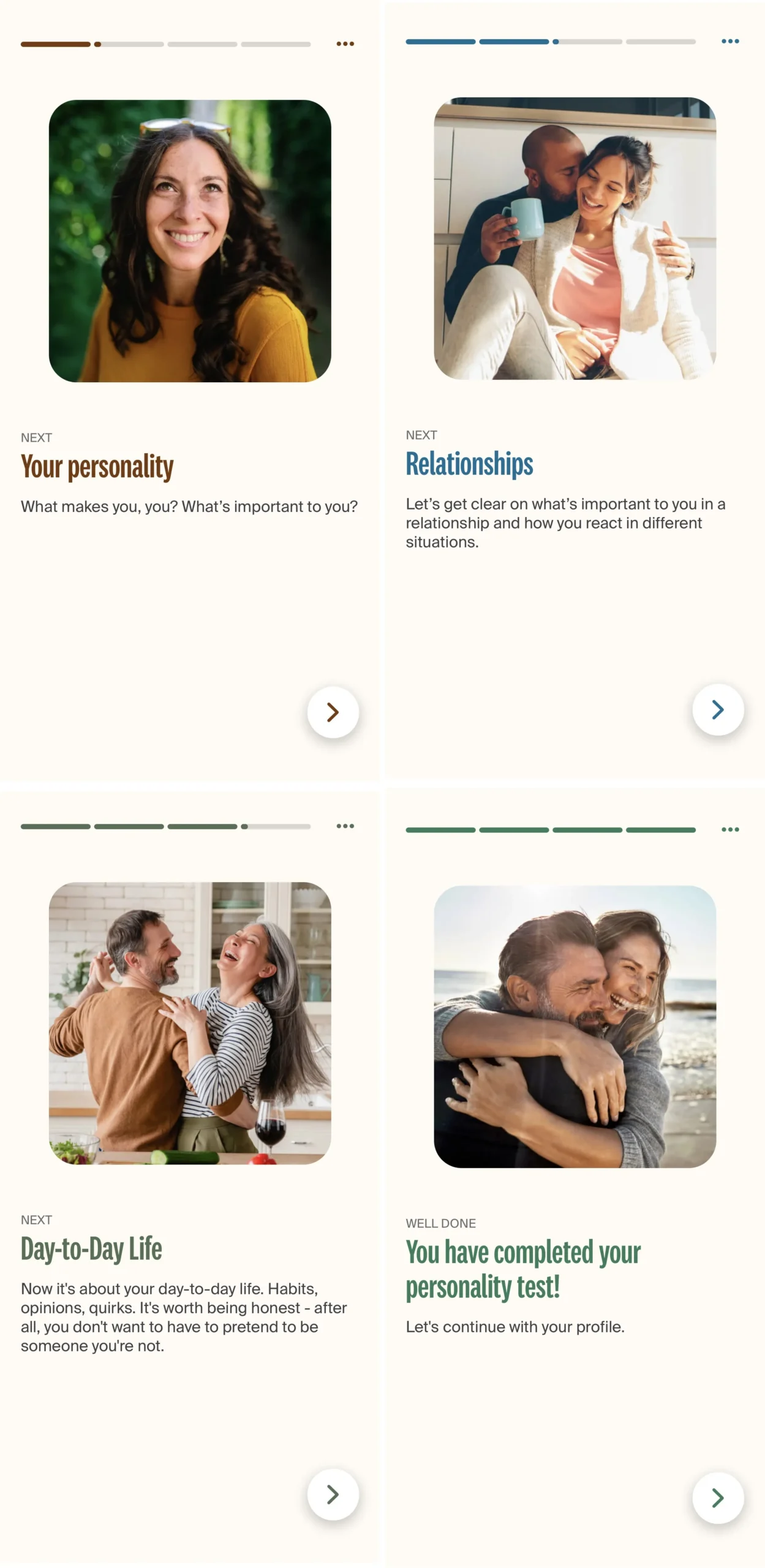
eharmony remains the standard for daters who want an algorithmically guided search rather than endless manual scrolling. The platform’s entire philosophy is built on psychological compatibility, requiring singles to complete an 80-question onboarding assessment based on 32 distinct dimensions of personality.
For singles whose ultimate priority is marriage or lifelong cohabitation, dedicated dating sites for marriage like eharmony provide an intentional sanctuary that general-interest swipe apps simply cannot replicate. Because creating an active profile requires completing an exhaustive questionnaire and paying a significant upfront subscription fee, low-effort swipers and casual daters are systematically filtered out.
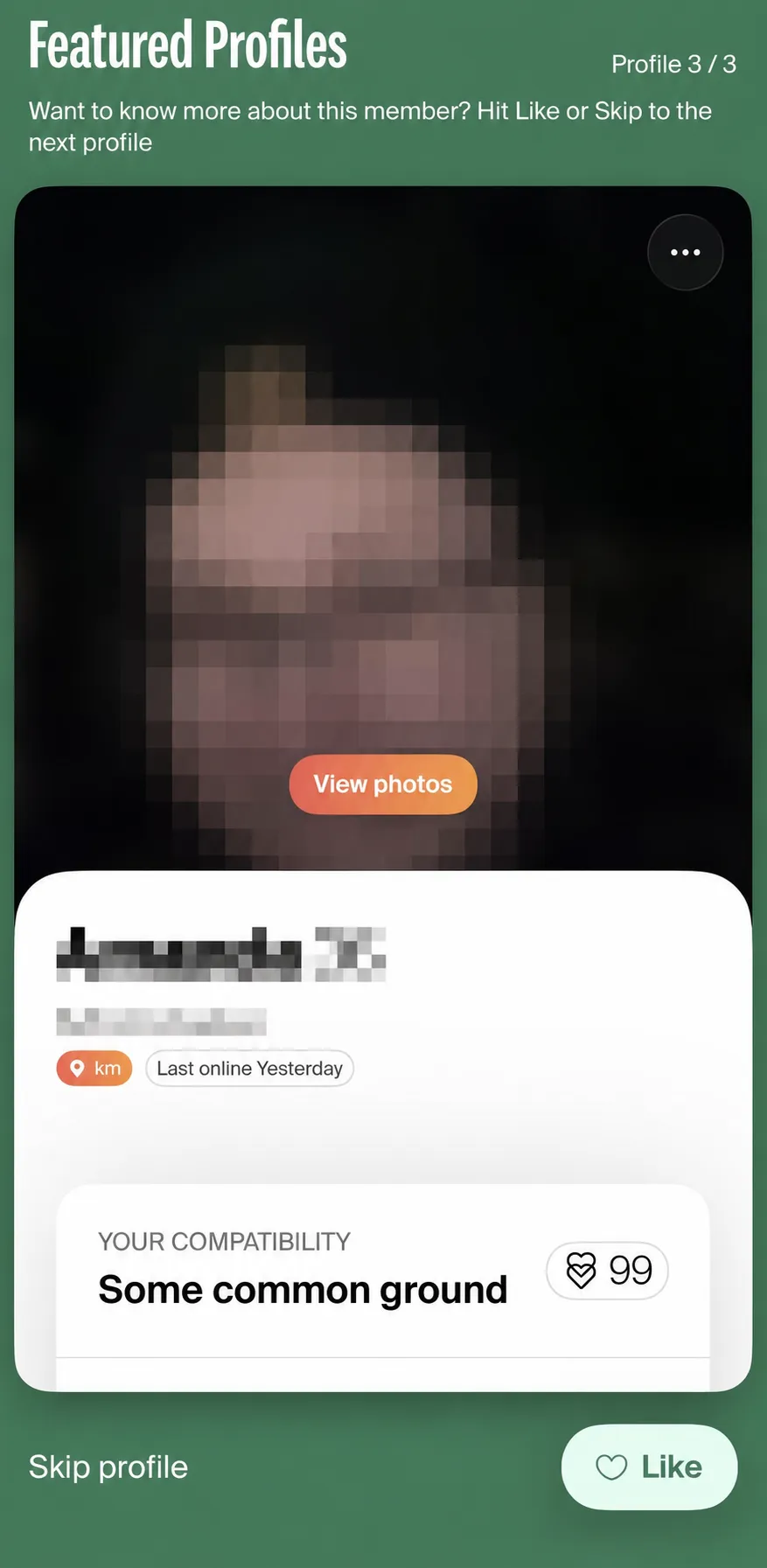
The primary barrier to eharmony is its paywall. As we detailed in our audit of how much eharmony costs and our companion guide on whether eHarmony is worth it, membership plans require multi-month commitments ranging from $35.90 to $65.90 per month, billed upfront in lump-sum charges (or divided into three installments). Free accounts allow you to take the compatibility test and view suggested matches, but reading or sending custom messages requires an active paid subscription.
However, this steep financial barrier serves a clear structural purpose: everyone on the paid platform has substantial skin in the game. You will encounter virtually no ghost accounts, crypto bots, or teenagers looking for Instagram followers. If you are 32 or older and looking for marriage within eighteen months, eharmony’s serious user pool justifies its premium price tag.
Pros
- Highest concentration of marriage-minded, commitment-ready singles in North America
- Exhaustive 80-question personality test delivers deeply calibrated compatibility scores
- High subscription cost completely filters out casual swipers and fake profiles
- Structured communication prompts help ease initial conversational anxiety
Cons
- Expensive: plans range from $35.90 to $65.90/month with mandatory 6, 12, or 24-month commitments
- Zero free messaging functionality; requires payment to communicate
- Demographics skew older (35+), making it less suitable for singles in their early twenties
3. Match: Best for Self-Directed Filtering
Match.com is the pioneer of online dating, and it remains uniquely valuable for daters who refuse to let an opaque algorithm decide whom they should meet. While modern apps restrict you to a narrow trickle of daily recommendations, Match provides a comprehensive, searchable database where you can filter by over a dozen granular criteria.
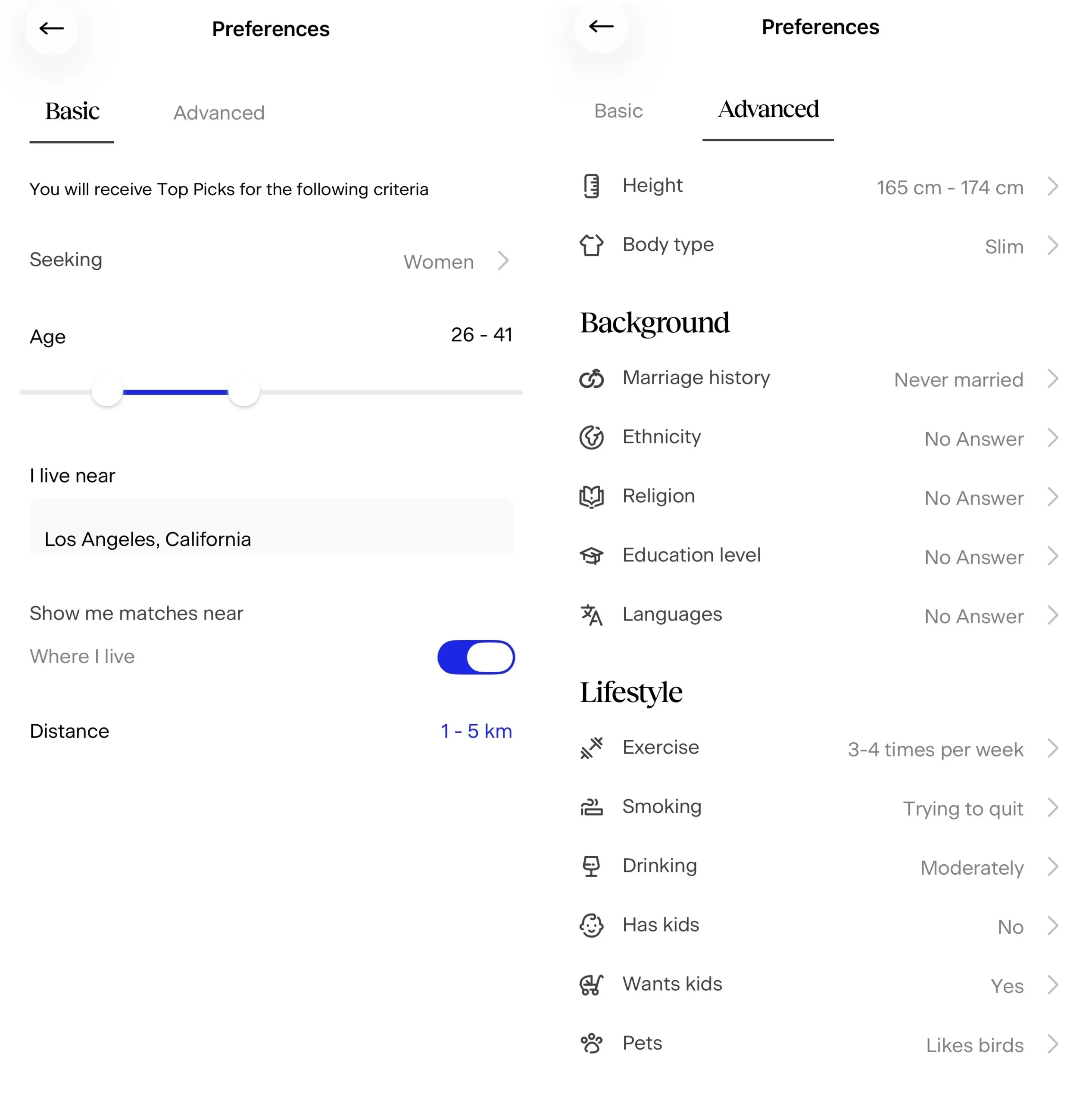
If you have non-negotiable relationship requirements—such as matching exclusively with someone who wants children, shares specific religious convictions, does not smoke, or holds a graduate degree—Match’s advanced search filters let you isolate those candidates instantly. Subscription plans cost between $21.99 and $39.99 per month depending on whether you commit to 3, 6, or 12 months, with Premium tiers adding read receipts.
Match is particularly strong for singles in their late thirties, forties, and fifties. Free users can create a profile, set detailed search parameters, browse the full member directory, and reply to one free “Top Pick” each day. However, initiating open-ended conversations with any member requires a paid subscription.
Pros
- Unrivaled self-directed search controls across education, faith, children, and lifestyle
- Broad demographic appeal with strong user density across all age brackets from 30 to 60
- Free users receive 1 daily conversation with a curated Top Pick match
- Desktop web interface is fully featured, ideal for daters tired of mobile typing
Cons
- Paid subscription ($21.99–$39.99/mo) required to message most members freely
- Member pool includes inactive legacy profiles, requiring manual check of “Online Now” status
- Mobile interface feels cluttered compared to streamlined modern competitors like Hinge
4. Coffee Meets Bagel: Best for Curated, Values-Led Dating
Coffee Meets Bagel (CMB) was specifically built to counter the endless swiping fatigue popularized by Tinder. Rather than handing you an infinite stack of profiles, CMB delivers a single, carefully curated batch of candidates—known as “Bagels”—every day at noon.
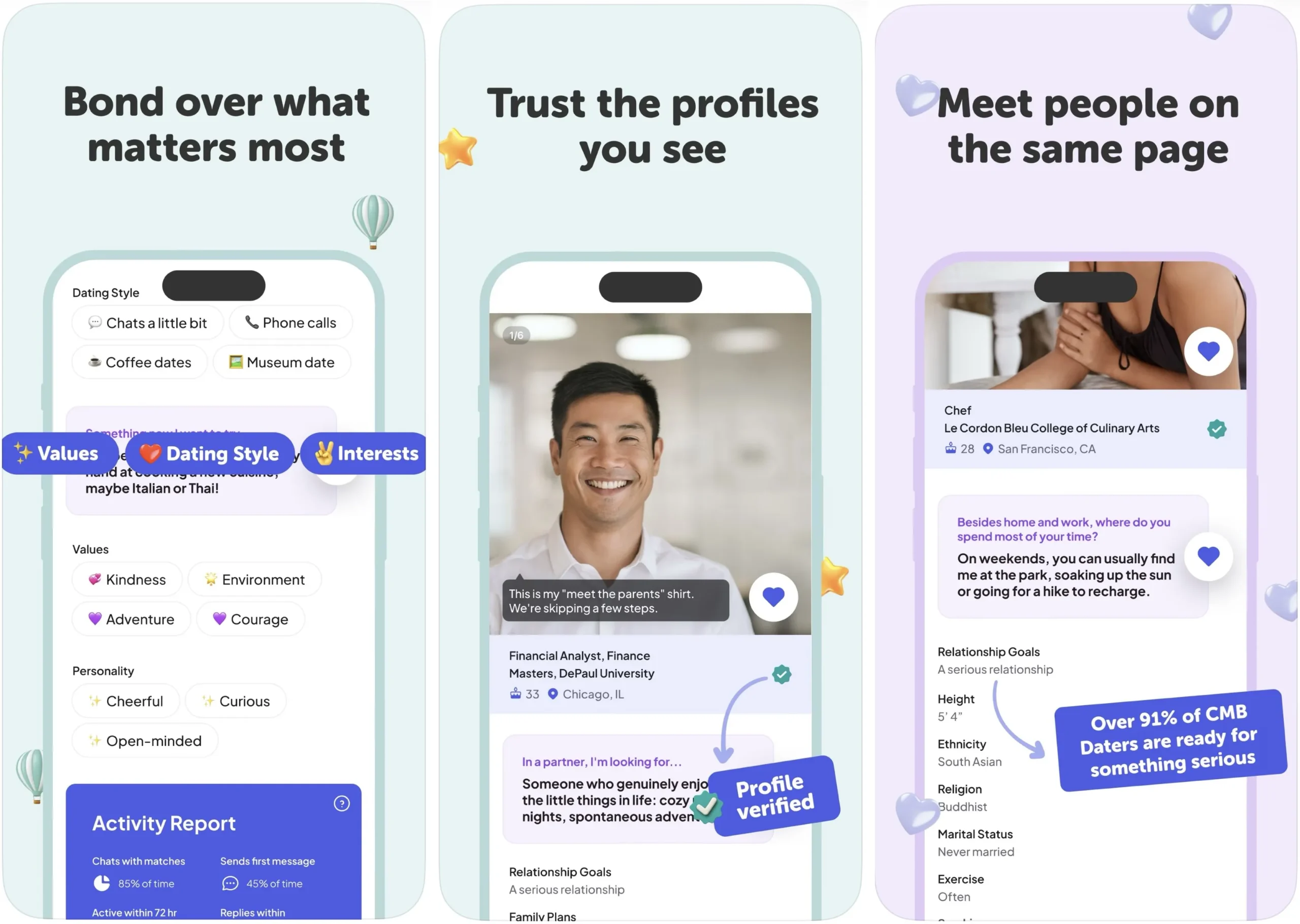
The app uses an asymmetric model: men receive up to 21 curated Bagels at noon (which they can choose to “Like” or “Pass”), while women are shown curated Bagels who have already expressed interest in them. Once two users match, a private chat room opens for exactly seven days. If you do not exchange phone numbers or plan a real date within a week, the chat automatically expires. This strict countdown discourages chronic pen-pals and forces daters to transition into real-world communication.
In terms of pricing and mechanics, Coffee Meets Bagel operates a functional freemium model. Suggested matches and reciprocal chats are completely free. Upgrading to CMB Premium starts from $34.99 per month. In addition, CMB uses a virtual currency called “Beans” (sold in in-app bundles; larger packs cost less per Bean). Beans allow free users to unlock extra profiles in the “Discover” section, view Activity Reports (showing how responsive a match is), or send Read Receipts without buying a recurring subscription.
Pros
- Daily noon delivery eliminates endless swiping and reduces cognitive burnout
- 7-day chat expiration forces singles to schedule a phone call or in-person meetup
- Member pool skews professional, educated, and relationship-oriented
- Strict GPS verification ensures matches reside in your actual geographic radius
Cons
- CMB Premium from $34.99/mo; dual currency system with Beans adds complexity
- Low volume outside major metropolitan tech and finance hubs
- 7-day chat window can feel rushed if you travel frequently for work
5. Bumble: Best for Intent-Led Filtering at Volume
Bumble made its name by requiring women to send the first message in opposite-sex matches, but its real utility for serious daters lies in its sophisticated lifestyle badges and high active user volume. If you want a pool larger than Hinge or CMB without drowning in Tinder’s hookup culture, Bumble strikes an effective balance.
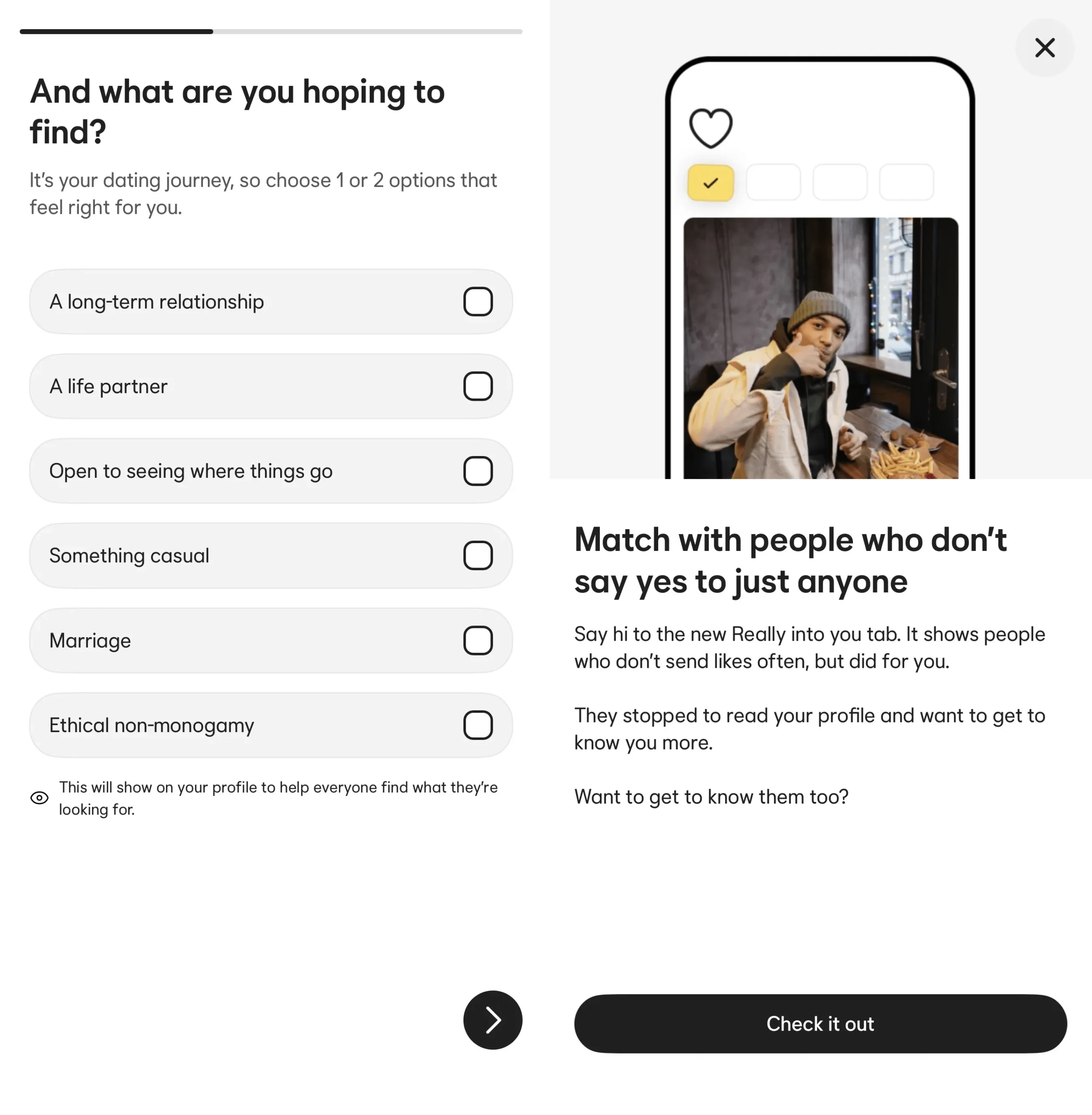
Bumble prominently displays verified relationship goals: “Marriage,” “A Long-Term Relationship,” “Ethical Non-Monogamy,” or “Something Casual.” Furthermore, Bumble’s mandatory biometric photo verification—where users take a real-time selfie mimicking a specific pose—is among the strictest in the industry, significantly reducing catfishing and bot profiles.
The core matching and messaging experience on Bumble is 100% free. Once a match occurs, either dater can message within an expanded 72-hour reply window. Bumble offers three upgrade tiers: Bumble Boost (from $39.99/month), which includes unlimited likes, Backtrack, and weekly Spotlight; Bumble Premium (from $69.99/month or $32.99/week), unlocking the unblurred Beeline, Incognito Mode, and advanced filters; and Premium+ (from $99.99/month). For an exhaustive breakdown of Bumble’s updated messaging rules and pricing, read our dedicated Bumble Review.
Pros
- Huge active user base across North America, second only to Tinder in liquidity
- Strict biometric selfie verification sharply cuts down on bots and fake profiles
- Comprehensive lifestyle badges (exercise, drinking, smoking, pets, astrological sign)
- 24-hour response clock and Opening Moves reduce dead, silent matches
Cons
- 24-hour match expiration can be punishing for busy professionals
- Bumble Premium is expensive (from $69.99/mo) and heavily upsells paid spotlights
- Swiping mechanics still encourage split-second visual appraisals
6. Tinder: Best for Maximum Reach (If You Can Filter Ruthlessly)
Dismissing Tinder as purely a hookup app ignores current reality, but pretending it was designed for romance is equally naive. The reality is simple: Tinder boasts the largest single user base in North America. When searching for serious connections in smaller towns, rural areas, or secondary markets, Tinder’s user density makes it unavoidable.
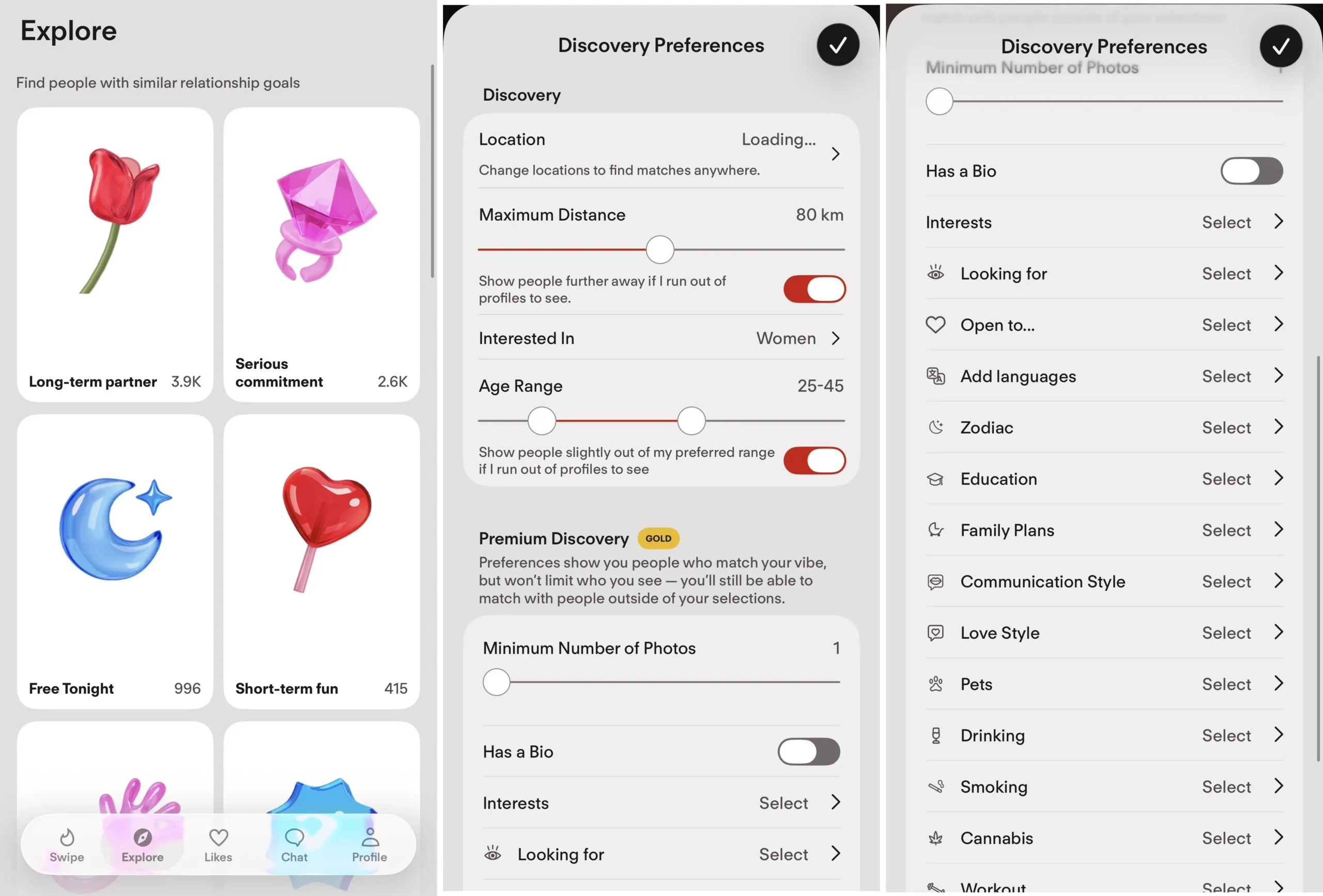
In response to changing dater preferences, Tinder introduced a “Relationship Goals” badge directly on profiles. By navigating to the Explore tab and selecting “Looking for Love” or “Long-Term Partner,” you can restrict your feed to daters who have explicitly indicated serious intentions. However, finding commitment here requires rigorous personal boundaries: you must be prepared to unmatch quickly when someone displays flaky or low-effort behavior.
Regarding pricing, Tinder subscriptions are organized across three paid tiers: Tinder Plus, Tinder Gold, and Tinder Platinum. Tinder Gold runs $18.99 for a single week, about $10.00/week on the 1-month plan, and about $5.83/week on the 6-month plan; Plus and Platinum pricing varies by age and region, so check in-app. Multi-month commitments discount the monthly rate, while weekly packages carry steep surcharges. Full free matching and two-way messaging remain accessible to every free user (subject to a rolling limit of approximately 100 right-swipes per 12 hours). Tinder Platinum adds Priority Likes and Super Like notes, but paying will not change the casual nature of the platform unless you manually filter for compatible intent.
Pros
- Unrivaled user volume—indispensable in smaller towns, rural areas, or secondary markets
- Fast, intuitive interface with full free matching and two-way messaging
- Dedicated “Long-Term Partner” category inside Explore tab helps isolate singles looking for commitment
- Mandatory photo verification badges help authenticate real account owners
Cons
- Culture remains predominantly casual, requiring aggressive manual screening
- Profile bios are often brief, providing minimal personality context before matching
- High prevalence of ghosting and low-effort conversational exchanges
- Paid tiers (Gold from $18.99/week; Plus and Platinum vary by age/region) add up quickly without guaranteeing relationship intent
The Intent Verification Architecture: Why Friction Filters Casual Daters
The single greatest structural flaw in consumer dating apps over the past decade has been zero-friction onboarding. When a platform allows someone to download an app, upload two blurry bathroom selfies, leave their bio empty, and begin swiping in sixty seconds, it creates a toxic environment. Low barriers attract low-intent participants: boredom swipers, validation chasers, and people looking for casual hookups without emotional accountability.
For daters looking for a lifelong partnership, onboarding friction is not a flaw—it is your most reliable protective barrier. Effective relationship platforms implement two distinct screening mechanisms:
- The Mandatory Profile Gate: Platforms like Hinge mandate that users upload at least six photos and answer three distinct written prompts before they can view a single profile. This simple 10-minute barrier eliminates over 50% of transient casual swipers who lack the patience to write thoughtful responses. Similarly, eharmony’s 80-question onboarding quiz takes 20 to 30 minutes to complete, ensuring that anyone you encounter has invested meaningful time and psychological effort before saying hello.
- Explicit Intent Visibility: In casual dating, relationship goals are frequently treated as ambiguous or negotiable. On platforms built for serious intent, badges such as “Long-Term Partner,” “Marriage,” or “Life Partner” are prominently displayed on the profile header. Daters can use hard search filters to completely exclude profiles that display “Short-Term Fun,” “Figuring Out My Goals,” or empty relationship fields, eliminating the agonizing heartbreak of discovering conflicting life goals on date four.
In addition to self-reported intent, verified biometric badges provide crucial baseline security. As we explored in our comprehensive investigation of dating profile verification, selfie-based biometric checks and phone verification cannot guarantee good character, but they do eliminate bot networks and catfishes, ensuring you are speaking with the real individual pictured.
Algorithmic Pacing vs. Infinite Swiping: Overcoming Decision Fatigue & Choice Overload
In modern behavioral psychology, Barry Schwartz’s famous Paradox of Choice explains why dating apps often feel like a digital casino. When users are exposed to an infinite catalog of potential partners—swiping through hundreds of people per hour on Tinder or Bumble—the human brain shifts into a consumer mindset. Instead of evaluating a candidate as a complex, nuanced human being, swipers begin scrutinizing profiles for microscopic flaws, constantly haunted by the fear of missing out (FOMO) on someone marginally more attractive just two swipes away.
This endless loop triggers dating decision fatigue. After forty-five minutes of rapid swiping, attention spans crater, messages devolve into monosyllabic greetings (“hey”, “sup”), and matches are abandoned before conversations ever begin.
Serious relationship platforms combat this burnout through algorithmic pacing and artificial scarcity:
- Daily Batching (Coffee Meets Bagel): By restricting male users to up to 21 curated Bagels and female users to men who have already liked them at 12:00 PM daily, CMB forces users to pause, review the profiles, and make conscious decisions. You cannot swipe indefinitely; once your daily drop is reviewed, the app encourages you to put your phone down and live your life.
- Liking Caps (Hinge): Capping free users at 8 likes per day completely alters dating behavior. When you only have eight likes to distribute across twenty-four hours, you do not waste them on low-effort profiles. You inspect prompt answers, evaluate mutual values, and craft thoughtful, personalized comments that spark real conversational rapport.
- Conversational Expiration Clocks: Platforms that enforce response countdowns—such as Bumble’s 24-hour initiation window and CMB’s 7-day chat expiration—prevent the formation of digital “pen-pal” relationships. They create gentle urgency, encouraging daters to transition from in-app text messages to a phone call, FaceTime, or a real-world coffee date within forty-eight hours.
The Subscription Economics of Serious Dating: High Paywalls vs. Freemium Traps
One of the most common questions singles ask is whether paying for an app actually produces better relationship outcomes. In our detailed financial audit of are paid dating sites worth it, we discovered that dating platform economics generally divide into two distinct models, each with profound implications for user intent:
- The Freemium Speed-Limit Model (Hinge, Bumble, Tinder): The core matching and messaging loop is free. The platforms monetize user impatience by selling visibility boosts, read receipts, and access to the “Likes You” feed. While this allows singles to date for zero dollars, it also means anyone with a smartphone can join, resulting in a member pool with wildly divergent relationship goals.
- The Hard Paywall Filter (eharmony, Match): These platforms allow free sign-up and personality assessment, but place two-way messaging firmly behind a recurring subscription ($21.99 to $65.90/month). While this pricing structure draws frequent criticism from budget-conscious daters, it serves an undeniable operational purpose: financial skin in the game.
When assessing the overall return on investment, daters exploring specialized dating sites for marriage frequently find that paying a higher monthly barrier acts as a reliable screening mechanism against casual browsing. A user paying $40 to $60 a month on eharmony is actively motivated to schedule dates, assess compatibility, and find a partner efficiently. In contrast, daters on free platforms often linger for months without meeting anyone in person.
Consumer Protection Warning: Regardless of which platform you choose, beware of upfront lump-sum billing and automatic renewal clauses. Most major dating services quote prices “per month” (e.g., “$35.90/mo”), but bill the entire multi-month contract upfront as a single lump sum (e.g., $430.80 for a 12-month plan). Always set a calendar reminder to cancel auto-renewal in your account settings at least 48 hours before your term expires.
The Hard Truth: Why Dating Apps for Serious Relationships Cannot Fix Profile Flaws
Here is an observation from years of auditing account flows and testing matchmaking algorithms: no subscription package or platform feature can rescue an uncalibrated profile.
Every week, frustrated daters complain that online dating is fundamentally broken. They swipe for hours, send dozens of likes, receive zero replies, and conclude that modern dating apps for serious relationships are rigged against them. In response, they whip out a credit card, purchase a premium subscription, and expect paid visibility to solve their dating life.
Let us be entirely honest: on any given app, some daters send fifty likes and hear deafening silence, while others secure two or three high-quality dates every week without spending a single dollar. The difference is rarely a premium badge. The difference is your storefront presentation.
Before you spend $40 on a premium tier or blame an algorithm for your lack of traction, audit your digital storefront against these three non-negotiable standards:
- The Lead Photo Rule: Your first photo accounts for roughly 80% of a match’s decision to pause or keep scrolling. It must be a clear, high-resolution portrait taken in natural light, showing your genuine smile and eye contact. No sunglasses, no hats, no gym locker room selfies, and no group photos where someone has to guess which person you are.
- The Prompt Specificity Principle: Prompts like “I love tacos, traveling, and laughing” tell potential partners absolutely nothing about who you are. Generic answers signal generic effort. Replace clichés with vivid, granular snapshots: “My ideal Sunday starts with baking sourdough and ends with an NPR Tiny Desk concert” gives compatible daters an immediate, natural conversational hook.
- Lifestyle Congruence: Serious daters look for lifestyle alignment. If you want children, state it clearly. If you spend every weekend hiking outdoors, include a high-quality photo of yourself on a trail. When your profile accurately reflects your real-world lifestyle, you naturally repel casual daters and attract singles with shared values.
Does Paying Actually Make an App Better for Serious Dating?
For most relationship-minded daters, the answer is nuanced. On freemium platforms like Hinge and Bumble, upgrading to a paid tier (such as Hinge+ or Bumble Boost) does not increase your organic attractiveness or improve algorithmic match quality. It simply gives you convenience: unlimited daily likes, the ability to see who liked you in a single dashboard, and advanced search filters.
If you are already receiving occasional matches and want to save time, a one-month subscription can streamline your workflow. However, if your profile is generating zero likes on the free tier, purchasing a subscription will only deliver zero likes faster. We recommend running our stress-test protocol—optimizing your photos, polishing your prompts, and exhausting your free likes for two weeks—before investing in a recurring plan.
A Quick Safety Reality Check
No matter how serious an app claims to be, never let down your common-sense defenses. Profile verification badges confirm that an account belongs to a real person, but they cannot verify moral character, financial stability, or relationship honesty.
Always maintain these three baseline security rules: keep all initial conversations inside the app until you have spoken on the phone or via video; never send money, cryptocurrency, or financial assistance under any circumstances; and always arrange initial meetups in public venues with independent transportation.
The Bottom Line: Choosing Dating Apps for Serious Relationships
There is no universally “perfect” dating application. The best service is the one that aligns with your age, your geographic location, your timeline, and your personal dating style:
- If you are 24 to 38 and want conversational chemistry: Start with Hinge. Its mandatory prompt structure, high user liquidity, and free comment feature make it the most effective zero-cost baseline for intentional daters.
- If you are 32+ and marriage is your immediate goal: Invest in eharmony. Its 80-question compatibility assessment and premium subscription paywall filter out casual swipers, providing the highest concentration of marriage-ready singles in North America. Daters in this category should also consult our curated guide to dating sites for marriage.
- If you have strict lifestyle or demographic dealbreakers: Use Match to leverage its comprehensive keyword and lifestyle search directory.
- If you suffer from acute swipe fatigue: Download Coffee Meets Bagel to receive a single, curated batch of matches at noon each day.
- If you live in a rural or secondary market: Leverage Bumble and Tinder, using strict relationship badges and personal boundaries to filter out casual noise.
Frequently Asked Questions
Is Hinge actually better than Tinder for serious relationships?
For most relationship-minded daters, yes. While Tinder offers a larger total user base, Hinge requires profile completion before liking and ties interactions directly to specific prompts and photographs. This structure dramatically cuts down on mindless, low-effort swiping and encourages meaningful conversations from the very first interaction.
Is eharmony worth the expensive subscription fee?
eharmony is worth the cost ($35.90–$65.90/month) if you are over thirty, financially stable, and looking for marriage within the next year or two. The steep financial commitment acts as an effective behavioral filter against casual daters. However, if you are under 28 or date on a strict budget, Hinge offers comparable relationship intent without mandatory fees.
Which dating app is best if my immediate goal is marriage?
For marriage-minded singles, eharmony remains the gold standard due to its 80-question onboarding quiz and upfront paywall. Daters under 38 looking for marriage also achieve excellent success on Hinge by filtering for the “Life Partner” badge. For an in-depth breakdown of matrimonial platforms, explore our dedicated guide to the top dating sites for marriage.
Can you find a serious relationship without paying for a dating app?
Absolutely. Platforms like Hinge, Bumble, and Coffee Meets Bagel allow you to create complete profiles, browse matches, and exchange unlimited messages with mutual connections for zero dollars. Paying for premium upgrades primarily saves time; it does not change your underlying compatibility with the singles you meet.
What is the single biggest mistake serious daters make on apps?
The biggest mistake is staying on the app too long before meeting in person. Long-winded digital texting creates artificial intimacy based on an idealized projection. Relationship experts recommend moving from initial app messaging to a phone call or an in-person coffee meetup within 5 to 7 days of matching.
Once you transition from app messaging to real-world dates, observing whether a match follows through with consistent plans is key. If you are assessing where things stand after a few dates, see our guide on how to know if he is serious about you to evaluate genuine behavioral intention.