

Updated October 12, 2026: Added Match Group corporate ownership breakdown, side-by-side 2026 plan pricing from our checkout walkthroughs, and over-50 member pool comparison.
If you are a single over 50 looking for a serious relationship, you might find yourself comparing Match and OurTime.
Match vs OurTime is not mainly a price comparison. The reviewed checkout screens show similar subscription structures, closely aligned monthly pricing, and the same continuous-service renewal wording.
The more useful decision is whether a reader wants a broader dating environment with a preference-led setup, or an age-focused over-50 dating environment.
Bottom line: Match has a broader dating environment and a more preference-led setup. OurTime is positioned around singles over 50, giving it a more age-focused dating environment than Match.
Table of Contents
Quick Verdict
Match provides a broader demographic environment where users go through a preference-led setup. OurTime is positioned around singles over 50, providing a more age-focused dating environment. While their audience positioning differs, both platforms share closely aligned subscription and billing patterns, and paid prompts appeared in both reviewed flows when users moved toward direct communication.
Is OurTime the Same as Match?
No—OurTime and Match are separate dating services with separate member logins, profiles, and billing, even though both are owned by Match Group. OurTime originated under People Media, which Match.com acquired in 2009, and trademark records list Match Group Americas, LLC as the owner. Paying for a subscription on Match does not unlock paid access on OurTime, and creating an account on one does not automatically copy your profile to the other.
Which Has More Members Over 50?
Because Match serves adults across all age brackets (18+) and operates one of the largest mainstream dating databases in North America, it often holds a larger total headcount of singles in their 50s and 60s around mid-sized towns and suburbs—provided you set your age filter to 50+. OurTime, by contrast, is built specifically around the 50+ community, meaning almost everyone browsing the feed is already looking to date within that age bracket without needing to filter out younger swipers.
Who Should Choose Match
Match is typically a reasonable option for singles who:
- Want access to a broader dating environment rather than a niche site.
- Prefer an onboarding process that emphasizes values, interests, and preferences.
- Do not mind navigating a broader dating environment with their own age and preference choices.
Who Should Choose OurTime
OurTime makes more sense for mature singles who:
- Want an age-focused dating environment.
- Prefer a platform that is structurally positioned around singles over 50.
- Are prepared to navigate an additional verification step during the account creation process.
Main Differences at a Glance
- Platform Environment: Match offers a broader dating environment. OurTime is positioned around singles over 50, giving it a more age-focused environment.
- Setup Approach: Match’s onboarding asks users to define values and preferences upfront, whereas OurTime focuses more directly on entering the demographic-specific space.
| Comparison Dimension | Match | OurTime |
|---|---|---|
| Parent Company | Match Group | Match Group (acquired via People Media; operated separately) |
| Who Can Join | Adults 18+ across all age brackets | Positioned specifically for singles 50+ (18+ in platform terms) |
| Account & Subscription Sharing | Separate account, profile, and subscription from OurTime | Separate account, profile, and subscription from Match |
| Onboarding & Discovery | Preference-led setup (values, interests, dealbreakers) + broad age filters | Age-focused 50+ onboarding with streamlined browsing |
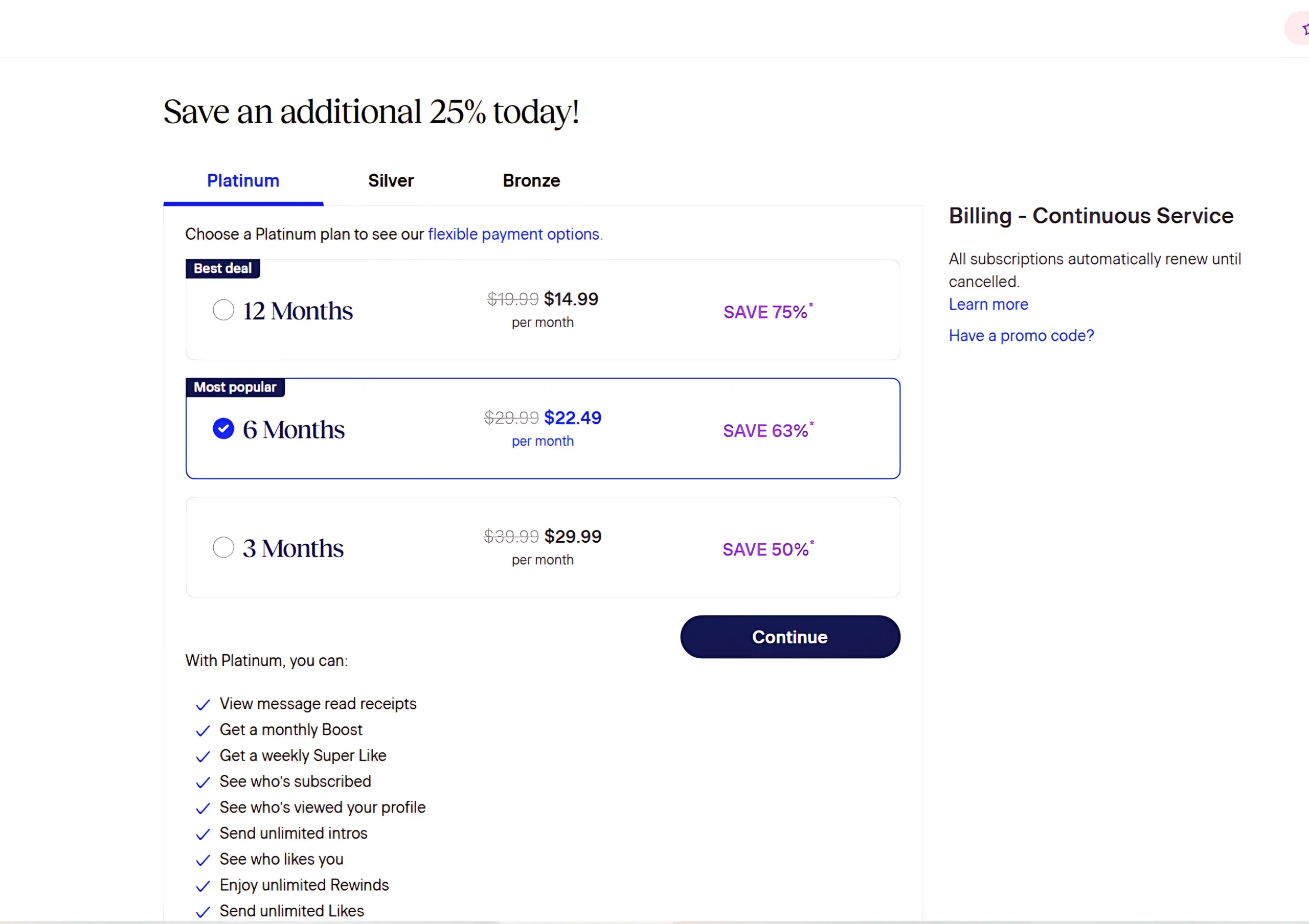
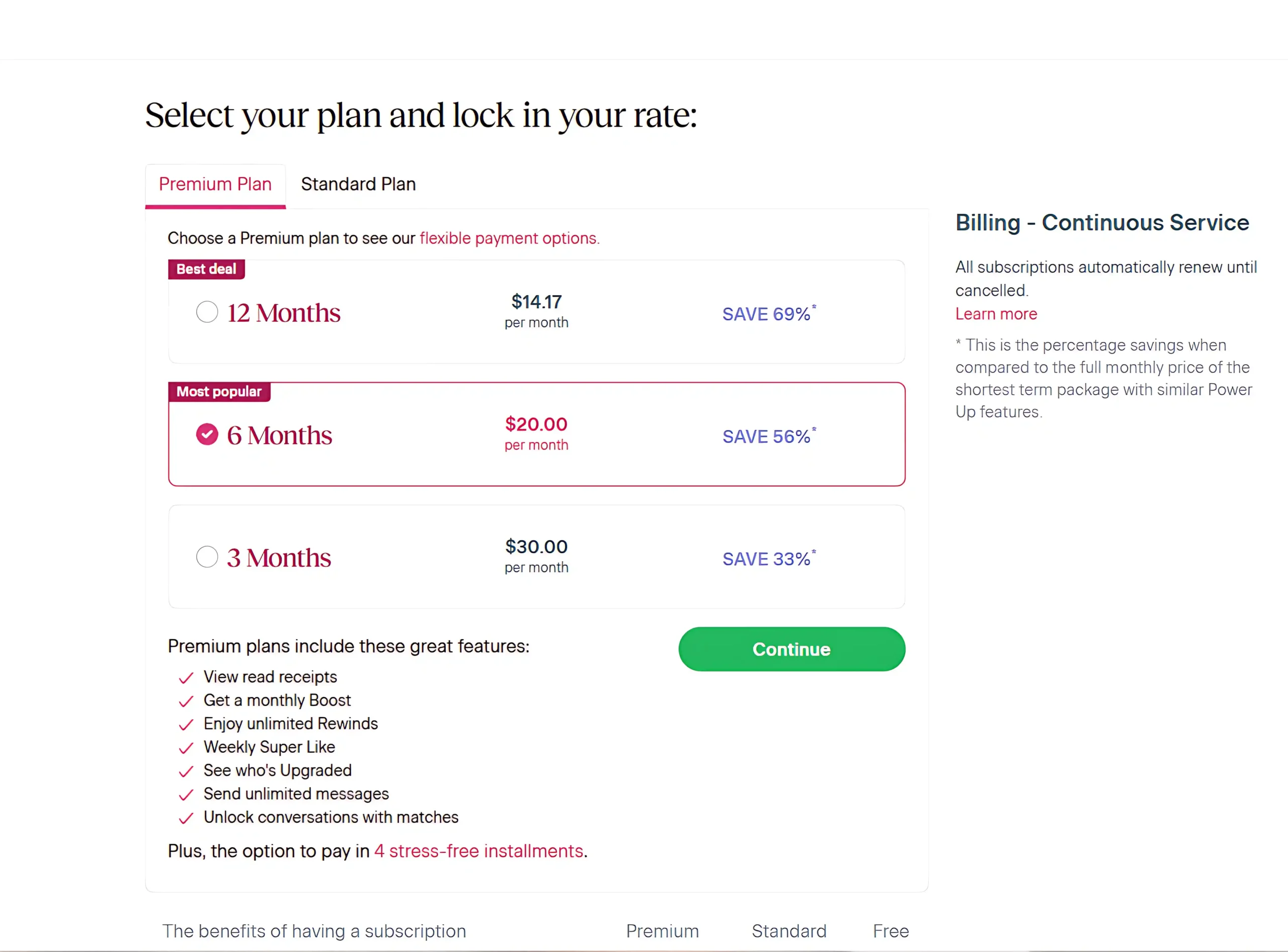
| Reviewed Checkout Pricing (3 / 6 / 12 Months) | Platinum checkout: $39.99/mo (3 mos), $29.99/mo (6 mos), $19.99/mo (12 mos); 25% promo rates ($29.99 / $22.49 / $14.99) shown | Premium checkout: $30.00/mo ($90 total for 3 mos), $20.00/mo ($120 total for 6 mos), $14.17/mo ($170.04 total for 12 mos) |
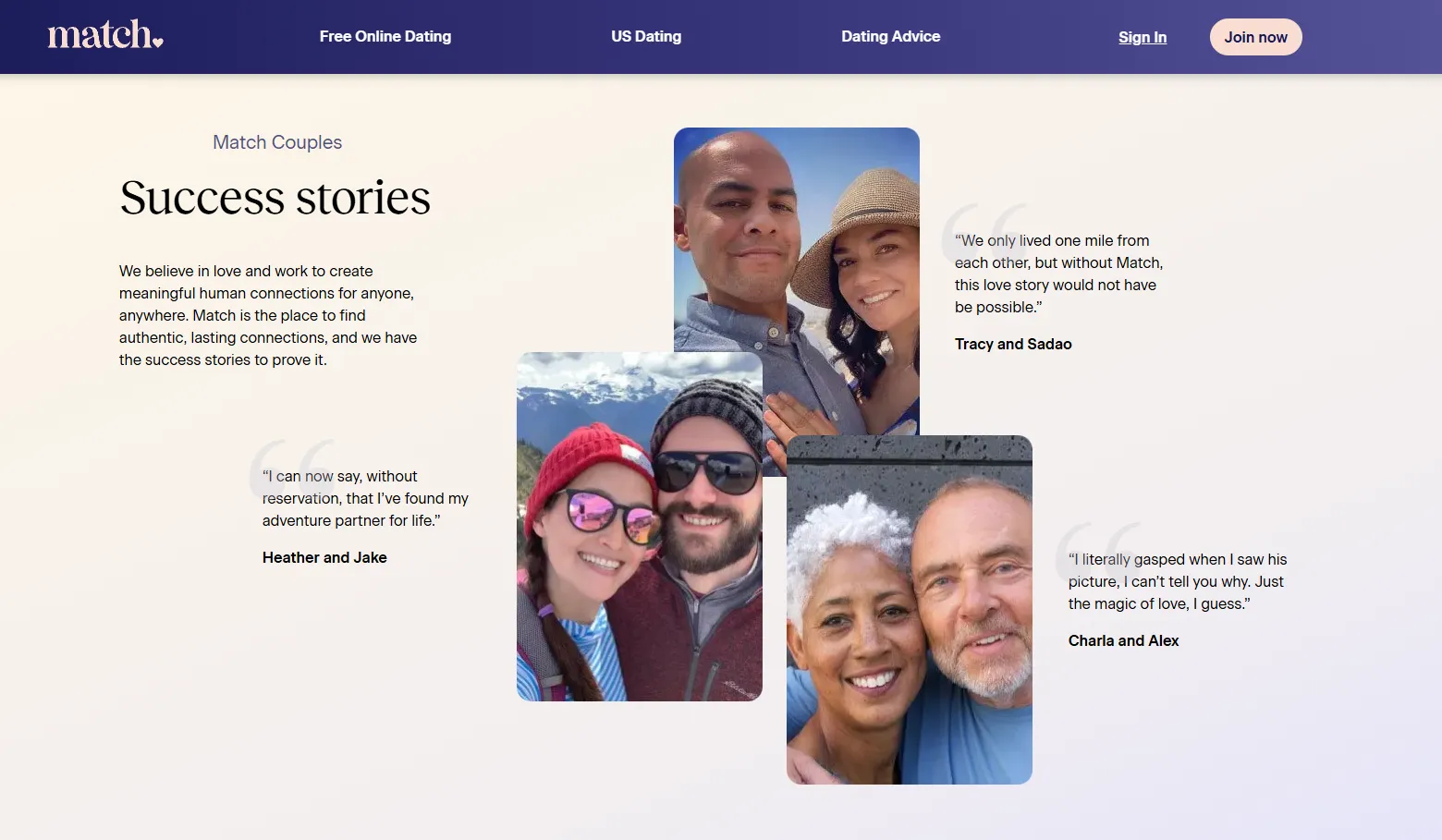
Match
- Broader dating environment
- Open to all adult demographics

OurTime
- Age-focused environment
- Positioned for singles over 50
Signup and Profile Setup
Setting up a profile on both platforms requires a bit of patience, but the focus of the friction differs.
Match’s registration and preference setup asks users about values, interests, and lifestyle preferences. This preference-led setup can be appealing for daters who want to establish lifestyle dealbreakers early on in the process.
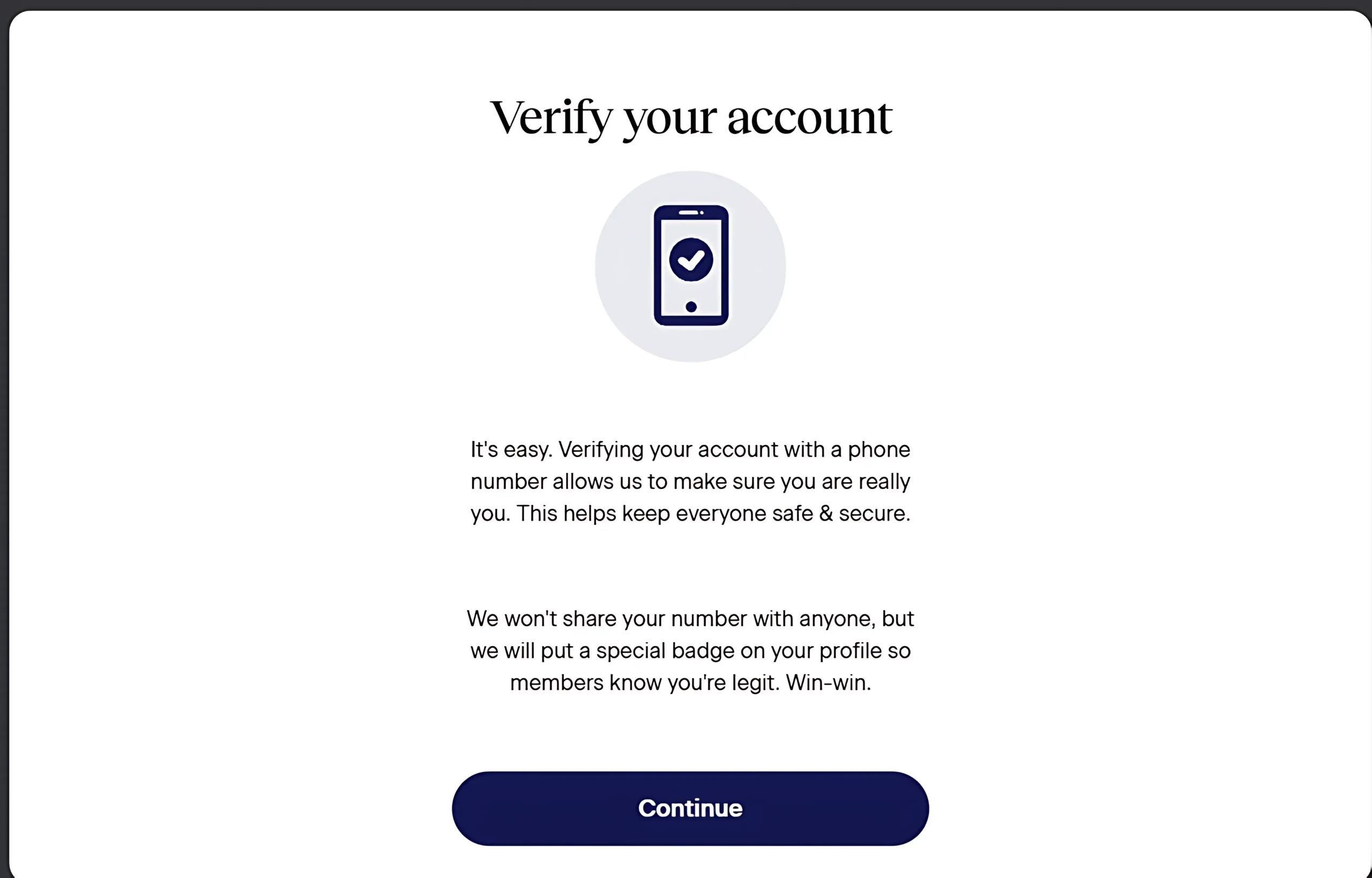
OurTime’s initial setup is visually simpler but includes its own hurdles. Both reviewed signup flows included a phone-number verification prompt before users could move deeper into account setup. This added an extra step during registration.
Free vs Paid Access
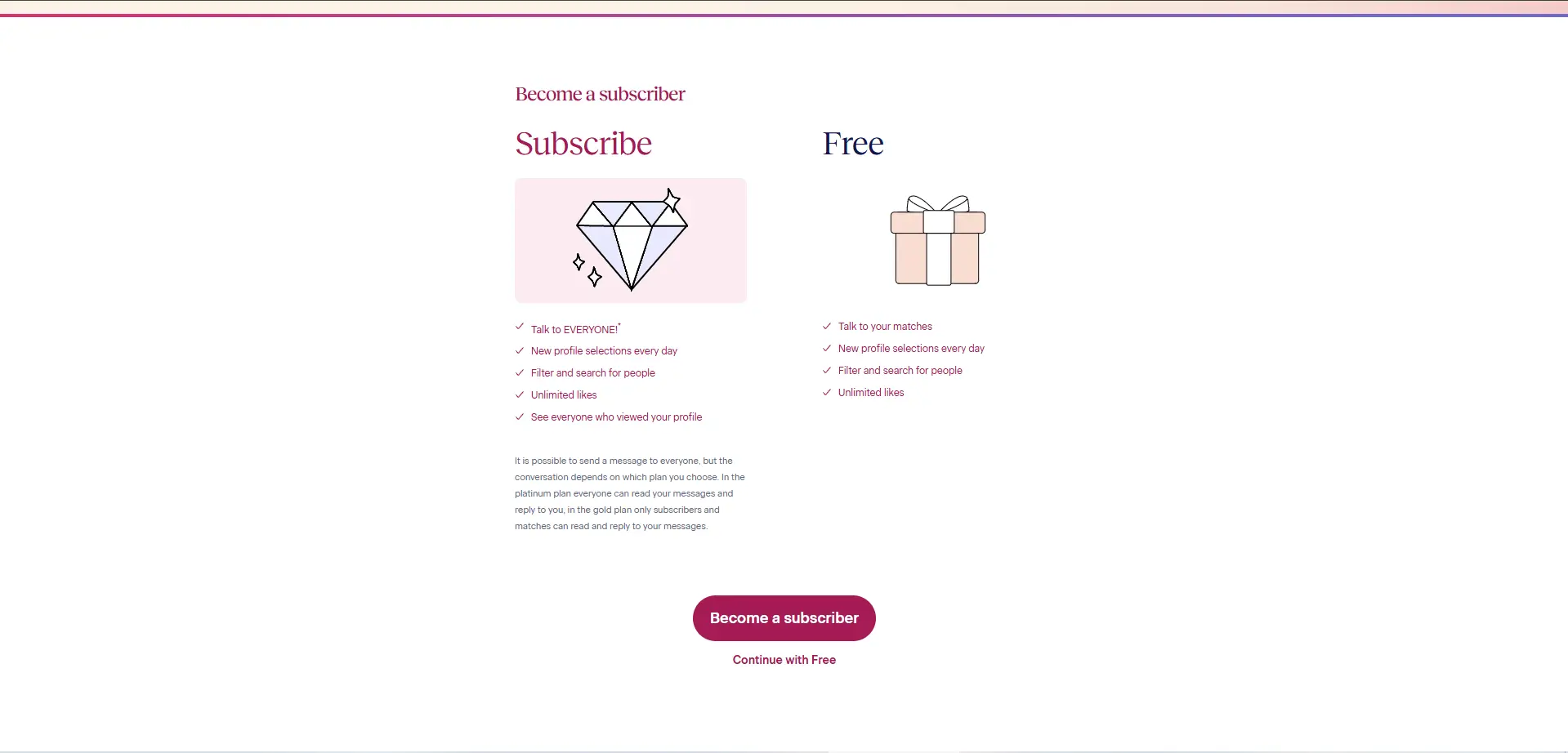
Do not expect the free experience on either platform to cover the full communication journey. The reviewed free flows were useful for browsing and early evaluation, but paid prompts appeared when users moved toward direct communication.
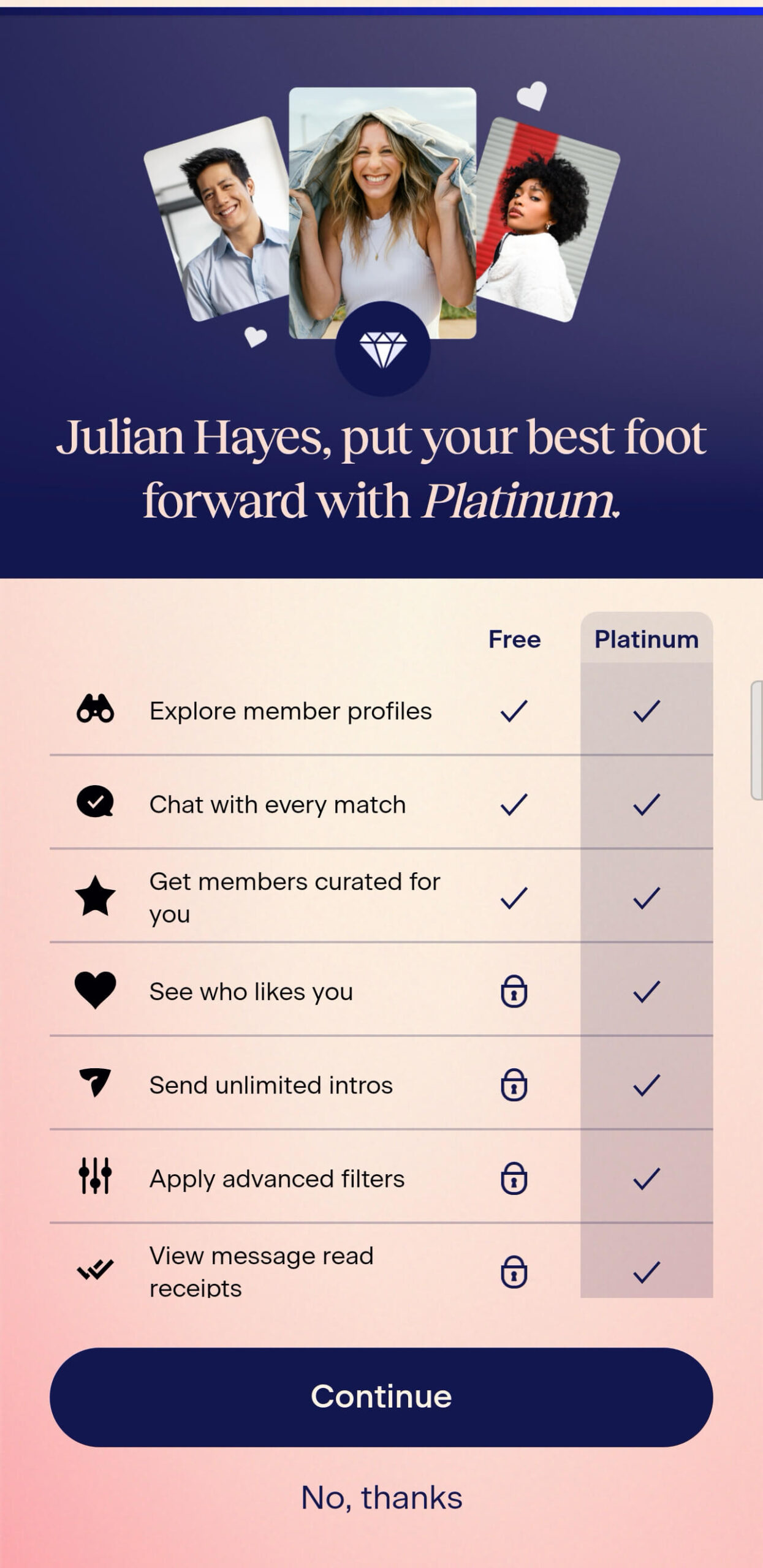
Below is a comparison of what was visible during our account reviews:
Free vs Paid Feature Comparison
- Profile Browsing: Allowed on both free tiers.
- Sending Likes: Allowed on both free tiers.
- Reading Messages: Not confirmed as a like-for-like comparison in the reviewed flow.
- Message Access: Paid prompts appeared when the reviewed flows moved toward direct communication.
- Visitor Visibility: Not confirmed in the reviewed free flow.
- Advanced Filters: Not confirmed in the reviewed free flow.
If your goal is to actually initiate direct communication, you will generally need to pay for a subscription.
Pricing and Paywall Clarity
As mentioned earlier, price is not the main deciding factor here.
The checkout screens reviewed show closely shared subscription patterns: 3-, 6-, and 12-month plans, similar displayed monthly pricing, and the same continuous-service renewal wording.
- Match Platinum Checkout Rates (Pictured Below): Our reviewed Match Platinum upgrade screen listed standard rates of $39.99/month for 3 months, $29.99/month for 6 months, and $19.99/month for 12 months, alongside a new-member 25% promotional offer reducing those rates to $29.99/month (3 months), $22.49/month (6 months), and $14.99/month (12 months).
- OurTime Premium Checkout Rates (Pictured Below): Our reviewed OurTime Premium checkout screen listed $30.00/month for 3 months ($90.00 total, Save 33%), $20.00/month for 6 months ($120.00 total, Save 56%), and $14.17/month for 12 months ($170.04 total, Save 69%), with an option to split eligible multi-month plans into 4 installment payments.
Displayed prices and offers can change over time, so readers should confirm the current checkout screen before paying.
Search, Filters, and Profile Browsing
Match’s onboarding asks users to define values, interests, and lifestyle preferences early in the setup process. However, current review materials are insufficient to complete a direct one-to-one comparison of Match and OurTime’s advanced filtering depth.
In general, Match’s onboarding is more preference-led, while OurTime’s older-audience positioning gives readers a more age-specific starting context.
Safety and Privacy Signals
As observed, the phone-number verification prompt observed during signup acts as an additional verification step during account creation. However, this signup friction is just a basic verification layer. It does not guarantee protection from fake profiles or scams. Users should always exercise standard online dating precautions and never share financial information with a match.
Account Management and Cancellation Notes
Both checkout screens reviewed included continuous-service wording stating that subscriptions automatically renew until cancelled.
Before paying, readers should review the current renewal and cancellation terms shown at checkout and follow each platform’s current subscription-management instructions if they decide not to continue.
Match Pros
- Broader dating environment.
- Preference-led setup emphasizes values and interests.
Match Cons
- Communication features trigger a paywall.
- Continuous-service auto-renewal terms apply.
OurTime Pros
- Positioned specifically for singles over 50.
- More age-focused dating environment than mainstream apps.
OurTime Cons
- Additional verification steps create early signup friction.
- Message access triggers a paywall prompt.
Alternatives
If you are still unsure which approach fits your dating style, consider these options:
- If you want a platform that relies on a more guided compatibility questionnaire and matching approach, read our eHarmony Review or compare eHarmony vs Match directly.
- For another dating site focused on mature singles, read our SeniorMatch Review.

Web • iOS • Android
Prefer Personality Matching Over Open Search? Try SilverSingles
If neither Match’s broad pool nor OurTime’s manual search fits your preferences, SilverSingles delivers vetted daily matches built specifically for mature singles over 50.

Web • iOS • Android
Looking for Serious Commitment & Compatibility? Try eHarmony
If you want in-depth psychological compatibility scoring and a dating pool dedicated to long-term marriage and commitment, test eHarmony for free.
Final Verdict
Match vs OurTime is not mainly a price comparison. The checkout screens reviewed show similar subscription structures, closely aligned monthly pricing, and the same continuous-service renewal wording.
The more useful decision is whether a reader wants a broader dating environment with a preference-led setup, or an age-focused over-50 dating environment.
If you prefer to define your values upfront and search within a broader pool, Match is a practical choice. If you want a platform positioned around singles over 50, OurTime provides that specific environment.
FAQ
Is Match or OurTime better for singles over 50?
It depends on what you are looking for. OurTime is positioned around singles over 50, giving it a more age-focused dating environment. Match provides a broader dating environment, but its onboarding is more preference-led, asking users to define values, interests, and lifestyle preferences early in the setup process.
Can you message for free on Match or OurTime?
In the reviewed flows, paid prompts appeared when users moved toward direct communication. The free experience was useful for browsing and early evaluation, but readers should check the current messaging access before paying.
Is OurTime owned by Match?
Yes. Both OurTime and Match are owned by Match Group. OurTime was originally launched by People Media, which Match.com acquired in 2009, and the OurTime trademark is held by Match Group Americas, LLC.
Is OurTime the same as Match.com?
No. Even though both belong to Match Group, OurTime and Match operate as separate dating services with separate logins, profile databases, and subscriptions. A paid membership on one does not transfer to the other.
Are Match and OurTime similarly priced?
Yes, though OurTime’s standard checkout rates are slightly lower than Match’s non-promotional Platinum prices. In our checkout walkthroughs, OurTime Premium cost $30.00/month ($90 total for 3 months), $20.00/month ($120 total for 6 months), or $14.17/month ($170.04 total for 12 months), whereas Match Platinum listed $39.99/month (3 months), $29.99/month (6 months), and $19.99/month (12 months) before a 25% promo discount ($29.99 / $22.49 / $14.99).
Do Match and OurTime subscriptions renew automatically?
Yes. Both checkout screens reviewed included continuous-service wording stating that subscriptions automatically renew until cancelled. Before paying, readers should review the current renewal and cancellation terms and follow each platform’s subscription-management instructions if they decide not to continue.
Is OurTime more age-focused than Match?
Yes. Match has a broader dating environment that serves adults across various age groups, whereas OurTime is explicitly built around an older dating audience and positioned around singles over 50.
Explore our comprehensive standalone audits of Match and OurTime to analyze detailed subscription tiers, hidden costs, and cancellation terms.