
A few months ago, a close friend of mine—let us call him Mark—lost $14,000 to an online romance scam. Mark is thirty-five, an analytical supply chain manager, and easily one of the most cautious people I know. He did not fall for a clumsy, broken-English email from a mythical overseas prince. He met someone on a mainstream dating app whose profile was fully verified, whose lifestyle matched his own, and who spent three patient weeks sending morning coffee pictures, venting about bad workdays, and building what felt like a genuine, grounded connection.
The money request did not arrive as an obvious robbery. It arrived as a casual, late-night screenshot of a currency arbitrage app her uncle supposedly managed. She did not ask him for a cent; she simply showed him how easily she made two hundred dollars while watching TV and asked if he wanted her to walk him through it so they could fund a vacation together. By the time Mark realized the platform was an elaborate visual simulation designed to trap deposits, his money was gone, the WhatsApp number was disconnected, and the dating profile was deleted.
Most dating site safety pages read like corporate legal waivers. They tell you not to wire cash to strangers and advise you to meet in public—advice so obvious it insults your intelligence. But professional fraud rings do not target your intellect; they target your emotional exhaustion and your genuine desire to find a partner. Here is the operational checklist I give my own friends before they hand over a phone number, fall for an expensive badge, or agree to meet someone in the real world.
The unfiltered reality: Verification checkmarks only confirm that an account completed an automated registration hoop, not that the person is honest. Paid VIP badges mean nothing—fraud rings happily spend $40 a month as an ordinary customer acquisition cost. Never let anyone pressure you into WhatsApp within 48 hours, never touch any link involving investment or finance, and remember that real people who respect you will never make you feel guilty for moving slowly.
Table of Contents
1. The Illusion of Platform Safety Tools: What Those Badges Actually Mean
When you open an app and see a shiny blue checkmark or a “Verified” badge next to a match’s name, your brain wants to exhale. You assume the company ran a background check, checked their government ID, and gave them a stamp of approval. That assumption is dangerous.
Across the account flows we audited on platforms like Match, SeniorMatch, and OurTime, verification is an automated technical filter, not a moral background check. An SMS verification check simply means someone possesses a temporary VoIP number or a burner SIM card capable of receiving a six-digit code.
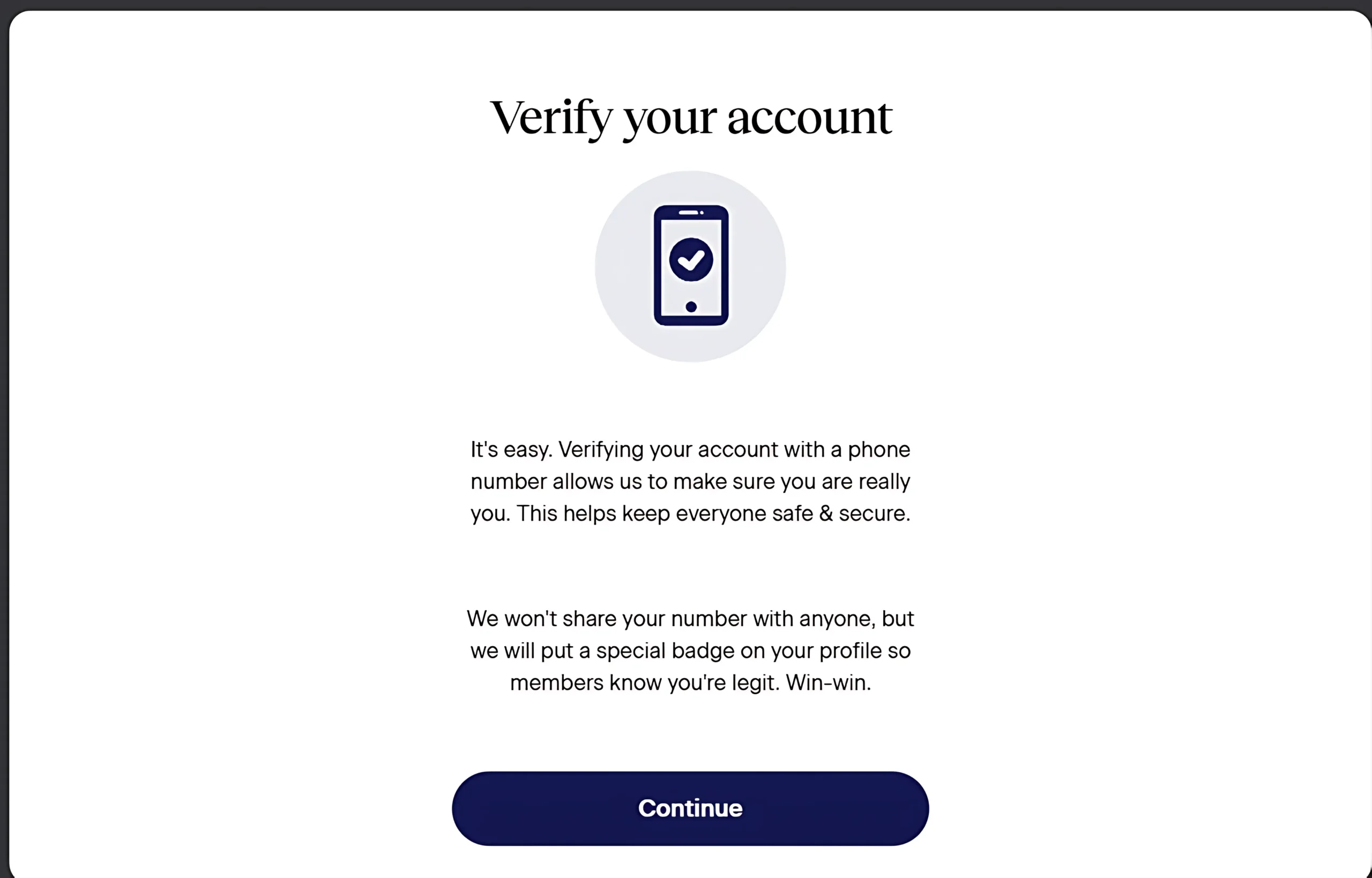
Even automated video-selfie verification systems have distinct technical limitations. Attackers purchase accounts that were verified by third parties, use paid account mules, or take over compromised profiles that have been dormant for months. For an in-depth operational audit of how biometric matching actually operates, read our guide on what dating profile verification does and does not mean.
Treat in-app reporting buttons the same way. Moderation algorithms operate retroactively. Reporting an account helps clean up the platform after harm occurs; it does not protect you from the opening forty-eight hours of psychological grooming.
2. The Off-Platform Pivot: Why Scammers Are Obsessed With WhatsApp
If you have been on dating apps for more than a week, you know the script: within five to ten messages, your match suddenly says, “I barely check this app, let’s chat on WhatsApp,” or “My subscription is ending tomorrow, message my cell.”
Some honest users simply prefer texting over a clunky dating app interface. But professional romance scammers push you off-platform within twenty-four to forty-eight hours for a calculated architectural reason: to bypass the dating app’s automated AI moderation filters.
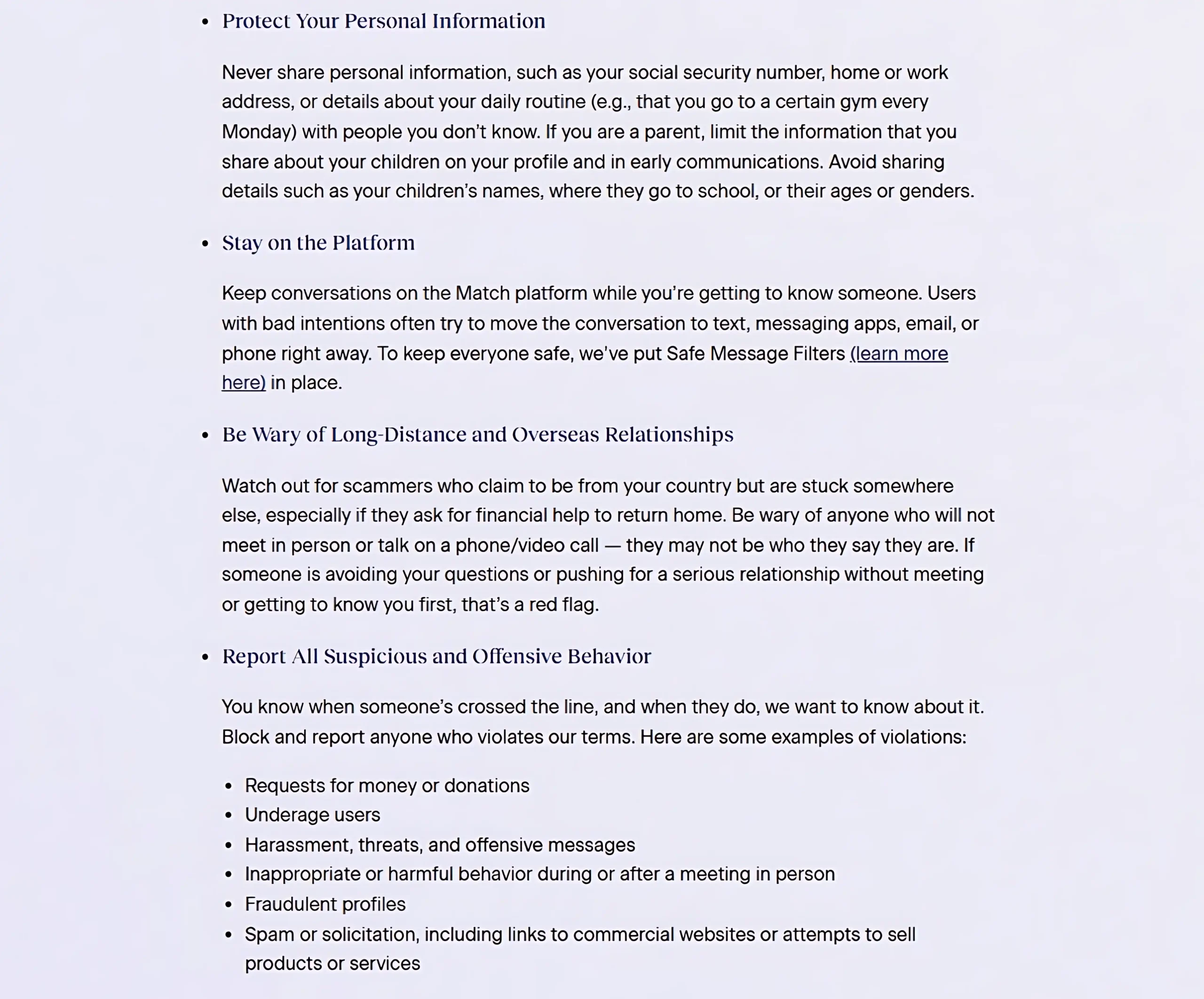
Mainstream dating networks run background text-scanning models that constantly look for trigger phrases: words like “crypto,” “Binance,” “wire transfer,” “investment,” “forex,” or external web links. If a scammer attempts their pitch inside the dating app, their account gets shadowbanned or banned within minutes.
By luring you onto WhatsApp or Telegram, they strip away the platform’s protective radar. You enter an end-to-end encrypted channel where no algorithm is monitoring their requests, and where the dating app has zero chat logs to review when you finally realize you have been defrauded.
The 5-Second Boundary Test
When someone asks for your personal number or suggests leaving the app early, respond with this exact line:
“I prefer keeping conversations on here for a few days until we know each other a bit better. Hope you understand!”
A legitimate, emotionally mature person will reply: “Totally get it, take your time.”
A fraudster or an aggressive boundary-tester will push back. They will act wounded (“Don’t you trust me?”), feign mild offense, or try to guilt you into making an exception. The moment someone treats your reasonable boundary as an obstacle to negotiate around, the conversation is over. Block them and move on.
3. Spotting Fake Accounts: Why Reverse Image Search Is No Longer Enough
Five years ago, identifying a fake profile was straightforward: you uploaded their picture to Google Lens, found out it belonged to an obscure European fashion model, and reported the account. In 2026, that tactic catches only the laziest amateurs.
Modern syndicates generate photorealistic portraits using modern generative diffusion models. These faces have never existed on Instagram, Facebook, or the public web. Reverse image tools come up completely blank, creating a false sense of security. If you want to spot synthetic profiles, you have to look for subtle anatomical friction:
- Earring and eyewear mismatches: Generative models struggle with bilateral symmetry. Look at the earrings in both ears; are they completely different shapes? Look at where eyeglasses touch the temples—does one side dissolve into the hairline?
- Background typography: Check storefronts, street names, or books in the background. AI images frequently render background text as alien, melted glyphs rather than legible English letters.
- Lighting conflicts: Notice whether the golden-hour sunlight across their cheek matches the fluorescent, overcast lighting on their shoulder.
- The “Too Consistent” aesthetic: Every single photo looks like an editorial photoshoot taken with an 85mm portrait lens, without a single candid, goofy, or low-resolution snap taken with friends.
For a detailed breakdown of narrative inconsistencies and conversational patterns, see our complete guide to how to identify fake dating profiles.
4. Don’t Confuse Paying With Being Safer
One of the most widespread psychological traps among singles over thirty is assuming that paid dating services or users holding premium badges are thoroughly vetted. The thinking goes: “If someone is paying $40 a month for Match Platinum or eharmony, they must be serious.”
Romance scamming is an industrial enterprise. Organized operations gross millions annually. To an operation planning to siphon $20,000 from a target, spending $35 on a one-month premium subscription to unlock unmetered direct messaging is a minor, routine business expense. It is a cost of customer acquisition.
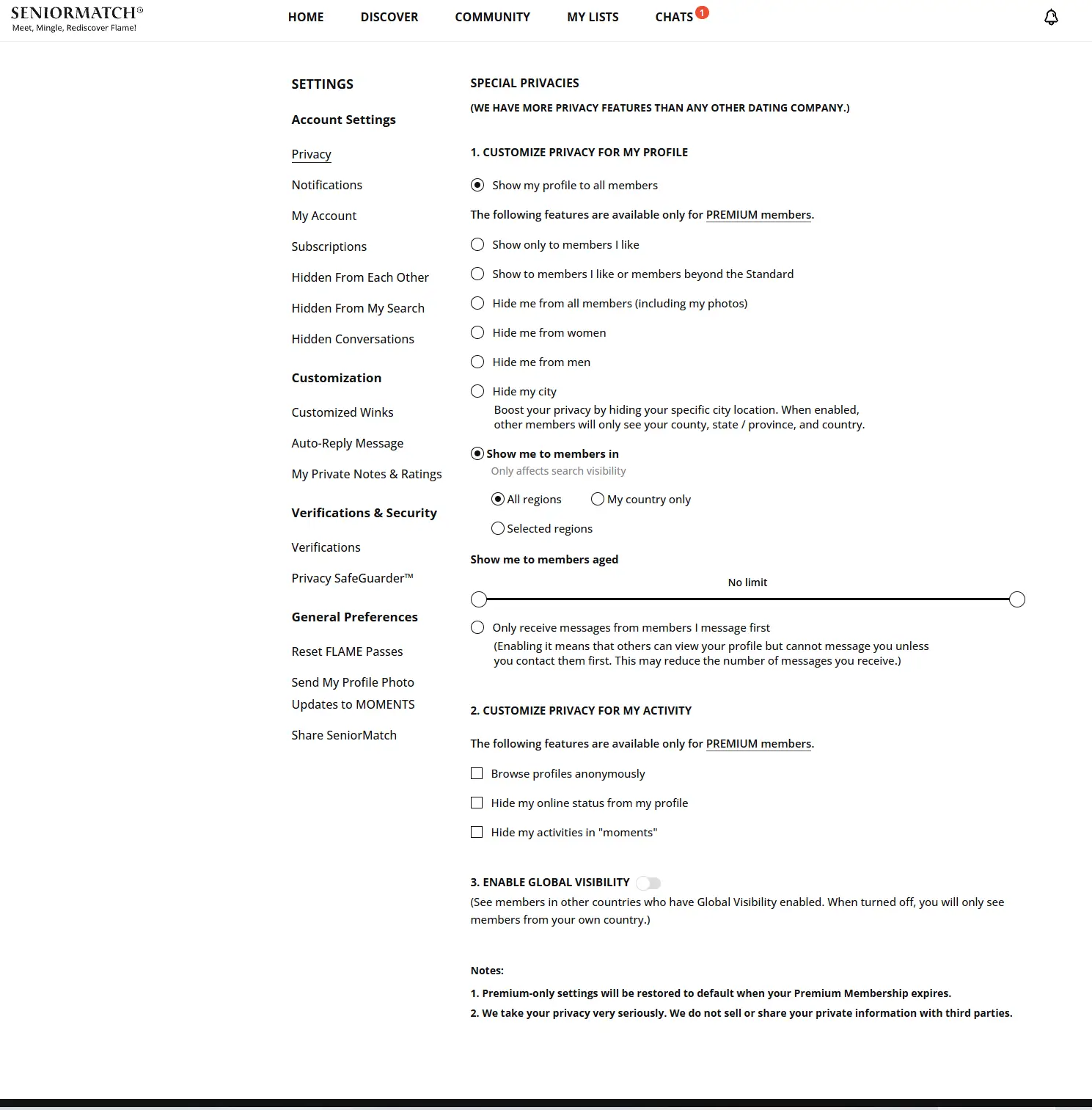
Paid status buys tool privileges: advanced filters, read receipts, and incognito browsing. It does not conduct background investigations, credit audits, or moral evaluations. If you are debating whether to upgrade your own account, read our full breakdown of what you can actually do on dating sites for free before paying.
5. Transitioning Offline: Rules for the First In-Person Meeting
When you transition from an engaging chat to an actual date, your safety strategy shifts from protecting your bank account to protecting your physical autonomy.
People get into vulnerable situations not because they lack common sense, but because they hesitate to set firm boundaries out of fear of “ruining the mood” or seeming overly paranoid. Let go of that fear. Anyone worth dating will actively respect your caution.
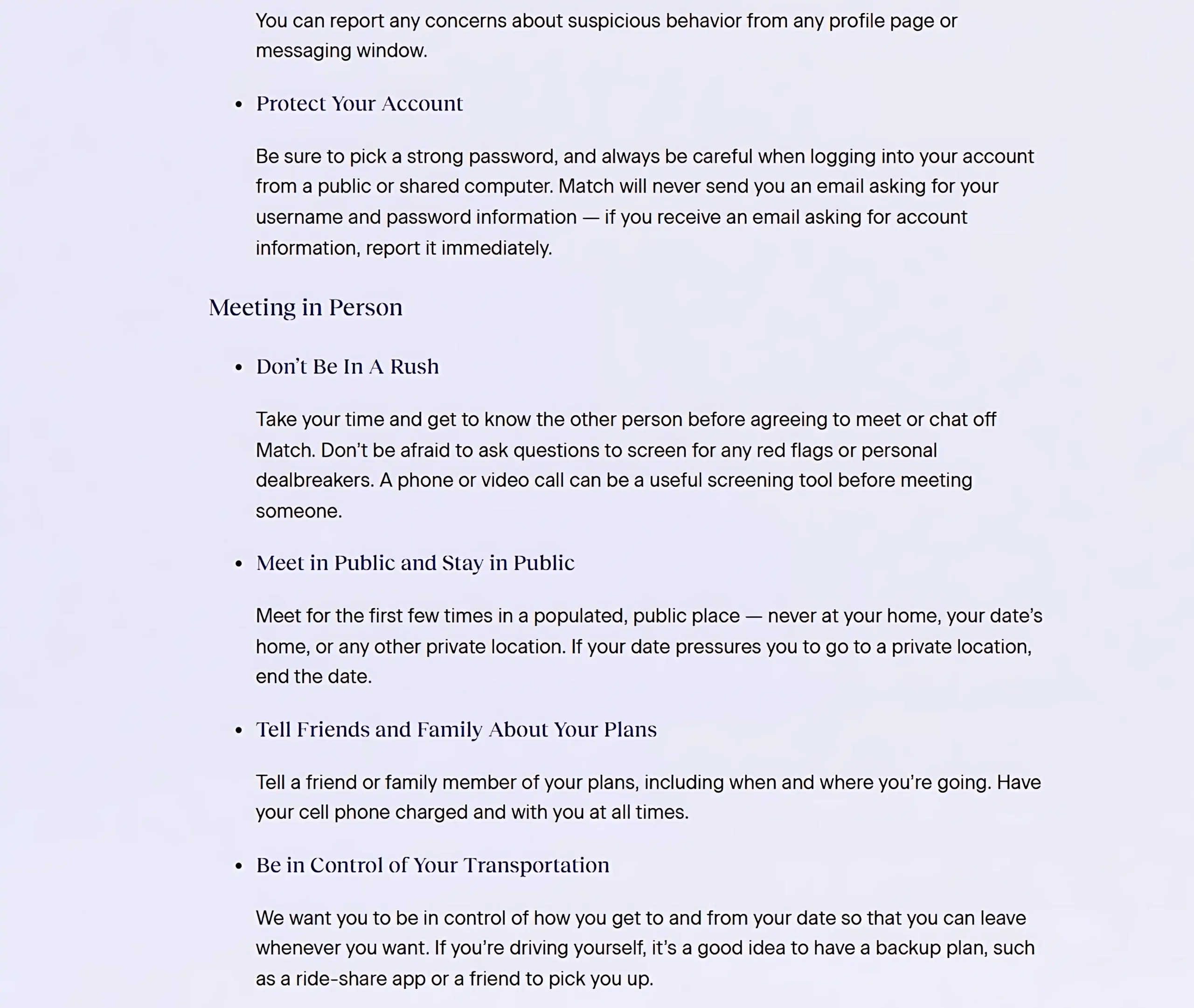
Follow these non-negotiable rules for dates one and two:
- The Coffee / Drink Baseline: Keep the first meeting short, daytime or early evening, in a bustling, public venue. Avoid secluded trail walks, private dinner parties, or hotel lounges. If the chemistry feels off, a coffee date can end gracefully in thirty minutes.
- Control Your Own Wheels: Never let a first date pick you up at your home, and never accept a ride in their car. Drive yourself, take the subway, or order your own Uber. You must always retain the power to stand up, settle your tab, and leave immediately without relying on their cooperation.
- Establish a Friction Contact: Text a close friend the date’s name, profile screenshot, phone number, and exact location. Agree on a specific check-in time (e.g., 8:30 PM). If plans suddenly change and your match suggests heading to a second, quieter venue, text your friend the updated location before leaving the first room.
6. The Zero-Tolerance Financial Hard Stops
Let us make this as clear as human language allows: there is zero legitimate reason for anyone you met on a dating app to ask you for financial assistance or investment participation. None. Ever.
Scammers rarely start by asking for money outright. They use two common narrative angles:
- The Manufactured Crisis: A sudden medical emergency, a passport held hostage at customs, an frozen corporate wire, or broken equipment on an offshore job site. They promise to repay you tenfold the moment their funds clear.
- The Exclusive Opportunity: The “Pig Butchering” model that caught my friend Mark. They appear financially self-sufficient, claim to trade crypto or commodities, and frame their advice as an act of love—helping you make money so you two can build a life together.
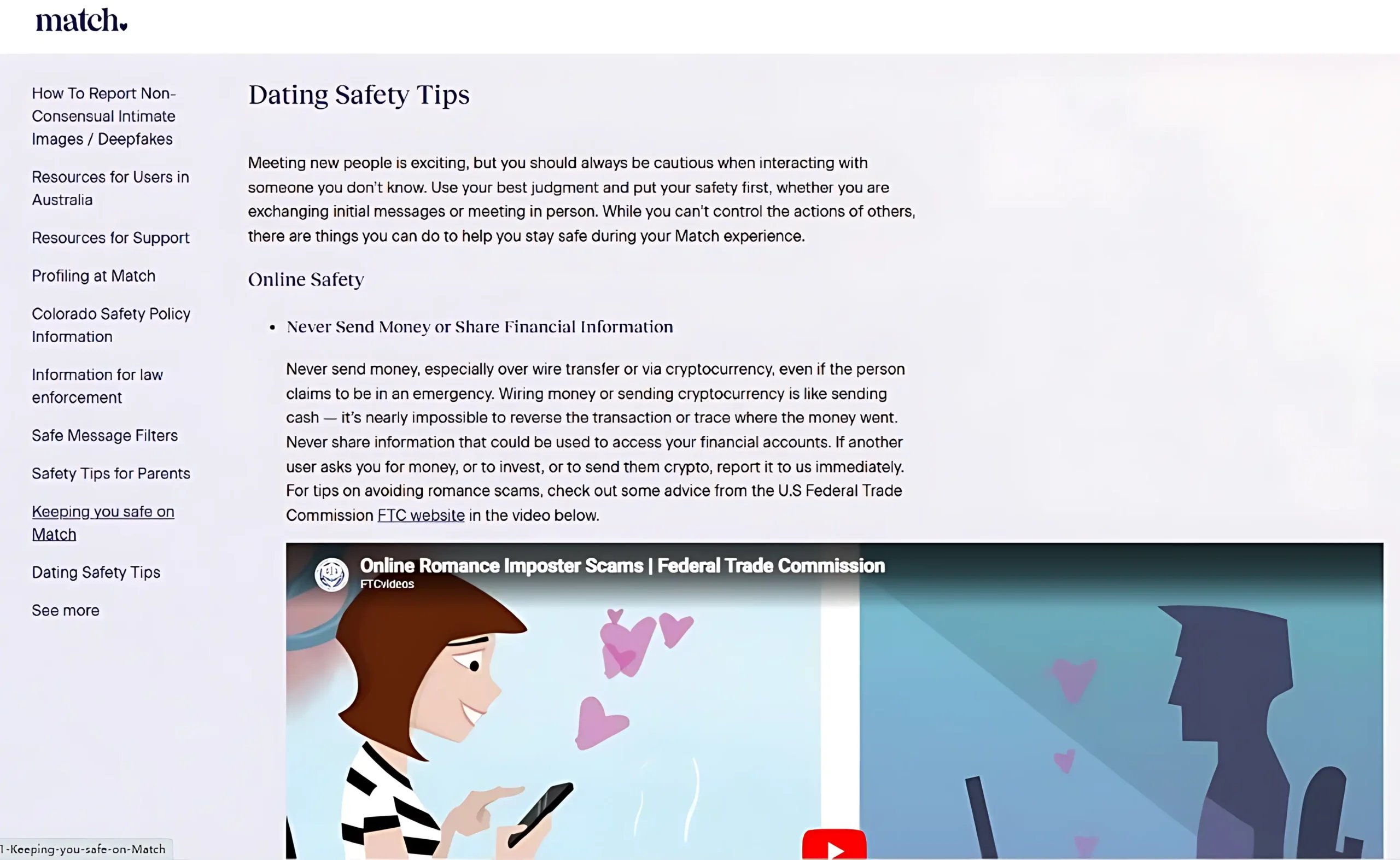
Both the Federal Trade Commission (FTC) and the FBI’s Internet Crime Complaint Center report billions lost annually to romance scams. If any online romantic interest mentions crypto, wire transfers, gift cards, emergency cash, or investment apps, stop talking. Do not argue. Do not attempt to trap them. Block them across every platform, report the profile to the dating service, and close the door.
7. The 60-Second Reality Check
Before you tap send on your personal number, agree to leave the dating app, or head out the door for a first date, take one quiet breath and run through these six questions:
- Have I kept my workplace, neighborhood, and children’s details out of this conversation?
- Did they respect my preference to stay on the dating app for a few days without throwing a guilt trip?
- Are they rushing intimacy and emotional commitment faster than what is natural for two strangers?
- Am I trusting them simply because their profile has a blue checkmark or a paid subscriber badge?
- Has there been any mention—subtle or direct—of money, crypto, investments, or sudden personal hardship?
- Do I have an independent ride home and a friend who knows exactly where I am sitting tonight?
Official consumer protection references:
- Federal Trade Commission: Spotting and Avoiding Romance Scams
- FBI Romance Scam Guidance
- Match Official Safety Documentation
Security practices and platform tools evolve continually. Reviewed and verified for September 2026.
Frequently Asked Questions
Why do scammers want to move to WhatsApp so quickly?
Because major dating platforms deploy background text-filtering algorithms that automatically flag financial keywords like crypto, wire, and investment. Moving to WhatsApp removes those AI safety tripwires and eliminates in-app chat evidence.
Can someone with a verified photo badge still be a scammer?
Yes. Photo verification only confirms that an account owner matched a pose during a brief selfie check. It does not verify moral intentions, financial honesty, or prevent fraudsters from operating through purchased or compromised accounts.
Are paid dating sites safer than free dating apps?
Paid platforms weed out low-effort casual spammers, but organized romance syndicates happily pay monthly membership fees as an ordinary operating cost. Treat a paid badge as a feature toggle, never as a character reference.
What should I do if a match makes me uncomfortable or asks for money?
Terminate contact immediately without confrontation. Take screenshots of relevant messages, block the account across all channels, and submit a detailed report through the dating app’s moderation center so their account can be reviewed.

Related Reviews & Guides
Explore our independent audits, pricing breakdowns, and relationship guides: