

Editorial Disclosure: TopDatingFinder is reader-supported. When you sign up through links on our site, we may earn an affiliate commission at no extra cost to you. Mentions of dating services are based on the provider’s public pages and our published reviews, not on a hands-on test in this article.
See our affiliate disclosure.
The biblical equally yoked meaning comes from 2 Corinthians 6:14, where Paul tells believers not to be “unequally yoked together with unbelievers.” In dating, many Christians take it to mean choosing a partner who shares your faith in Christ and is heading in the same spiritual direction, so you can build a life together without pulling against each other.
Key takeaways
- The biblical image is two oxen sharing one yoke: they need to walk at the same pace in the same direction.
- Many churches apply the passage to dating and marriage as “date another believer”; traditions differ on specific details.
- Being equally yoked does not require identical denominations, matching personalities, or spiritual perfection.
- The clearest indicator is how faith shapes everyday priorities and decisions, not just outward religious labels.
- Talk about faith early and honestly, and seek wise counsel from mentors or pastoral leaders when unsure.
In this article
You may have heard the phrase “equally yoked” in a sermon or from married Christian friends. Now that you are dating, you want to know what it means in practice: does your partner need to be at the exact same spiritual point, and what if you like someone with different beliefs?
Understanding what it means to be equally yoked is not about judging others. It is about discerning whether two people can pull together in the same direction without constant spiritual friction. Here is the biblical background, how churches apply it to dating, common misconceptions, signs of alignment, and questions to ask early on.
1. What Does “Equally Yoked” Mean? (Biblical Equally Yoked Meaning in 2 Corinthians 6:14)

The equally yoked meaning starts with a farming picture: a yoke is a wooden beam placed over two draft animals so they can pull a plow together. Both animals must share a similar stride and strength. If mismatched animals are harnessed together, they exhaust each other and plow a crooked furrow.
Many commentators connect this metaphor to the Old Testament instruction in Deuteronomy:
Thou shalt not plow with an ox and an ass together.
Deuteronomy 22:10 (KJV)
An ox and a donkey have different strides and strength; forcing them into one harness causes distress to both.
In the New Testament, Paul drew on this familiar picture when writing to Corinth:
Be ye not unequally yoked together with unbelievers: for what fellowship hath righteousness with unrighteousness? and what communion hath light with darkness?
2 Corinthians 6:14 (KJV)
Paul addressed spiritual alliances between believers and non-believers. While the passage does not use the word “dating,” churches historically applied it to marriage—the deepest partnership two adults form. Because dating leads toward marriage, the principle extends to dating relationships. Today, “equally yoked” describes partnering with someone who shares your faith in Christ and walks in the same spiritual direction.
2. What Is the Practical Equally Yoked Meaning in Dating?
Many churches teach that a Christian should date another believer. Because dating fosters emotional attachment and leads toward marriage—an intentional goal shared by daters on many dating sites for marriage—evaluating spiritual alignment early protects both people from future heartbreak.
Others emphasize that being equally yoked goes beyond a shared label. If faith anchors your week while your partner treats it as an occasional social background, friction can still arise. Being yoked together requires shared devotion, not just matching vocabulary.
Traditions differ across denominational lines. Some churches see no obstacle when a Baptist and a Methodist date, provided both hold core orthodox convictions and agree on where to worship. Others encourage resolving theological differences—such as baptism or child-rearing—before committing. Discuss these questions openly with your pastor or mentor.
To build a life together, two people must agree on where they are heading, as the Old Testament prophet observed:
Can two walk together, except they be agreed?
Amos 3:3 (KJV)
Couples who are equally yoked benefit from a shared foundation. They pray together, worship as a household, and share a moral compass during major life decisions. In grief or hardship, shared hope brings comfort without division. While it does not prevent conflict, it provides a solid anchor.
3. What the Equally Yoked Meaning Does Not Imply
The phrase is often misunderstood in dating circles. Keeping these distinctions in mind prevents unnecessary rigidity and false expectations:
- Not the same denomination by default: Strong Christian marriages often bring together believers from different church backgrounds who agree on core beliefs.
- Not spiritual perfection: It does not mean waiting for a partner without doubts, nor being at identical points in spiritual growth.
- Not identical personalities or interests: Shared faith leaves room for different temperaments and hobbies. An introvert and an extrovert can be deeply aligned.
- Not a reason to judge others: Dating only fellow believers is a personal boundary about partnership, not a judgment on someone else’s character or worth.
- Not a checklist of church activities: Attendance numbers do not measure the heart. Alignment shows in humility, love, and everyday character.
4. 7 Key Signs of the True Equally Yoked Meaning in a Relationship
Look at how faith shows up in everyday decisions and conversations. The table below outlines common areas of alignment:
| Area | What being equally yoked can look like | Worth talking about if… |
|---|---|---|
| Faith in Christ | Both view faith in Jesus as life’s anchor, not just an inherited tradition. | One partner treats faith as optional or expresses that it holds little meaning. |
| Church and community | Both value belonging to a local church and attend together. | One person avoids church or prefers you attend alone. |
| Prayer and Scripture | Comfortable praying together and discussing Scripture. | Bringing up prayer or Scripture consistently causes discomfort. |
| Marriage and family | Shared vision for a Christian marriage and raising children in faith. | Opposing views on whether children should be raised in church. |
| Money and generosity | Shared biblical view on stewardship and charitable giving. | Deep resentment toward charitable giving or church financial support. |
| Physical boundaries | Mutual, agreed-upon boundaries for physical affection and purity in dating. | One person repeatedly dismisses or pushes past the other’s stated boundaries. |
| Handling conflict | Willingness to apologize, forgive, and practice reconciliation. | Prolonged silent treatments or using spiritual guilt in arguments. |
No couple matches perfectly in every area from day one. The points in the “Worth talking about” column are prompts for honest conversations, not instant deal-breakers.
Physical boundaries deserve their own conversation, and many couples set them together with a mentor or pastor.
5. Questions to Test the Equally Yoked Meaning Early On

You do not need an interrogation on a first date, but waiting months to discuss convictions leads to avoidable pain. Between the second and fifth dates, bring up these open questions naturally:
- “What role does faith play in your everyday life right now?”
- “How did you come to faith, and what does it look like for you these days?”
- “Do you want to be part of a church together if this gets serious?”
- “How would you want to raise kids when it comes to faith?”
- “What does a Christian marriage look like to you?”
- “Is there anything about faith you’re still working through?”
Ask these questions to learn, not to interrogate, and answer them with equal honesty.
When two people are unequally yoked, differences rarely cause friction on early dates. Friction emerges later around defining choices: weekends, finances, facing trials, and raising children. While couples with differing beliefs can care for each other, the inability to share one’s core spiritual life often creates quiet, persistent loneliness.
What if you’re dating someone who doesn’t share your faith?
If you are currently dating someone whose spiritual convictions differ from yours, handling next steps requires honesty and care:
- Be honest about what your faith means to you: Explain early why Christ matters to you and how faith guides your choices, before emotional attachments deepen.
- Listen to where they are: Respect your partner’s autonomy. Never pressure, lecture, or make faith a condition for dating.
- Understand why pastors caution against “missionary dating”: Dating someone to convert them places unfair pressure on both people and often breeds resentment.
- Get wise counsel: Talk with your pastor, a mentor, or Christian friends who can offer prayerful perspective.
- Make a decision you can live with: If you realize you are pulling in different directions on core values, parting ways with kindness is an act of integrity.
If spiritual beliefs are ever used to justify control, shame, emotional pressure, or intimidation, step back and speak with a trusted friend, pastor, or professional counselor.
7. Where to Meet Christians Who Value the Equally Yoked Meaning
If you want to meet someone who shares your convictions, look where shared values are naturally present:
- Local church communities: Attend services regularly and join small groups or singles ministries.
- Community service: Volunteering in outreach projects reveals character naturally.
- Conferences and retreats: Faith-centered gatherings connect you with believers beyond your home church.
- Friend introductions: Let trusted friends know you are open to thoughtful introductions.
If you’d like to widen your circle online, our guide to the best Christian dating apps compares options built for believers. If you are re-entering dating after the end of a marriage, our guide on Christian dating after divorce walks through healing, pastoral counsel, and spiritual readiness.
Web • iOS • Android
ChristianCafe
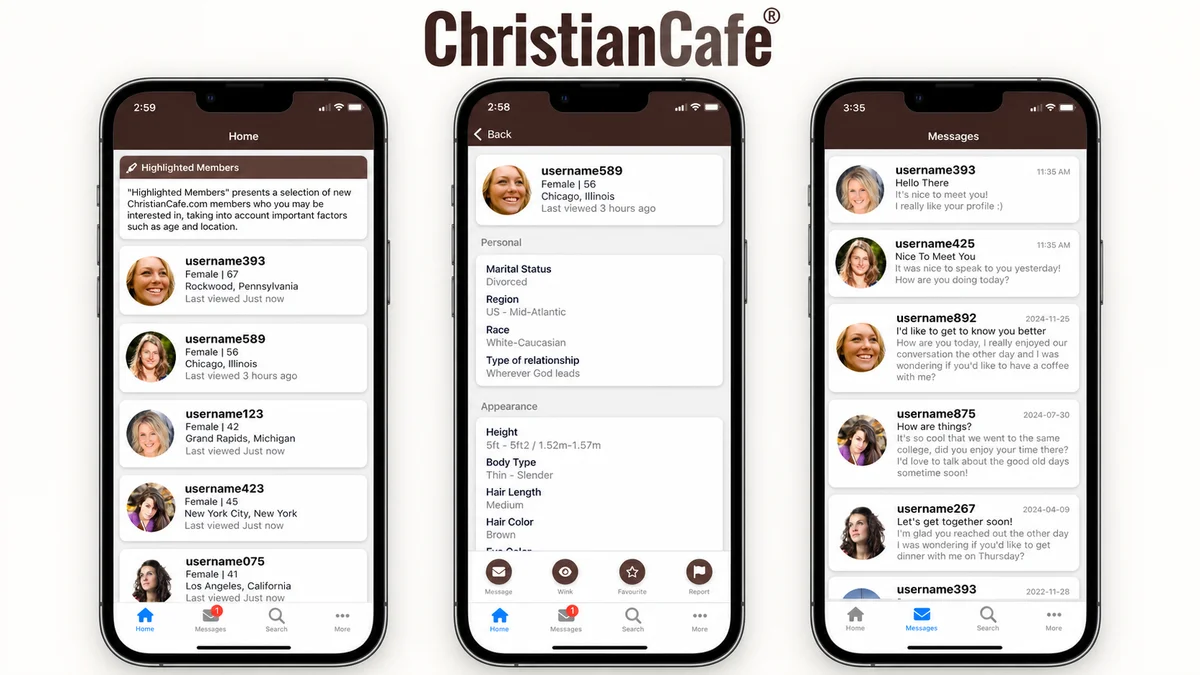
If you’d like to meet other believers online, ChristianCafe is a Christian dating site that has been running since 1999 and describes itself as Christian owned. Based on its homepage, new members can communicate free during a 10-day trial. For more detail, see our ChristianCafe review.
Visit ChristianCafe →
Affiliate link
- Christian Owned
- Since 1999
- 10-Day Free Trial
Free 10-day trial advertised · Checked Nov 15, 2026; terms can change
Whichever site you use, our online dating safety checklist covers the basics before you meet in person.
8. Frequently Asked Questions: Equally Yoked Meaning
What does equally yoked mean in simple terms?
In simple terms, being equally yoked means partnering with someone who shares your faith in Christ and moves in the same spiritual direction. The image comes from two oxen sharing one yoke: when pulling forward together with shared purpose, they work smoothly without fighting each other.
Where does “equally yoked” come from in the Bible?
The phrase comes from 2 Corinthians 6:14 in the King James Version, where Paul warns believers not to be unequally yoked with unbelievers. Commentators connect it to Deuteronomy 22:10, which prohibited plowing with an ox and donkey together because mismatched strength caused painful strain.
Is it a sin to date a non-Christian?
Churches and believers hold differing views. Many pastors teach that Christians should only date fellow believers, since dating leads toward marriage and Scripture cautions against unequally yoked covenants. Because convictions vary across church traditions, it is best to discuss your situation with your pastor.
Does equally yoked mean the same denomination?
Not necessarily. Many pastors say that couples from different denominations, such as Baptist and Presbyterian, can be equally yoked if they share core historical Christian beliefs. However, some traditions advise discussing differences in baptism, governance, and child-rearing before committing to marriage.
Can you be unequally yoked with another Christian?
While 2 Corinthians 6:14 specifically addresses partnerships between believers and non-believers, many Christians use the phrase to describe two believers with divergent spiritual priorities. If faith anchors your daily life while your partner treats it as an occasional social routine, significant relational friction can still develop.
What are the benefits of being equally yoked?
Couples who are equally yoked share a foundational spiritual bond. They can pray together, worship as a household, and rely on the same biblical values when navigating money, parenting, and careers. In times of hardship, shared faith provides comfort and enduring hope without causing spiritual division at home.
How do you know if you’re equally yoked?
You know by watching how faith shows up in daily routines, moral choices, and future priorities, rather than relying on labels. Look for mutual comfort with prayer, regular church involvement, readiness to forgive after arguments, and shared expectations regarding marriage, finances, and how to raise future children.
What if I’m already married to someone who doesn’t share my faith?
If you are already married to a non-believer, the New Testament addresses your situation in 1 Corinthians 7. Christian leaders encourage spouses in spiritually mismatched marriages to remain faithful, love their partner unconditionally, and reflect Christ with patience and grace. Speaking with a pastor or counselor provides valuable support.

More relationship advice
Looking for grounded perspectives on modern dating, setting boundaries, and building healthy connections? Explore our full collection of articles in the Relationship Advice Hub.