
Editorial Disclosure: TopDatingFinder is reader-supported. When you buy through links on our site, we may earn an affiliate commission at no extra cost to you. Mentions of programs, books, or coaching are based on the publisher’s or provider’s public sales page, not on a hands-on test.
As an Amazon Associate I earn from qualifying purchases.
See our affiliate disclosure.
Asking yourself why is my girlfriend pulling away is one of the most stressful when your girlfriend pulls away, she is often stressed, feeling unheard, or unsure about the relationship. Don’t flood her with texts or demand answers. Give her a little room, then ask one calm, specific question, such as “You’ve seemed distant lately. Is something on your mind?” Listen fully before you defend yourself, then respond to what she says.
Key takeaways
- You can’t know why she’s distant by guessing. You find out by asking once and listening.
- More texts and more pressure usually push her further away.
- Listen to the whole answer before you explain or defend yourself.
- Small, steady effort over weeks rebuilds closeness better than one big gesture.
- If she wants to end it, respect that. Your dignity matters too.
In this article
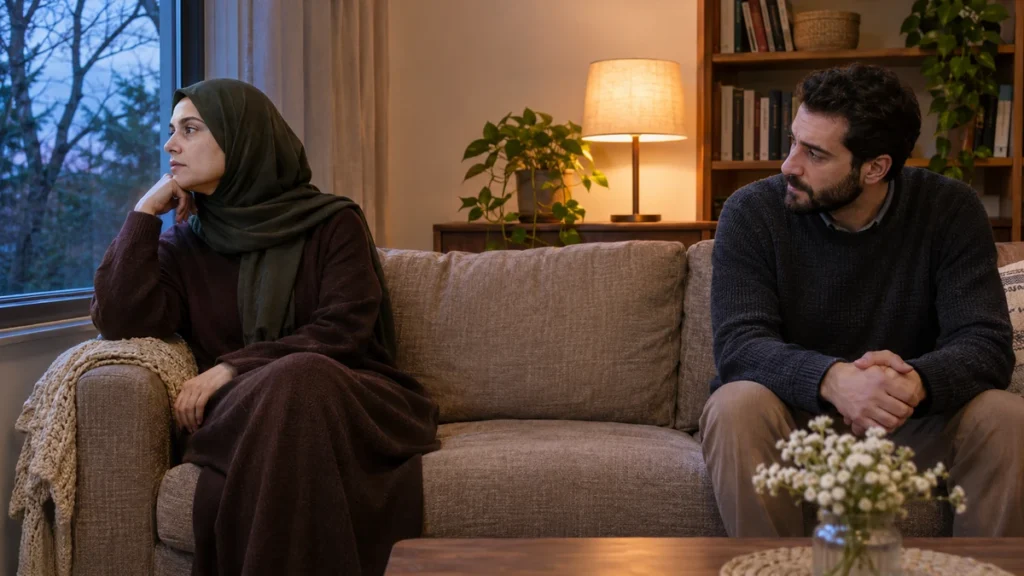
She used to call on her commute home, text you during the day, and look forward to weekends together. Lately, her replies have dropped to short words like “ok.” She cancels plans or seems tired, and when you talk, her attention stays on her phone. You find yourself staring at your phone and asking: why is my girlfriend pulling away?
Emotional distance is unsettling, but guessing what is happening in her head usually leads to panic and reactions that push her further away. This guide outlines common reasons women step back, how to tell a busy stretch from withdrawal, mistakes to avoid, exact words to start a calm conversation, how to handle her answer, and how to respond with dignity if she decides to end things.
1. Root Causes: Why Is My Girlfriend Pulling Away?
When trying to understand why is my girlfriend pulling away, common causes fall into distinct categories. You do not need to guess beforehand; this table helps you prepare for a calm conversation, not diagnose her.
| Possible reason | What it can look like | What usually helps |
|---|---|---|
| Stress outside the relationship | Exhausted from work or health; quiet, but not hostile. | Ask what support she needs; lighten her load without demanding energy back. |
| Feeling unheard or taken for granted | Stops sharing her day; feels explaining her view is pointless. | Listen first; acknowledge feelings; change one specific behavior. |
| Something specific you did | Coldness began abruptly after an argument, broken promise, or comment. | Acknowledge the event directly, own your part without excuses, and give her time. |
| Unsure about the relationship | Avoids future plans and commitment talks; affection drops. | Initiate a calm check-in; listen openly to doubts; accept an honest answer. |
| Needing space or personal autonomy | Pulls back after the relationship gets more serious; needs solitary time to protect her sense of self. | Give space warmly; keep your own friendships and goals without treating space as rejection. |
| The relationship has become routine | Conversations revolve only around chores and logistics; dates feel routine. | Plan a low-pressure activity; create relaxed time where problems are not discussed. |
If the distance started after something you said or did, the conversation starts with owning it. See our guide on how to win her back after hurting her.
Sometimes withdrawal is not about the relationship. When someone faces personal burnout or grief, emotional energy contracts. Recognizing outside stress keeps you from jumping to panic when asking why is my girlfriend pulling away.
2. Why Is My Girlfriend Pulling Away vs. Just Busy?
A central question is whether she is pulling away or managing a heavy schedule. Before asking why is my girlfriend pulling away, evaluate whether a work deadline or family emergency is draining her bandwidth.
To distinguish between a temporary crunch and emotional distance, observe patterns across several weeks:
- Duration: Has this lasted several weeks, or does it match a temporary deadline?
- Exclusivity: Is she quiet with everyone, or warm with friends while cold to you?
- Initiative: Does she reach out when free, or are you initiating everything?
- Sharing: Does she share what drains her, or give clipped, closed answers?
- Presence: When together, does she relax, or maintain emotional walls throughout?
A busy stretch usually has a clear cause and end. Distance that lasts for weeks and targets only your dynamic is a pattern worth addressing calmly.
3. What NOT to Do When Asking Why Is My Girlfriend Pulling Away
When emotional distance appears, anxiety can prompt behaviors that feel protective but almost always make the problem worse. Avoiding common pitfalls protects the relationship from unnecessary strain.
Here is what not to do when you notice her pulling back:
- Do not flood her with texts: Repeated messages asking “What’s wrong?” turn anxiety into pressure.
- Do not hover: Dropping your hobbies, routines, and friends to monitor her replies creates over-availability and amplifies pressure.
- Do not make accusations: Saying “You’ve changed” triggers defensiveness and shuts down honesty.
- Do not retaliate with coldness: Waiting hours to reply turns an emotional gap into a power struggle.
- Do not manufacture jealousy: Dropping hints about other options is manipulative and destroys trust.
- Do not snoop: Checking messages or location violates basic privacy and fuels paranoia.
- Do not bring this up during fights, late at night, or after drinking: Emotional topics require a clear head, not exhaustion.
- Do not ask her friends: Involving her inner circle avoids direct communication and creates awkwardness.
All of these reactions increase pressure. When cornered, her reflex is to pull further away. Giving her breathing room creates the safety needed to speak honestly.
How to talk to your girlfriend when she’s pulling away
Effective communication does not require a dramatic confrontation. The goal is simply to open a door so she feels safe speaking, using four steps:
- Pick a calm moment: Choose a private, unhurried time. Talking during a walk or while cooking feels easier than a formal sit-down.
- State what you noticed without blame: Describe concrete observations rather than interpreting motives. Stating what you see keeps defenses low.
- Ask one open question: Ask a single direct question and then stop speaking. Avoid stacking multiple questions.
- Listen all the way through: Let her finish without interrupting or defending yourself. Reflect back what she said to confirm understanding.
Here are four realistic opening scripts you can adapt:
- General distance: “You’ve seemed a bit far away the last couple of weeks, and I miss you. Is something on your mind?”
- If you suspect it involves something you did: “I’ve been wondering if I’ve done something that’s bothering you. I’d rather hear it than guess.”
- If she is overwhelmed by stress: “It looks like you’ve had a lot going on. Is there anything I can take off your plate, or do you just need some quiet time?”
- If she previously said “fine” but distance continues: “I know you said everything’s fine, and I don’t want to push. I just still feel some distance, and I care about us. I’m here when you want to talk.”
If she says “nothing is wrong” but stays distant, avoid cross-examining her. Giving her room to process demonstrates emotional stability.

What to do after she answers
Once you ask your question, her reply gives you genuine information. How you respond determines whether you resolve the distance or deepen it.
The table below outlines common responses, what they often mean, and constructive next moves:
| She says… | What it often means | Your next move |
|---|---|---|
| “I’m just really stressed.” | Her outside stress is real and depleting. She lacks energy for extra social demands. | Ask what practical help she needs; lower social expectations and help with daily tasks. |
| “I don’t feel heard.” / “You’re always on your phone.” | She has felt disconnected over time and withdrew as self-protection. | Do not defend yourself; pick one concrete behavior and change it consistently for weeks. |
| “I need some space.” | She feels crowded or overwhelmed and needs time alone to reset. Not always an ending. | Ask what healthy space looks like; honor her boundaries, and agree on a check-in time. |
| “I’m not sure about us.” | She has genuine doubts about long-term fit or shared goals. | Thank her for honesty; ask what she is unsure about, and give her time to think. |
| “Nothing’s wrong.” (yet distance persists) | She feels conflicted, fears conflict, or is not yet ready to share her doubts. | Accept her words calmly for now; step back, and check in gently a few days later. |
| “You did something that hurt me.” | A specific action or broken trust caused the withdrawal. | Acknowledge the hurt directly without deflecting blame; focus on steady accountability. |
These scenarios represent common patterns, but every person is unique. What matters most is responding to what she tells you rather than reacting to worst-case assumptions.
How to reconnect if she’s open to it
If she is open to working through the distance, do not expect closeness overnight. Connection returns through steady, small efforts repeated over weeks.
Here are practical ways to re-establish warmth:
- Create a daily, screen-free check-in: Spend ten minutes talking without phones, focusing on feelings rather than errands.
- Respond to small bids: When she shares an observation, pause and give full attention.
- Take initiative on shared tasks: Notice chores she usually handles—dinner, errands, or cleaning—and complete them without being asked.
- Plan a thoughtful, low-pressure date: Organize an outing from start to finish so she avoids planning, choosing a quiet setting to talk.
- Follow up on small details: Ask about meetings or appointments she mentioned.
- Maintain your own friends and interests: Continue investing in your hobbies, fitness, and friendships. A healthy relationship requires two grounded people.
Rebuilding connection requires steady reliability. When you show up with patience and consistency, warmth has room to return naturally.

Further reading — Hold Me Tight (Sue Johnson): Based on its published description, the book is built around a series of conversations that help partners understand the emotional patterns that pull them apart and how to reach for each other again. It may suit readers who want a structured way to talk about distance once the first conversation has happened.
Check price on Amazon Affiliate link

What if she wants to break up?
Sometimes the honest conversation brings an outcome you hoped to avoid: she wants to end the relationship. In that moment, arguing or negotiating will not change her mind and will leave you feeling depleted.
The most grounded response is calm acceptance. One sentence you can say is:
“I don’t want this to end, but I hear you. Thank you for being honest with me.”
Accepting her choice preserves self-respect. Step back, stop pursuing, and focus on your well-being—lean on close friends, protect daily routines, and give yourself time to process.
If she has not walked out completely but feels halfway out the door, our roadmap on how to save your relationship outlines what panic habits to stop immediately and how to listen without defensiveness.
If, after some time apart, you want to understand whether trying again makes sense, our guide on how to get her back after a breakup covers what helps and what backfires.
Understanding how to know if getting back together is right can help you evaluate whether the underlying issues are truly fixable before making any attempt to reconnect.
If she has already ended things and you want a structured, self-paced program for men, Get Your Ex Back: Super System (Affiliate link) by Dan Bacon of The Modern Man is a video course that, based on its sales page, focuses on fixing what went wrong before reaching out; the page lists a 30-day money-back policy.
If there is controlling behavior, threats, or if either partner feels unsafe, seek support from a trusted professional or a specialized resource first.
8. Frequently Asked Questions: Why Is My Girlfriend Pulling Away
Why is my girlfriend suddenly distant?
A sudden shift usually stems from severe outside stress, feeling unheard, or developing doubts about the future. Because external pressure and emotional withdrawal look identical from the outside, you cannot know which applies without asking calmly once.
Should I give her space when she pulls away?
Yes. Stepping back is usually wiser than crowding her. That does not mean vanishing; it means pausing repeated check-ins, focusing on your own routine, and giving her room to breathe before having a conversation.
How do I ask my girlfriend what’s wrong without pushing her?
Pick a quiet moment when neither of you is rushed. State a neutral observation, ask one open question, and listen completely without interrupting or defending yourself.
Does pulling away mean she’s going to break up with me?
Not necessarily. Many people pull back when overloaded by work, family, or burnout. But if the distance lasts for weeks and she consistently avoids plans, she may be questioning whether to stay.
What should I do if she says she needs space?
Clarify what space looks like in practice so you both share clear expectations. Honor her preferred boundaries completely, and agree on a reasonable time to touch base so neither of you is left in limbo.
How long should I wait before talking to her about it?
Give a quiet spell a week or two before starting a talk. If the withdrawal persists beyond that and affects your connection, it is healthy to bring it up gently rather than letting frustration build.
Should I keep texting her if she’s pulling away?
Keep messages warm, infrequent, and unpressured. Avoid rapid follow-ups or emotional paragraphs. One clear, thoughtful message leaves the door open without demanding an immediate performance.
What if she says nothing’s wrong but still feels distant?
Accept her words without arguing, but observe her actions over the next few days. If distance remains, give her room and check in gently once more a few days later.

More relationship advice
Looking for grounded perspectives on modern dating, setting boundaries, and building healthy connections? Explore our full collection of articles in the Relationship Advice Hub.