

By your early thirties, dating burnout hits differently. It is rarely about a lack of options. It is about how much time and energy you waste figuring out that someone across the screen wants an entirely different life than you do. You spend an entire evening setting up an account, swipe through dozens of polished faces, finally start a conversation, and realize within three messages that they are just passing time.
An app cannot fix modern dating, and paying for a premium subscription will not make someone emotionally ready for commitment. What a useful platform can do, however, is enforce enough transparency and profile depth upfront so you stop wasting weeks on fundamentally incompatible people.
For this guide, we walked through current U.S. account flows for Hinge, eharmony, Match, Coffee Meets Bagel, Bumble, and Tinder. We did not grade them on marketing slogans or self-reported success rates. We looked at the real friction: what they force you to fill out, how aggressively they blur photos behind paywalls, and where each app actually fits in a serious dating search.
Bottom line: Hinge is the sharpest modern baseline for profile-first dating; eharmony is a slow, structured filter for people ready to invest upfront; Match suits daters who want manual search control. Coffee Meets Bagel offers curated pacing with strict location signals; Bumble lets you screen intent at high volume; and Tinder works for serious relationships only if you have the discipline to filter out 90% of the noise yourself.
The Quick Answer: Which Dating Style Fits You?
If you want an app that feels modern but actively forces people to complete their profile before they can even hit like, start with Hinge. If you are exhausted by casual browsers and want a lengthy questionnaire that weeds out low-effort users, pick eharmony. If you want to break away from algorithmic guessing and set granular criteria yourself, choose Match.
For deliberate pacing and strict guardrails against fake accounts, Coffee Meets Bagel is built for patience. Bumble works best when you want to filter a massive local crowd by explicit relationship intentions. And Tinder remains viable only if you treat it like an aggressive manual sorting task.
| Platform | Best Fit | What Stood Out in Walkthrough | The Reality Check |
|---|---|---|---|
| Hinge | Balanced & Profile-Led | Requires profile completion before liking; conversation prompts | Free daily likes run out quickly; tier upgrades get pricey |
| eharmony | Structured Commitment | Lengthy Compatibility Quiz weeds out casual tourists | Blurred profile photos on free tier; expensive lump-sum billing |
| Match | Self-Directed Search | Granular lifestyle, faith, and family preference filters | Ongoing messaging requires upgrading; mixed user intentions |
| Coffee Meets Bagel | Values & Low Burnout | Mandatory location rules; values-first profile depth | Smaller daily batch; occasional mobile interface bugs |
| Bumble | Active Intent Filtering | Mandatory photo verification helps prevent catfishing | Advanced intention filters require Premium subscription |
| Tinder | Maximum Local Volume | Massive user pool; explicit “Looking For” tags | Heavy casual noise; demands ruthless manual screening |
What Actually Makes an App Useful for Serious Dating?
It is easy to treat “serious dating” as a marketing badge that an app either displays or lacks. In practice, platform architecture dictates human behavior. An app becomes useful for long-term relationships through specific product choices:
- Onboarding friction: Does the app allow someone to upload one gym selfie and start matching in thirty seconds, or does it force them to articulate who they are?
- Visible intent signals: Can you see whether someone wants marriage, children, or casual dating before you waste a Friday night on a drink?
- Interaction mechanics: Does the core loop encourage mindless left-right swiping, or does it require commenting on a specific thought or photo?
- Paywall fairness: Can you assess local compatibility before pulling out a credit card, or does the platform aggressively hide basic information?
Looking past dating toward marital commitment? Read our focused companion guide on the Best Dating Sites for Marriage to evaluate matching tools explicitly tuned for long-term matrimonial intent.
1. Hinge: Best Overall Balance for Serious Dating
Hinge is the easiest default recommendation for adults in their twenties and thirties, not because its users possess superior character, but because its interface makes it difficult to hide behind a blank profile.
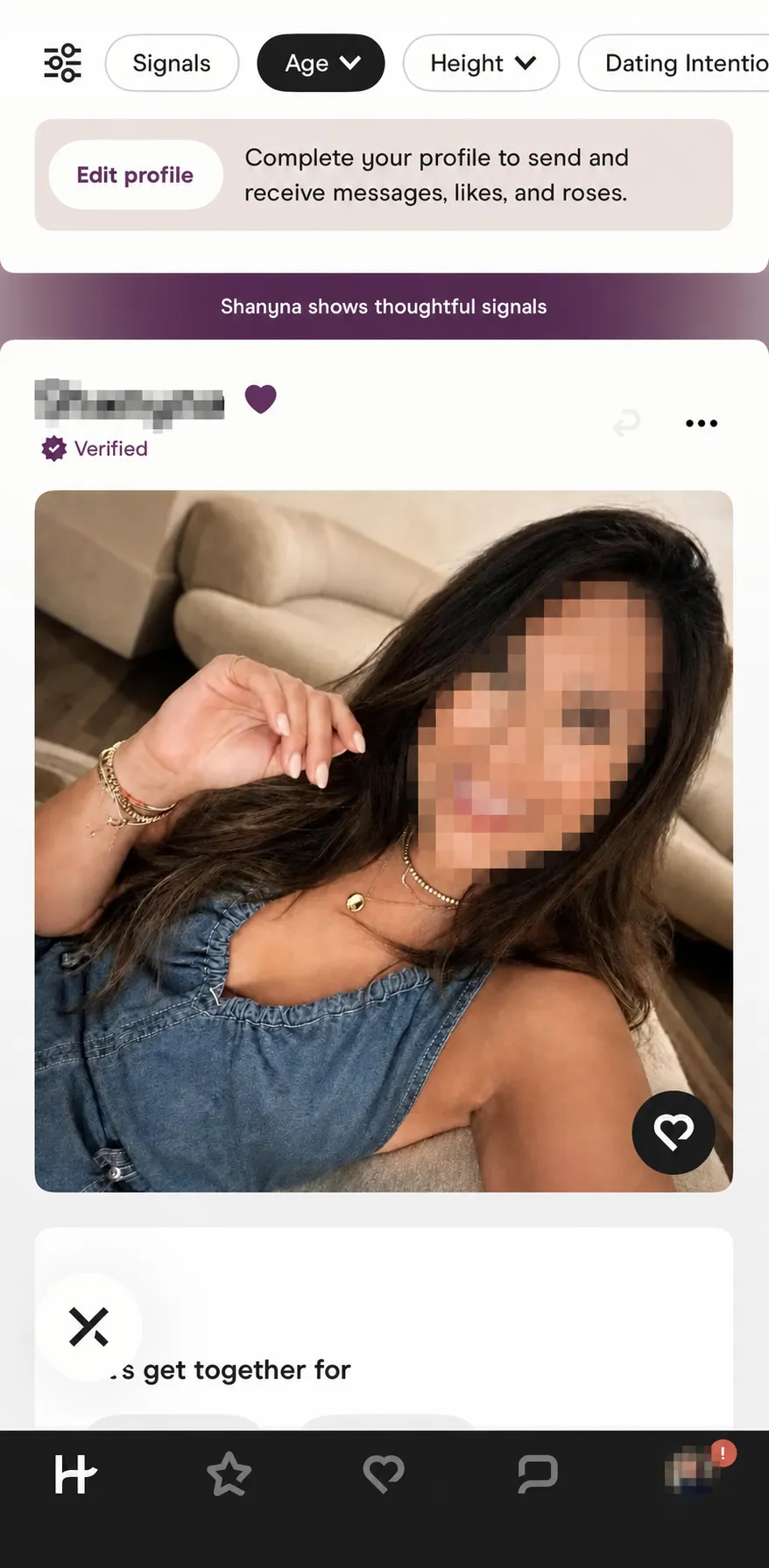
During our account walkthrough, one operational mechanic stood out immediately: you cannot simply create a shell profile and start sending likes. The interface effectively locks your ability to send hearts until your profile reaches a completion threshold. You must answer prompts, share lifestyle details, and specify dating preferences before the discovery engine opens up.
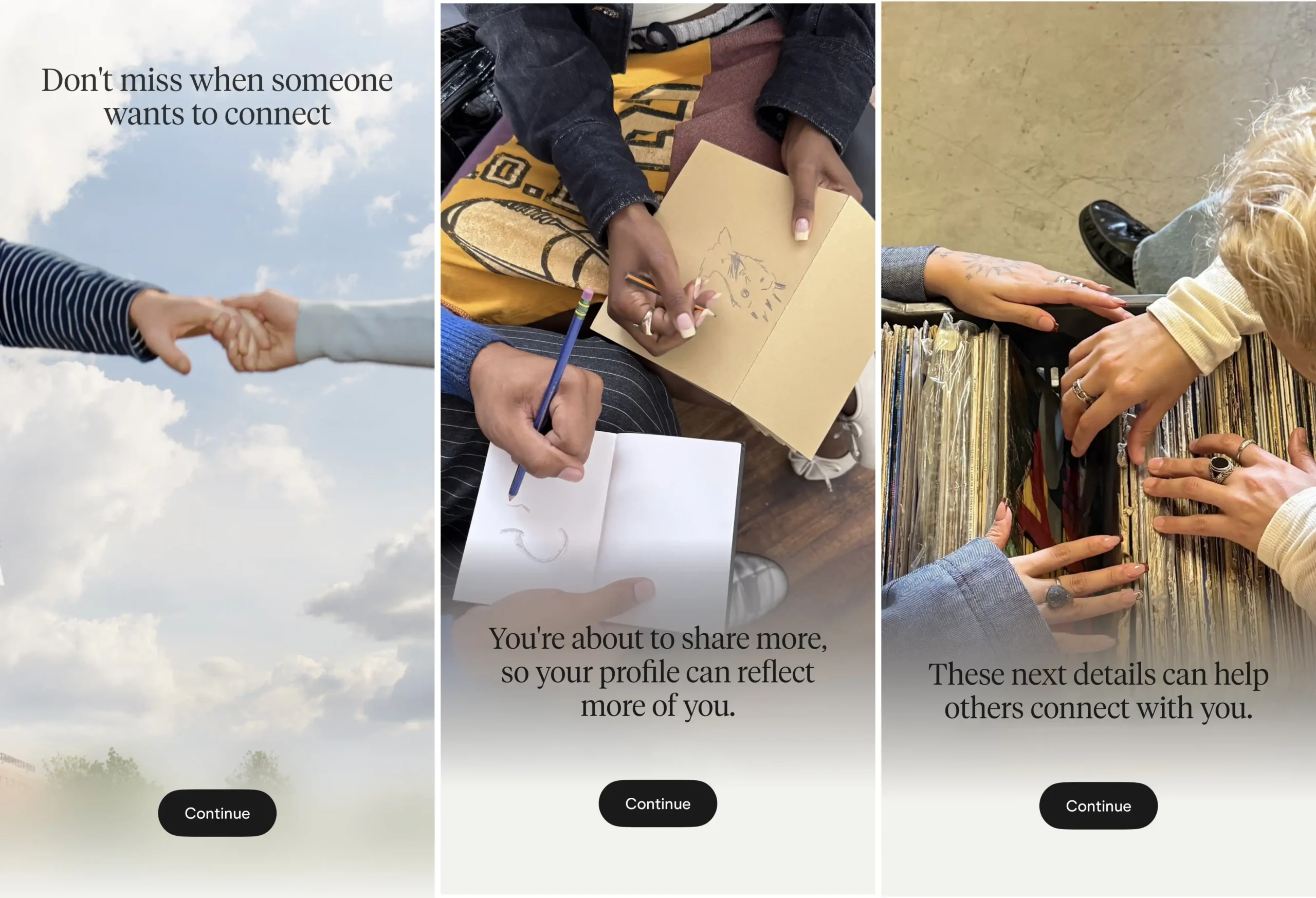
A practical warning from setup: take your orientation and dealbreaker preferences seriously from the very first minute. Hinge’s cold-start recommendation model treats your initial boundaries very literally. If you rush through setup or accidentally misconfigure your dating criteria, your early queue will feel wildly misaligned.
What makes Hinge genuinely work for serious dating is how likes are structured. You do not like an entire profile; you like a specific photo caption, a witty prompt response, or a voice note. That mechanic almost entirely removes the dreaded “hey” opening message, handing the other person an immediate conversational anchor.
Pros
- Profile setup forces enough depth to anchor a real conversation
- Likes tie directly to specific prompts rather than generic swipes
- Modern, clean interface without arcade-style gamification
Cons
- Daily free likes are capped tightly, requiring patience between batches
- Advanced lifestyle and family filters are locked behind Hinge+ and HingeX
2. eharmony: Best for Structured, High-Commitment Matching
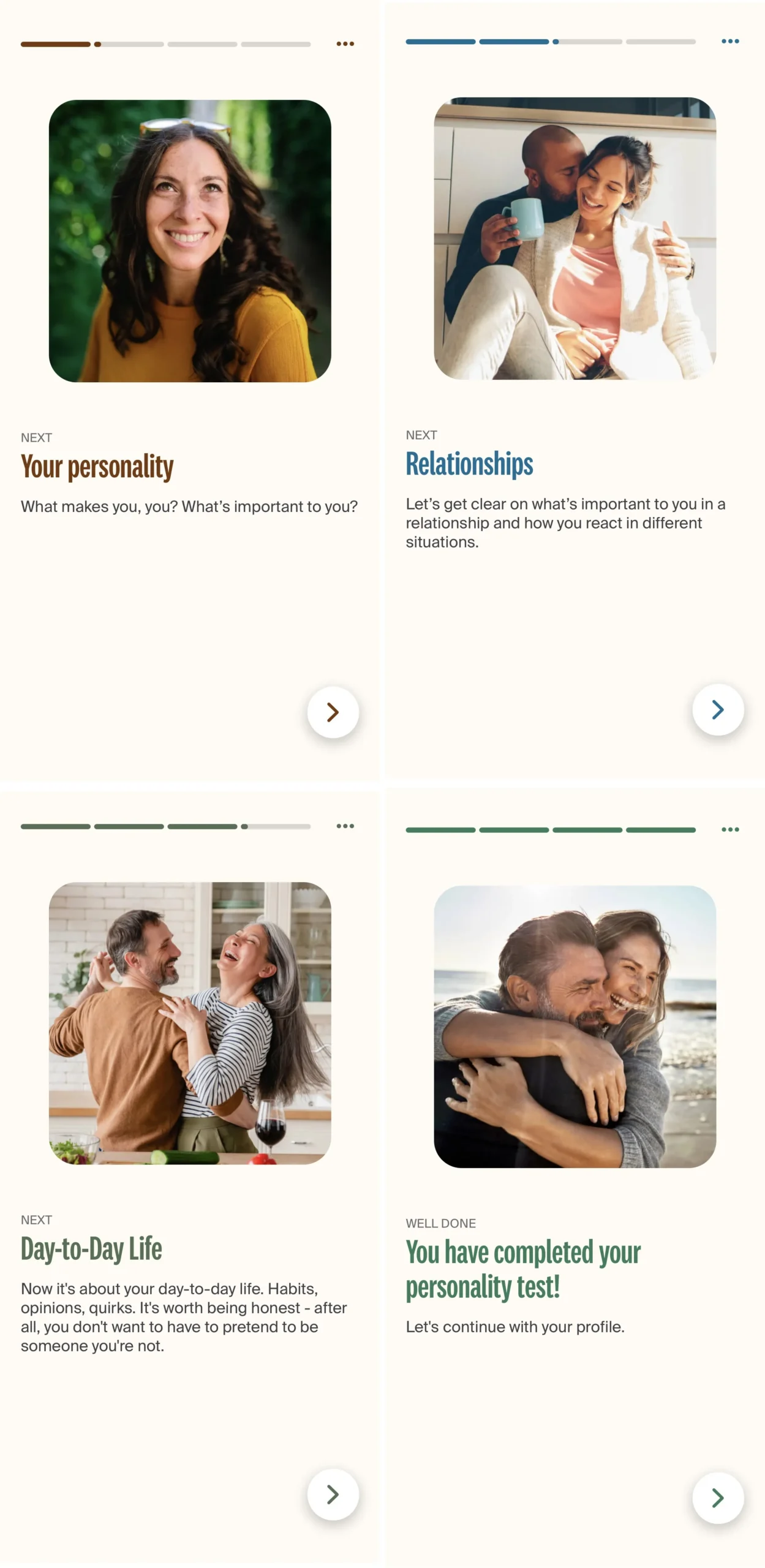
If Hinge feels like a modern cafe, eharmony is a formal sit-down dinner where you must complete an eighty-question inventory before you even reach the coat check. Its interface feels undeniably traditional, but for daters seeking marriage, that upfront friction is the primary value proposition.
The Compatibility Quiz requires twenty to thirty minutes of focused effort. It examines communication styles, conflict management, core values, and life goals. Casual swipers, bored browsers, and romance scammers do not sit through an eighty-question psychological assessment on a Tuesday evening. The friction serves as an intentional filter.
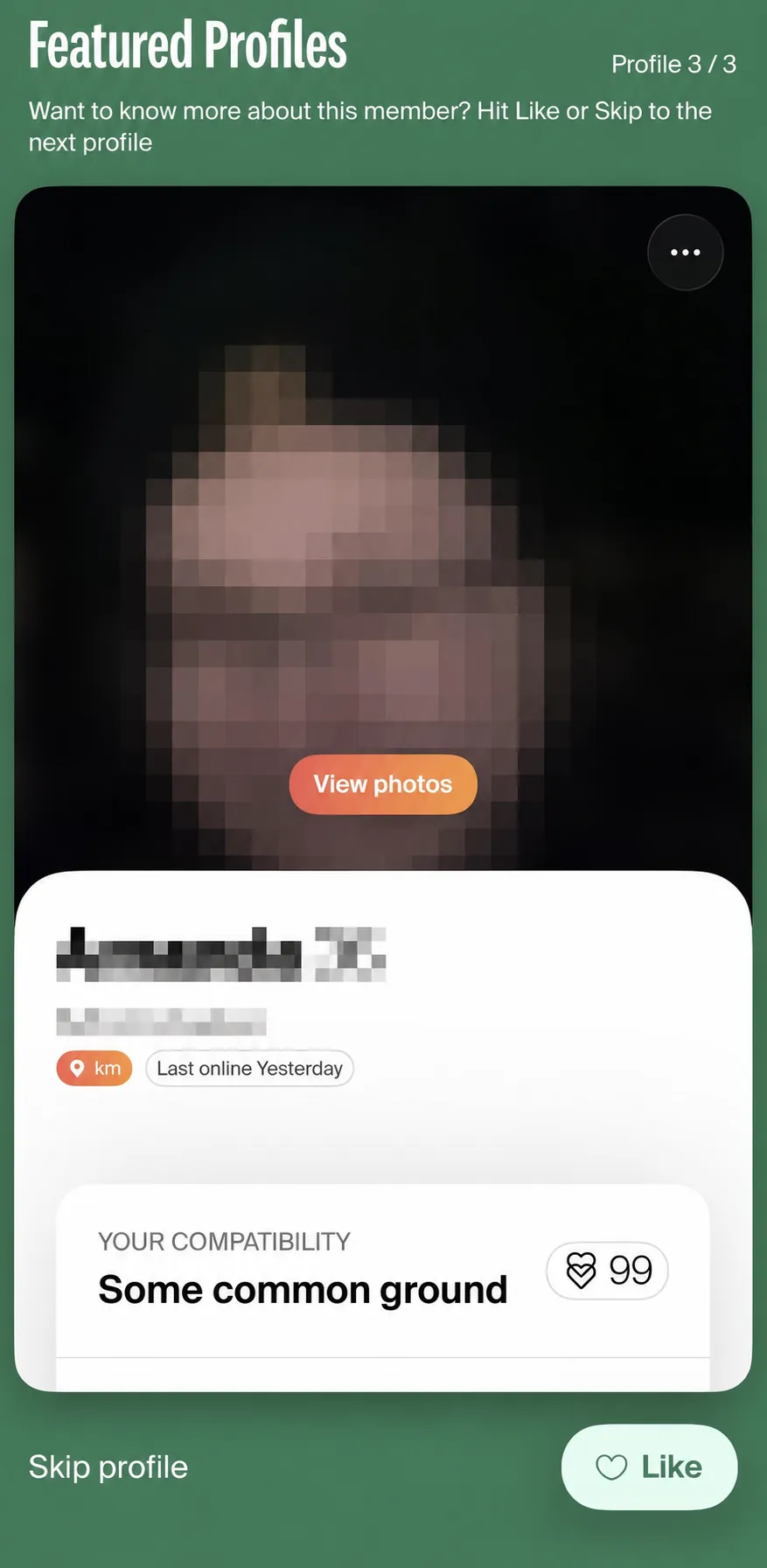
The Reality Check on Cost: Once you complete the quiz, the paywall arrives with zero subtlety. On a free basic account, profile photos are heavily blurred. You cannot see who you are looking at, and meaningful messaging is locked. To use the platform effectively, you must subscribe.
Do not believe anyone who describes eharmony as costing “the price of a cup of coffee.” While marketing materials often break pricing down to weekly amounts, eharmony typically bills in 6-, 12-, or 24-month commitments charged in large, lump-sum installments that run into hundreds of dollars. Furthermore, cancellations and refunds are subject to strict terms. Treat eharmony as a serious financial investment in your dating life, not a casual trial.
Pros
- High registration friction effectively weeds out low-effort accounts
- Matching algorithm prioritizes psychological and long-term values alignment
- Member base explicitly skews toward committed relationships and marriage
Cons
- Free tier is practically unusable due to blurred profile photos
- High upfront subscription cost with rigid multi-month billing cycles
- Thinner user density in smaller towns and non-metro areas
3. Match: Best for Self-Directed Filtering
Match remains a staple in online dating because it refuses to surrender your search entirely to an algorithm. Using Match feels like building your own targeted search engine rather than waiting for an app to guess your type.
Registration is straightforward. You bind an email, enter essential demographics, and can immediately begin browsing profiles, with the ability to enrich your bio later. For daters in their thirties looking to break out of routine social circles and meet people across different backgrounds, Match offers extensive demographic breadth.
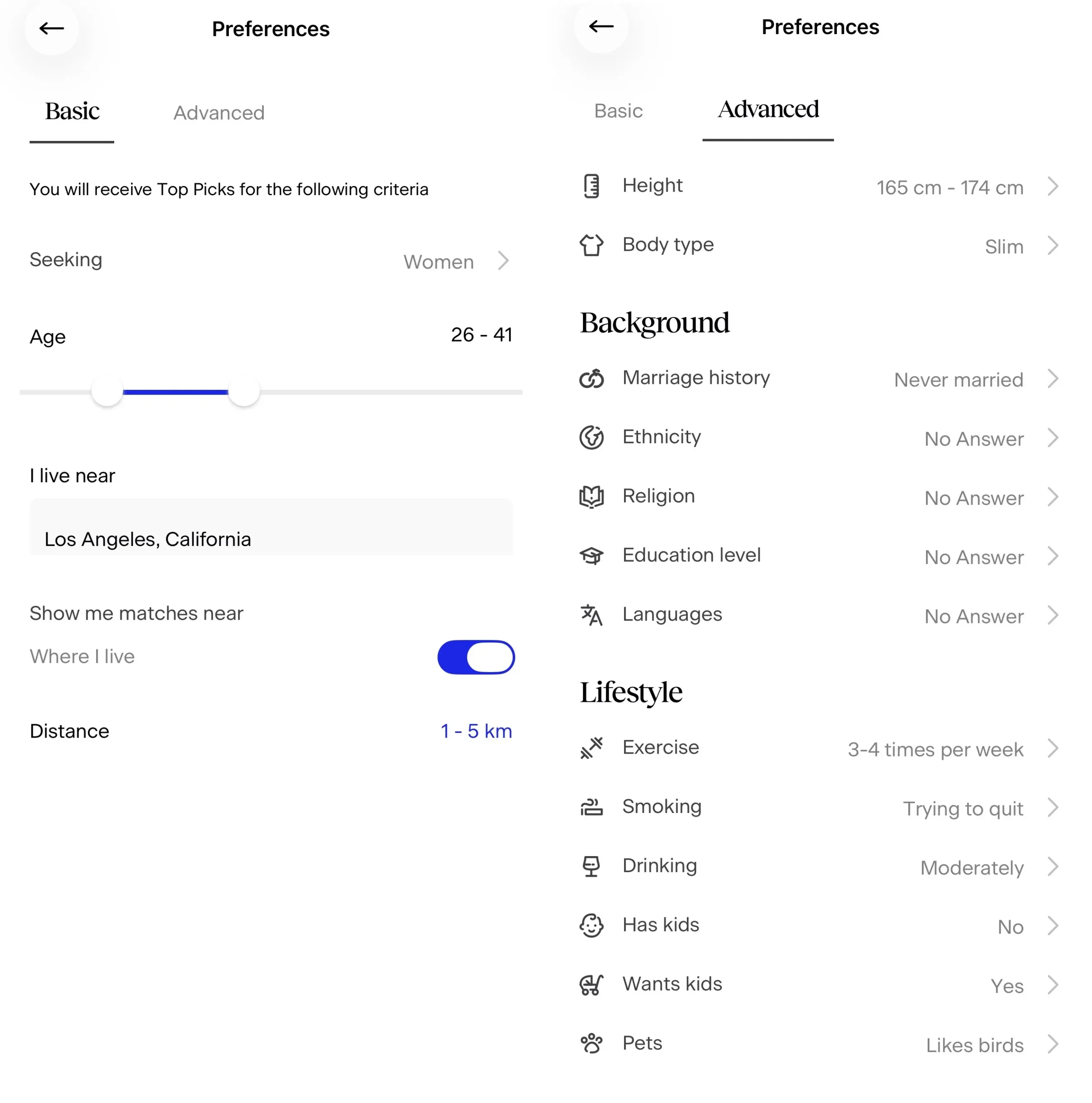
Basic Preferences cover age and location, but the real power lies in Advanced Preferences. You can filter by marital history, smoking habits, religion, education, whether someone has children, and whether they want more. If you already know your non-negotiables, setting these parameters early prevents painful mismatches months down the line. (For daters actively balancing childcare costs and custody schedules, see our curated roundup of the best dating apps for single parents.)
The Catch: While profile photos remain unblurred and the app encourages sending an initial greeting, seeing who liked you or maintaining ongoing two-way conversations almost invariably hits the subscription paywall. Match is like a well-stocked department store: window shopping is free, but you must pay before taking the conversation home.
Pros
- Granular manual filters give you full control over lifestyle criteria
- Profile photos and bios are unblurred from the first day of browsing
- Large, demographically diverse member base across all age groups
Cons
- Ongoing messaging requires a paid subscription
- Broad audience means you must actively screen for relationship intent
4. Coffee Meets Bagel: Best for Curated, Values-Led Dating
Coffee Meets Bagel (CMB) is built specifically for singles suffering from swipe fatigue. Instead of handing you an infinite stack of profiles, CMB delivers a curated batch of daily suggestions (your “Bagels”) each day at noon.
Onboarding is notably strict. During initial setup, CMB requires live mobile GPS location authorization. This verification hurdle deters bad actors who attempt to spoof local locations or run automated scam profiles from overseas. Setting up a deceptive account here requires genuine effort.
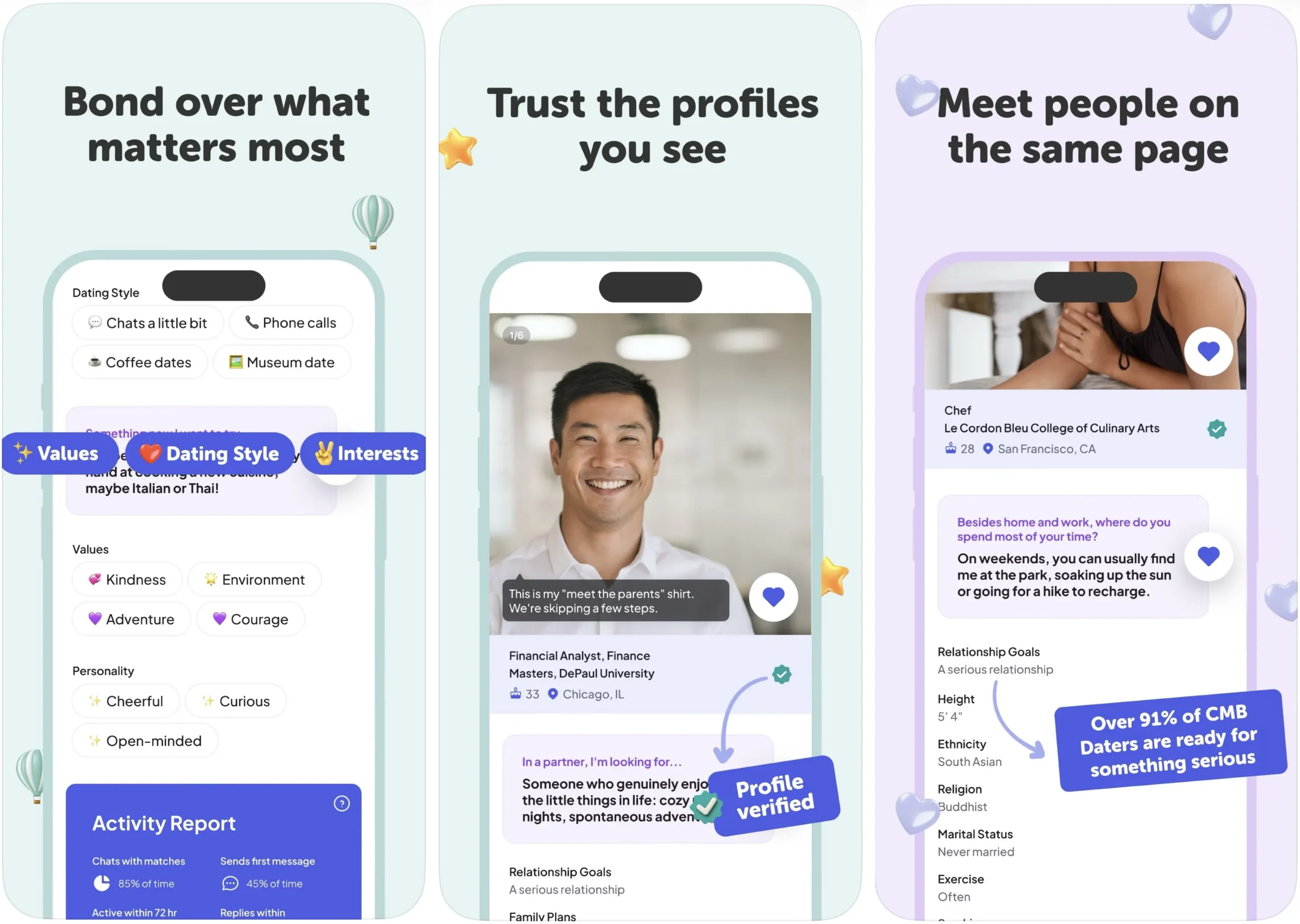
CMB profiles place relationship goals, values, and dating styles right below the photo carousel. You are far more likely to read about family orientation and personal ambitions than encounter a blank bio with an Instagram handle. The app encourages thoughtful evaluation over reflexive swiping.
The Tradeoff: The app occasionally experiences interface sluggishness or message syncing bugs, though major issues are generally patched quickly. More importantly, CMB relies on high user density. If you reside outside a major metropolitan hub, your daily batch of Bagels will dry up quickly.
Pros
- Strict onboarding and location verification create a higher trust baseline
- Curated daily batches prevent burnout and encourage reading profiles
- Strong concentration of career-oriented singles seeking committed partnerships
Cons
- Limited daily match volume outside tier-one metropolitan areas
- Mobile application occasionally encounters UI glitches and slow loading
5. Bumble: Best for Intent-Led Filtering at Volume
Bumble pairs the large user pool of a mainstream swipe app with meaningful identity guardrails. While account creation is relatively fast, Bumble enforces biometric Photo Verification—a live pose selfie matched against profile pictures. That requirement significantly cuts down on stolen photos and catfishing.
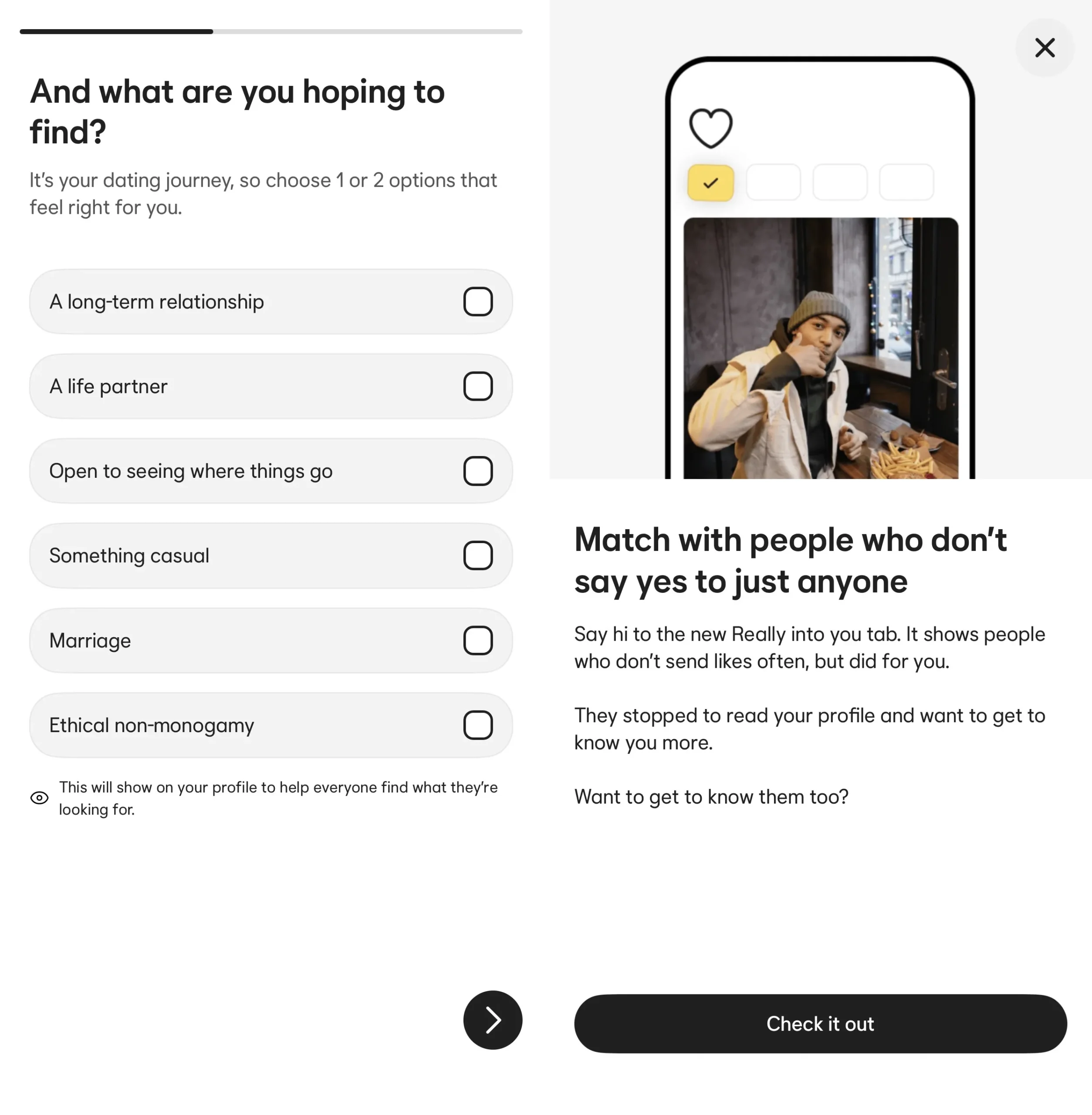
For serious daters, Bumble’s core asset is its explicit Relationship Goals badge. Members can publicly state whether they want a “Long-term relationship,” a “Life partner,” “Marriage,” or “Casual dating.” When you have zero patience left for ambiguous intentions, filtering specifically for people who openly declare long-term goals saves immense emotional energy.
The Tradeoff: In heterosexual matches, women must message within 24 hours or the connection expires. Furthermore, filtering out everyone who has not explicitly marked serious relationship goals requires upgrading to Bumble Premium. Free users still face a broad mix of intentions.
Pros
- Live photo verification provides effective defense against catfishing
- Massive, highly active user base in nearly every geographic area
- Explicit relationship intent badges eliminate early guessing games
Cons
- 24-hour match expiration rule creates artificial messaging pressure
- Advanced relationship goal filters are paywalled behind Bumble Premium
6. Tinder: Best for Maximum Reach (If You Can Filter Ruthlessly)
Writing off Tinder as purely a hookup app ignores current reality, but pretending it is built for romance is equally naive. The truth is simple: Tinder boasts the largest single pool of dating profiles in North America. The interface is lightning fast, photos are displayed cleanly, and onboarding requires verified phone and email credentials.
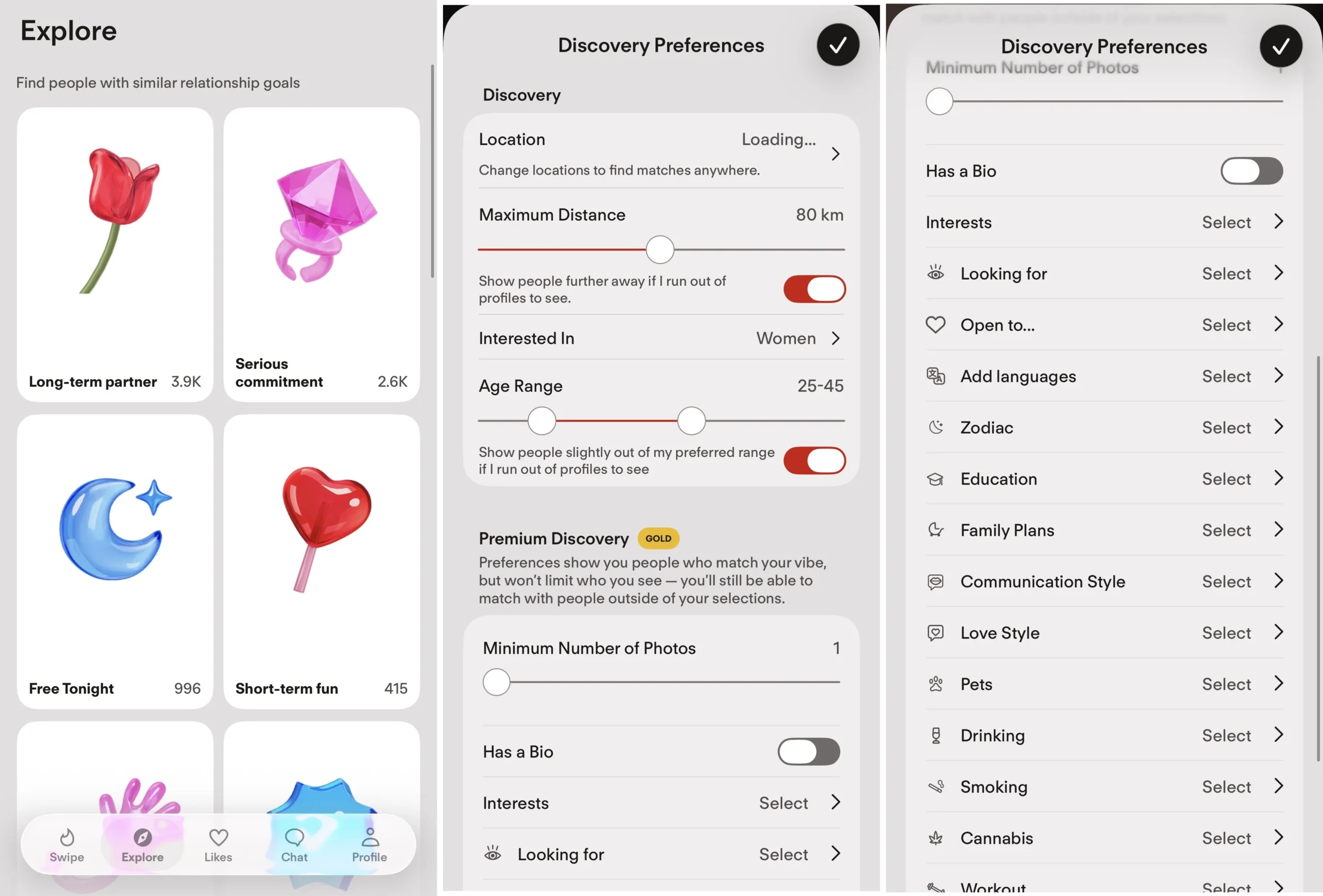
In our walkthrough of the U.S. flow, Tinder Explore prominently featured “Long-term Partner” and “Serious Commitment” portals right next to “Free Tonight.” People seeking committed partnerships are undeniably on the platform, often because smaller niche apps in their town ran out of users.
The Reality: Tinder requires ruthless personal discipline. You cannot afford to swipe right based on physical attraction while secretly hoping someone will change their mind about commitment. If a profile lacks bio context, omits relationship goals, or sends mixed signals, swipe left immediately. Furthermore, daily free likes are capped, and exceeding them triggers immediate subscription popups for Tinder Plus, Gold, or Platinum.
Pros
- Unmatched user volume ensures discovery queues never run empty
- Explicit “Looking For” tags allow disciplined users to target serious daters
- Straightforward mutual-matching system without artificial messaging restrictions
Cons
- Heavy percentage of low-intent, casual, or validation-seeking accounts
- Requires constant mental energy to manually filter out conversational noise
- Strict daily like limits push aggressive recurring subscription upsells
The Hard Truth Before You Pay: Profile Quality Is the Bottleneck
Here is an observation from years of auditing account flows: none of these apps can rescue a lazy, uncalibrated profile.
Every week, daters complain that online dating is rigged. They swipe for hours, send dozens of likes, receive zero replies, and conclude the platform is broken. Then they pull out a credit card, buy a premium subscription, and expect paid visibility to fix the problem.
Let us be blunt: some people send fifty likes a week and get deafening silence, while others secure two or three quality dates every week without spending a dime on upgrades. The difference is rarely a premium badge. The difference is your external presentation.
On any dating app, your photos and prompts represent your storefront. A serious, high-converting profile does not need professional modeling shots, but it demands honest care:
- Clear, current, well-lit photos where your eyes and natural smile are visible
- No confusing group shots where someone has to guess which person you are
- No dark, shirtless gym mirror selfies or sunglasses in every picture
- Prompt answers that showcase humor and personality, offering an easy hook for a stranger to start a conversation
Before you hand any dating platform $30 to $60 a month for more reach, polish the profile you are actually advertising. Paying for visibility when your profile is unappealing only amplifies rejection faster.
Does Paying Actually Make an App Better for Serious Dating?
Paying buys convenience, expanded filters, and time savings. It allows you to see who liked you first, removes daily like restrictions, and lets you narrow searches by lifestyle traits. What it will never buy is someone else’s emotional maturity, honesty, or readiness for a long-term relationship.
Treat paid memberships as access tools, not investments in a guaranteed romantic outcome. If a platform’s free tier functions well in your area, subscribing for three months to streamline filtering can make sense. But test the free version first. For a detailed breakdown of free-tier boundaries across major platforms, see our guide on what you can actually do on dating sites for free before paying.
A Quick Safety Reality Check
A stated relationship goal or a photo verification badge is a helpful operational signal, not a character reference. Genuine safety requires maintaining your own boundaries:
- Keep conversations inside the dating app until you have established basic trust; avoid moving to WhatsApp, Telegram, or SMS prematurely.
- Never send money, cryptocurrency, wire transfers, or gift cards to anyone met online, regardless of the emergency described.
- Plan first dates in public venues and let a trusted friend know your location.
For a complete pre-date screening process, review our Online Dating Safety Checklist and our guide on how to identify fake dating profiles.
The Bottom Line: Where to Start
There is no universal “best” dating app for serious relationships. The right choice depends on your patience and filtering preference:
- Start with Hinge if you want the best all-around balance between profile depth and modern app flow.
- Choose eharmony if you are dating explicitly for marriage, have the budget for substantial upfront billing, and want structure to deter casual users.
- Pick Match if you want direct control over specific lifestyle filters like children, faith, and habits.
- Use Coffee Meets Bagel for low-fatigue, values-first pacing; Bumble for screening relationship goals across an active crowd; and Tinder only if you have the discipline to filter aggressively.
Frequently Asked Questions
Is Hinge actually better than Tinder for serious relationships?
For most daters, yes. While Tinder offers a larger user base, Hinge requires profile completion before liking and ties interactions to specific prompts, which dramatically cuts down on low-effort swiping and empty openers.
Is eharmony worth the expensive subscription fee?
Only if you are focused strictly on marriage, live in a populated area with solid member density, and specifically want a financial barrier to weed out casual daters. If you want flexible browsing or are hesitant about long-term billing, its multi-month commitments are not worth the cost.
Can you find a serious relationship without paying for a dating app?
Yes. Apps like Hinge, Bumble, and Tinder allow you to match and message for free within their core loops. Paid tiers speed up filtering and visibility, but they do not improve personal compatibility or conversational chemistry.
Why do some profiles get dozens of matches while others get none?
Outside of geographic location, profile quality is the decisive factor. Blurry photos, bad lighting, empty bios, and negative prompt answers depress response rates far more than whether someone pays for a premium subscription.

Related Reviews & Guides
Explore our independent audits, pricing breakdowns, and relationship guides: