

Published under the pen name Julian Hayes.
The best dating sites for marriage should do more than filter for a “serious relationship.”
A person can genuinely desire an exclusive, committed partnership while having zero intention of ever entering a legal marriage. They may be firmly childfree, geographically rooted, or completely content cohabiting indefinitely without a marriage certificate. None of that makes them an unsuitable partner; it simply makes them incompatible with someone whose explicit goal is marriage.
This guide evaluates platforms on practical mechanics rather than marketing claims about “marriages created” or unverified success stories. A nationwide statistic reveals virtually nothing about whether a service will help you connect with viable partners in your area code.
How quickly can a platform help you confirm marriage intent, screen non-negotiable deal-breakers, and evaluate whether the local active pool justifies your investment?
Five practical criteria drive the selections below:
- Intent clarity: How explicitly relationship and marriage goals are stated and indexed.
- Deal-breaker control: The precision of filters covering children, faith, lifestyle, and relocation.
- Profile depth: Whether matching algorithms or profiles surface meaningful behavioral and values-based context.
- Demographic fit: Whether the user base aligns with specific life stages or core worldviews.
- Pre-paywall visibility: What you can verify about the active local pool before entering credit card details.
Using those criteria, the six core picks reflect distinct matching approaches. eharmony focuses on guided compatibility; Match prioritizes user-controlled search; EliteSingles targets career-focused professionals; OurTime serves singles over 50; and ChristianCafe and CatholicMatch build around shared religious foundations. Tawkify is included as an outsourced, human-led matchmaking alternative, and MillionaireMatch as an option for those prioritizing socioeconomic alignment.
Bottom line: No platform can promise a marriage. The right service simply surfaces long-term alignment and fundamental incompatibilities before you spend months dating the wrong match or commit to an unnecessary subscription.
Table of Contents
Is shared religious faith your foundational priority? For believers seeking marriage grounded in Christian values, review our comprehensive ranking of the 7 Best Christian Dating Apps.
Serious Relationship vs. Marriage: Two Distinct Searches
Conflating serious dating with marriage-oriented dating leads to misaligned expectations.
Someone looking for a serious relationship is typically seeking:
- Exclusive, monogamous dating.
- Emotional intimacy and consistent companionship.
- Indefinite cohabitation without formal legal contracts.
A marriage-minded search introduces foundational life questions that require earlier resolution:
- Is legal marriage an explicit goal?
- What are your family expectations (biological children, adoption, or childfree)?
- How are blended families, step-parenting, and previous divorces handled?
- What role will religious community play in your home?
- Is either partner willing to relocate for career or family needs?
- What is the target timeline between meeting and engagement?
A profile does not need to resolve these on day one, but the platform must provide the filters and context necessary to address them early.
Why Hinge and Bumble Are Not in the Core Six
Hinge and Bumble facilitate many successful marriages. They are not excluded because they are “casual”.
Rather, their core mechanics prioritize rapid, location-based swiping. They lack the deep psychological onboarding, granular database queries, or life-stage specialization offered by the platforms featured here. If you want a committed relationship but have no immediate marriage timeline, our dedicated serious dating apps guide is the better resource.
What Matters Most When Dating for Marriage
The five criteria above evaluate what a platform provides. The six factors below focus on what you should be able to evaluate in a potential partner before investing substantial time or money.
| Marriage Factor | What to Check |
|---|---|
| Marriage intent | Is marriage clearly part of the person’s long-term goal, rather than simply “something serious”? |
| Children | Existing children, future family plans, adoption, or a firm childfree preference. |
| Faith | Religion, denomination, level of practice, and the role faith would play in a future home. |
| Location | Realistic dating distance, local availability, and whether relocation is possible. |
| Compatibility | Personality, lifestyle, communication, career priorities, and other long-term expectations. |
| Access | What you can actually see, filter, evaluate, or message before paying. |
Quick Comparison: Best Dating Sites for Marriage
The six main picks solve different parts of the marriage-minded search. Use this table as a first-pass filter rather than a universal ranking.
| Platform | Best For | Marriage Advantage | Main Tradeoff |
|---|---|---|---|
| eharmony | Structured compatibility | Compatibility Quiz and guided match delivery provide more structured context | Minimal self-directed search flexibility |
| Match | Self-directed screening | Granular filtering across lifestyle, faith, family, and relationship criteria | You carry more of the vetting workload |
| EliteSingles | Career-focused professionals | Personality-led matching with career and education context | Narrower positioning than a broad mainstream platform |
| OurTime | Dating after 50 | More age-focused environment for later-life dating | Being 50+ does not guarantee remarriage intent |
| ChristianCafe | Christian marriage | Detailed faith, denomination, and church-related profile context | Narrower niche audience |
| CatholicMatch | Catholic sacramental marriage | Explicit Catholic and sacramental-marriage positioning | Highly specialized audience |
Premium Alternative — Tawkify
Best for: Busy individuals who want to outsource candidate sourcing and date coordination to a human matchmaker.
Tradeoff: A substantially different, higher-cost service model than a standard dating subscription.
Also Consider — MillionaireMatch
Best for: Daters who consider socioeconomic alignment or high net worth an important partner criterion.
Tradeoff: Financial standing does not confirm trust, compatibility, or readiness for marriage.
Mainstream Options: Compatibility, Search, and Career Fit
The first three options serve broader audiences, but they approach partner selection in very different ways: guided compatibility, self-directed filtering, and career-focused matching.
1. eharmony — Best for Structured Compatibility
Best For
Daters prioritizing structured psychological alignment who prefer guided matching over open, self-serve directory browsing.
Main Tradeoff
Restricted search autonomy; you cannot run open keyword searches across the full user directory.
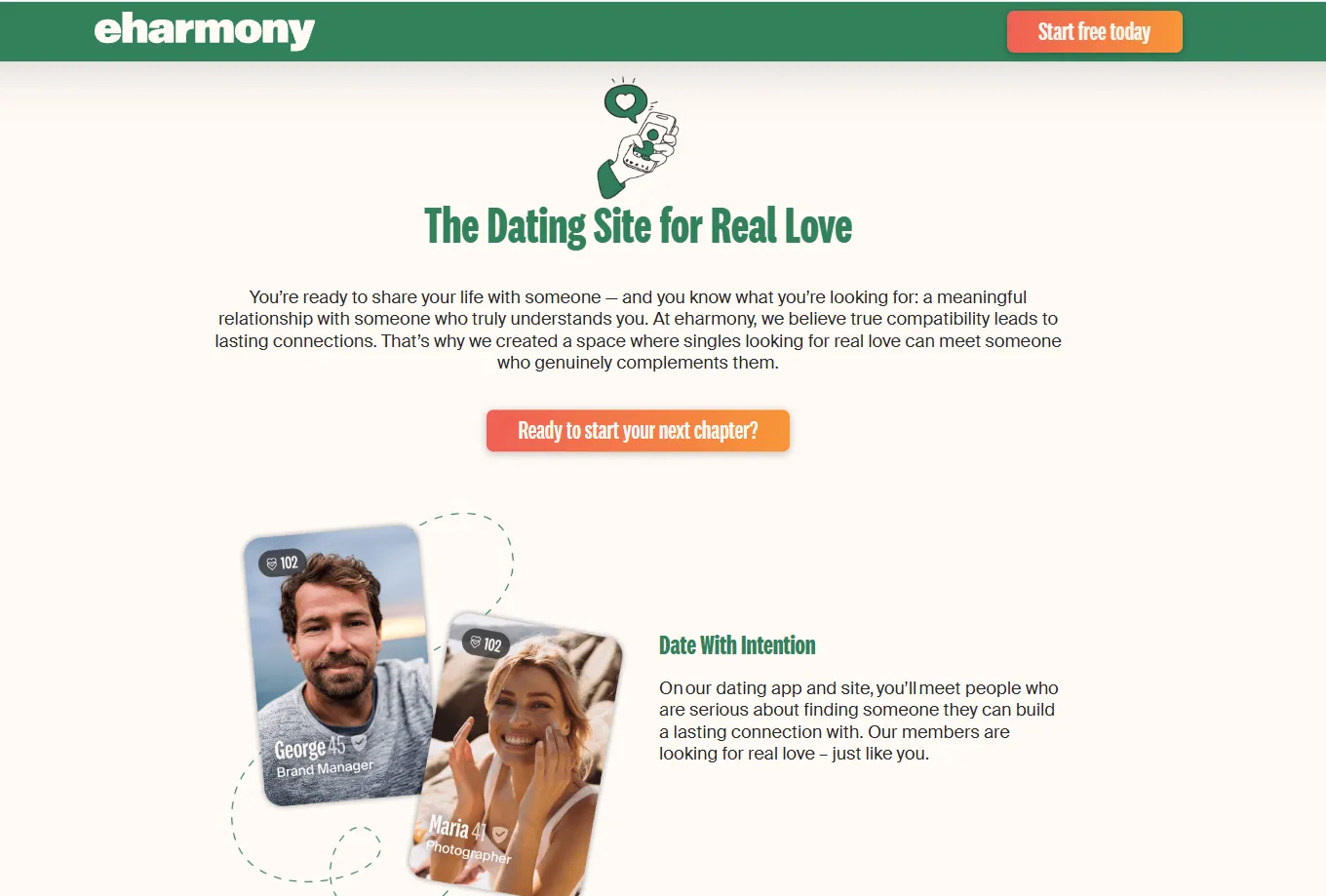
eharmony approaches matching through guided structure rather than an open catalog. Onboarding requires completing its detailed Compatibility Quiz, which evaluates core relationship pillars: communication styles, conflict resolution tendencies, and underlying values.
For marriage-minded singles, this framework bypasses superficial profiles. While an algorithm cannot predict marital longevity, it provides substantive conversational context on day one. The tradeoff is search control. If you prefer manually sorting through hundreds of profiles using custom parameters, eharmony’s curated delivery can feel confining.
How to evaluate before paying: Complete the free onboarding to review your compatibility breakdown and inspect the geographic proximity of initial match suggestions. Never buy a subscription based on an abstract compatibility score; confirm that local, active candidates exist in your immediate market.
2. Match — Best for Self-Directed Screening
Best For
Daters with precise, non-negotiable deal-breakers who want total control over search criteria.
Main Tradeoff
High intent variance; you must personally vet whether a match wants casual dating, a long-term relationship, or marriage.
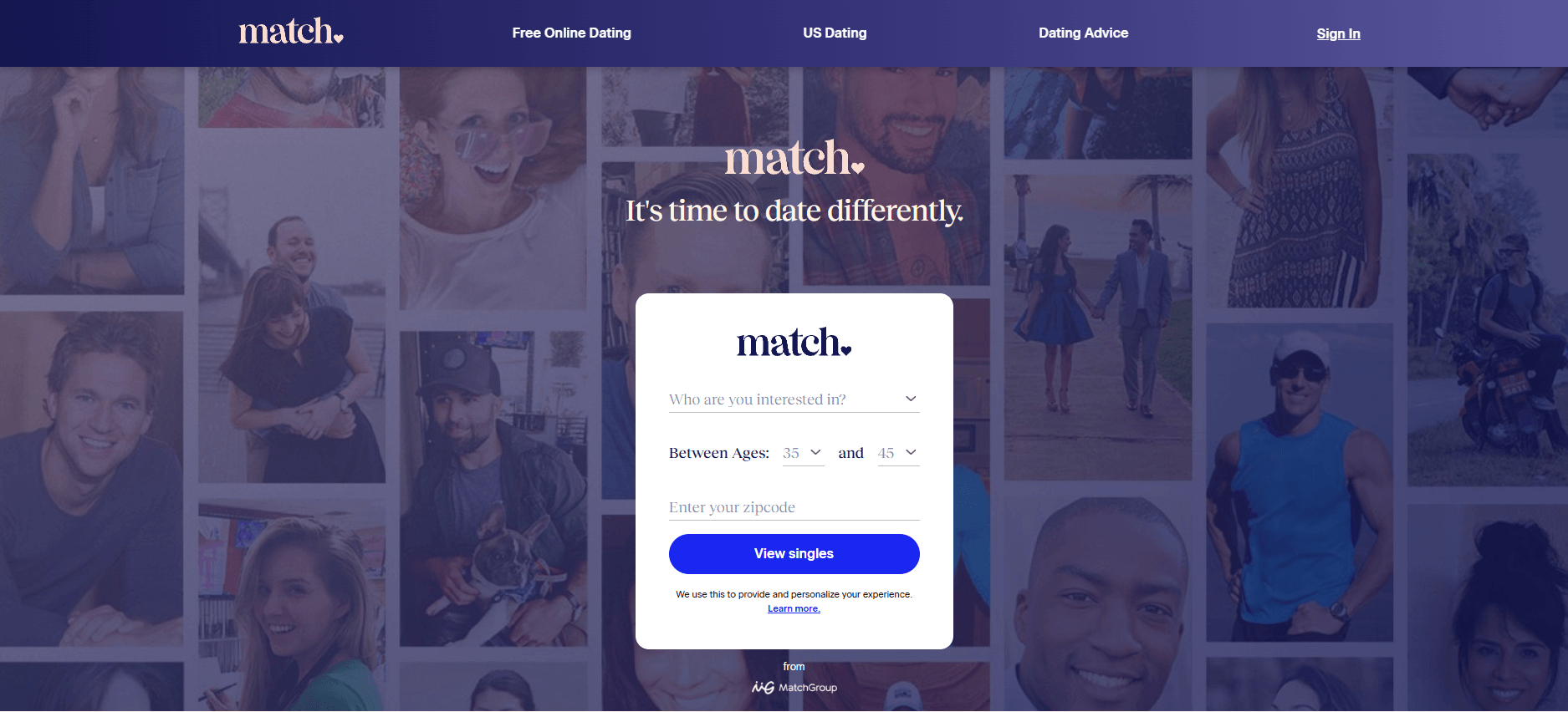
Match offers the structural inverse of eharmony. Instead of relying on algorithmic recommendations, it grants you direct access to an expansive database filter.
You can simultaneously cross-reference:
- Marital status (never married, divorced, widowed).
- Current parenting status versus future desires for children.
- Religious affiliation and frequency of practice.
- Educational background, lifestyle habits, and political views.
This degree of control is invaluable when you have zero tolerance for mismatched priorities. If you are strictly childfree or consider regular religious practice essential, you can filter out non-viable prospects immediately.
Local pool beats national marketing: National membership figures are irrelevant if your local radius has limited supply. Before paying, run your specific filter stack under a free account to verify local density.
Read our Match Review or compare eHarmony vs Match.
3. EliteSingles — Best for Career-Focused Professionals
Best For
Educated professionals seeking intellectual alignment, mutual career respect, and compatible work rhythms.
Main Tradeoff
Narrow active user pools outside tier-one and tier-two metropolitan hubs.
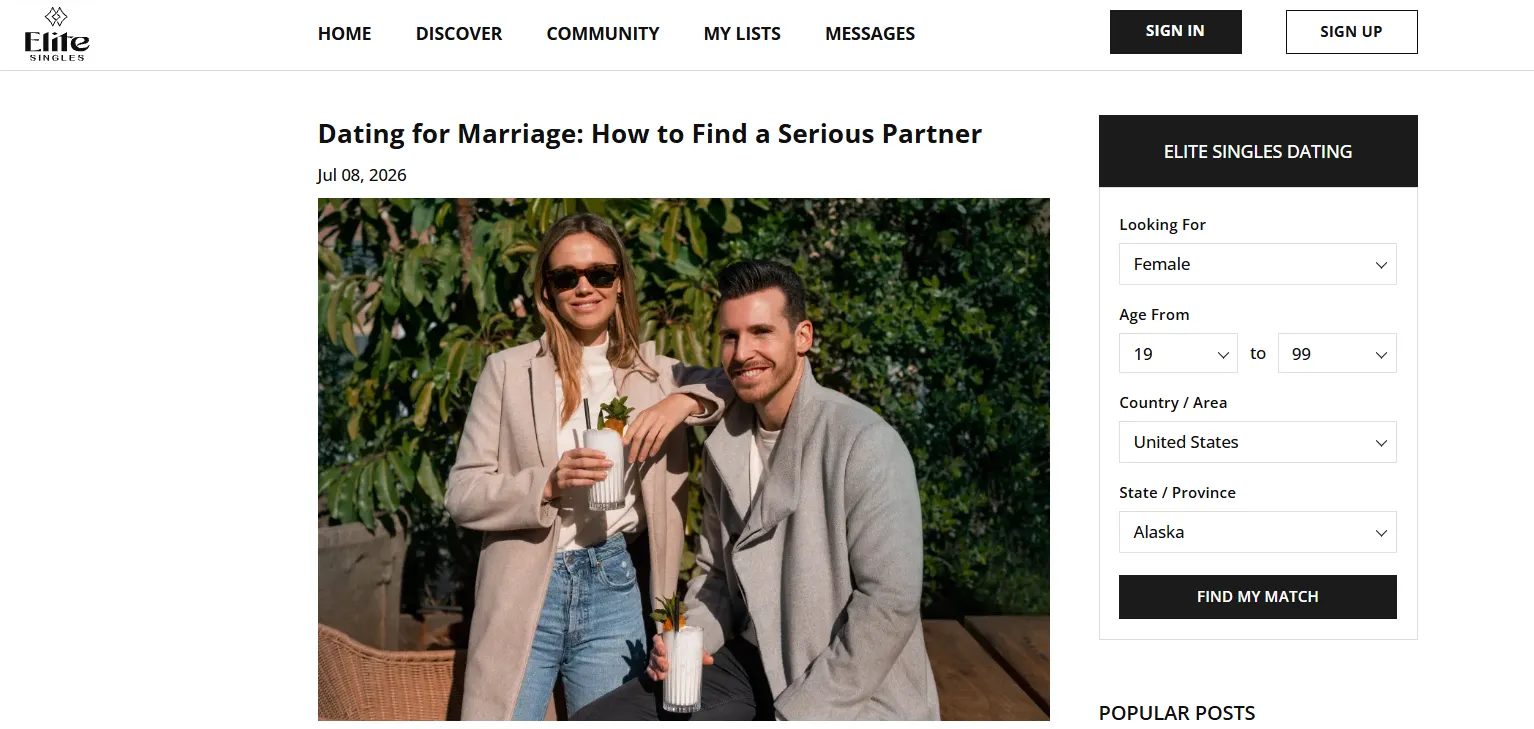
EliteSingles serves singles who consider professional drive, education, and lifestyle pace central to marital compatibility. The platform combines a Five Factor personality assessment with daily curated batches of 3 to 7 matches, bypassing endless swiping to suit demanding work schedules.
However, professional achievement does not equate to emotional maturity. A degree or an executive title reveals nothing about how an individual manages conflict, communicates vulnerability, or handles family responsibilities. Treat professional filters as a lifestyle baseline rather than an indicator of relationship readiness.
Check local density first: EliteSingles functions efficiently in major metropolitan corridors, but supply drops steeply in smaller markets. Verify your first few daily match batches before purchasing.
Life Stage and Faith-Based Options
The next three picks become more useful when age or faith is not a minor preference, but part of how you define the kind of marriage you want.
4. OurTime — Best for Marriage or Remarriage After 50
Best For
Singles over 50 seeking an uncluttered environment free from multi-generational noise.
Main Tradeoff
Being 50+ does not automatically imply an interest in legal remarriage.
OurTime caters directly to mature daters, removing the demographic mismatch common on general dating apps. The platform serves individuals dating after divorce, bereavement, or an extended period out of the dating pool.
However, entering the dating market in later life brings varied objectives. While many members desire a second marriage, others seek exclusive companionship, casual dining partners, or committed cohabitation without legal ties.
Real-world dilemma: A common point of friction occurs when one partner seeks a formal marriage, while the other—often to protect existing estate arrangements, adult children’s inheritances, or pensions—insists on a permanent Living Apart Together (LAT) arrangement. OurTime provides the demographic pool, but you must clarify expectations around legal remarriage, cohabitation, and finances early.

Read our OurTime Review, compare Match vs OurTime, or see OurTime vs SeniorMatch.
5. ChristianCafe — Best for Faith-First Christian Marriage
Best For
Christian singles for whom shared theology, church involvement, and biblical values are foundational.
Main Tradeoff
A smaller total user directory and an older, forum-style interface.
Owned and operated by Christians, ChristianCafe is structured around faith-based marriage. Profiles delve deeply into details rarely captured on secular platforms: specific denomination, spiritual maturity, frequency of church involvement, and written narratives on biblical worldview.
This transparency saves time for believers who view shared faith as non-negotiable. However, tighter criteria inevitably constrict geographic availability.
Real-world dilemma: A user in a smaller regional market who applies strict filters for denomination and weekly church attendance may find only three matching profiles within a 40-mile radius. If shared doctrine is an absolute baseline, you must weigh whether you are prepared to date long-distance and relocate, or whether you need to broaden your search radius on a mainstream platform.

6. CatholicMatch — Best for Catholic Sacramental Marriage
Best For
Practicing Catholics seeking a spouse dedicated to Catholic doctrine and the vocation of Holy Matrimony.
Main Tradeoff
Highly specific audience; geographic distance is frequently required.
CatholicMatch is the most explicit marriage-oriented platform in this review. Its stated mission and terms of service focus directly on facilitating sacramental marriage.
Profiles evaluate adherence to Catholic teachings, Mass attendance habits, and parish involvement. While shared faith establishes common ground, it does not bypass the need to evaluate financial management, communication styles, and family planning.
Real-world dilemma: A paying member sends a message to a match and receives complete silence for a week, assuming the recipient is inactive or an abandoned profile. In reality, the recipient may hold a Basic (free) account, which requires waiting for a mandatory platform unlocking period before free members can read or reply to inbound communications. Do not mistake platform-level communication constraints for disinterest.

Other Ways to Search for a Marriage-Minded Partner
Premium Matchmaking Alternative: Tawkify
Best For
Time-constrained singles who prefer to outsource candidate sourcing, vetting, and coordination to a dedicated human matchmaker.
Main Tradeoff
High financial barrier (packages cost thousands of dollars, not monthly subscription fees).
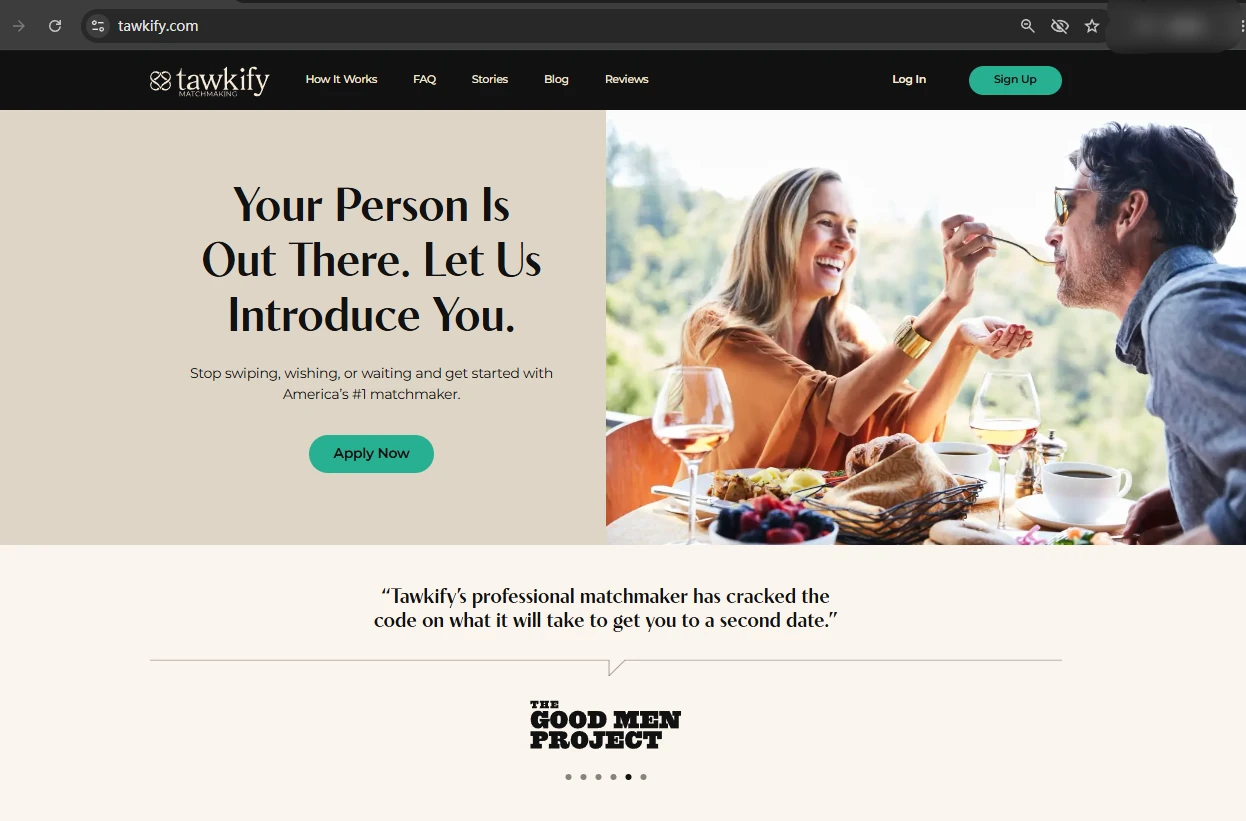
Tawkify operates on a private matchmaking model rather than self-directed software access. Clients work with an assigned matchmaker who conducts video consultations, sources candidates, performs initial screenings, and schedules dates.
Scrutinize the service contract: Matchmaking does not guarantee chemistry or marriage. Before signing, obtain written clarity on:
- The exact number of guaranteed introductions.
- The sourcing pipeline (are matches drawn exclusively from paying Clients or from the broader, free Member database)?
- Contract pausing terms, replacement policies, and refund parameters.
Understanding that your date may be a free member from the broader pool—someone who has not made the same financial commitment—is essential for managing expectations.
Also Consider: MillionaireMatch for Affluent Dating
Best For
Singles who view high net worth and socioeconomic parity as essential components of a lifestyle match.
Main Tradeoff
Financial standing does not correlate with emotional maturity or marital stability.
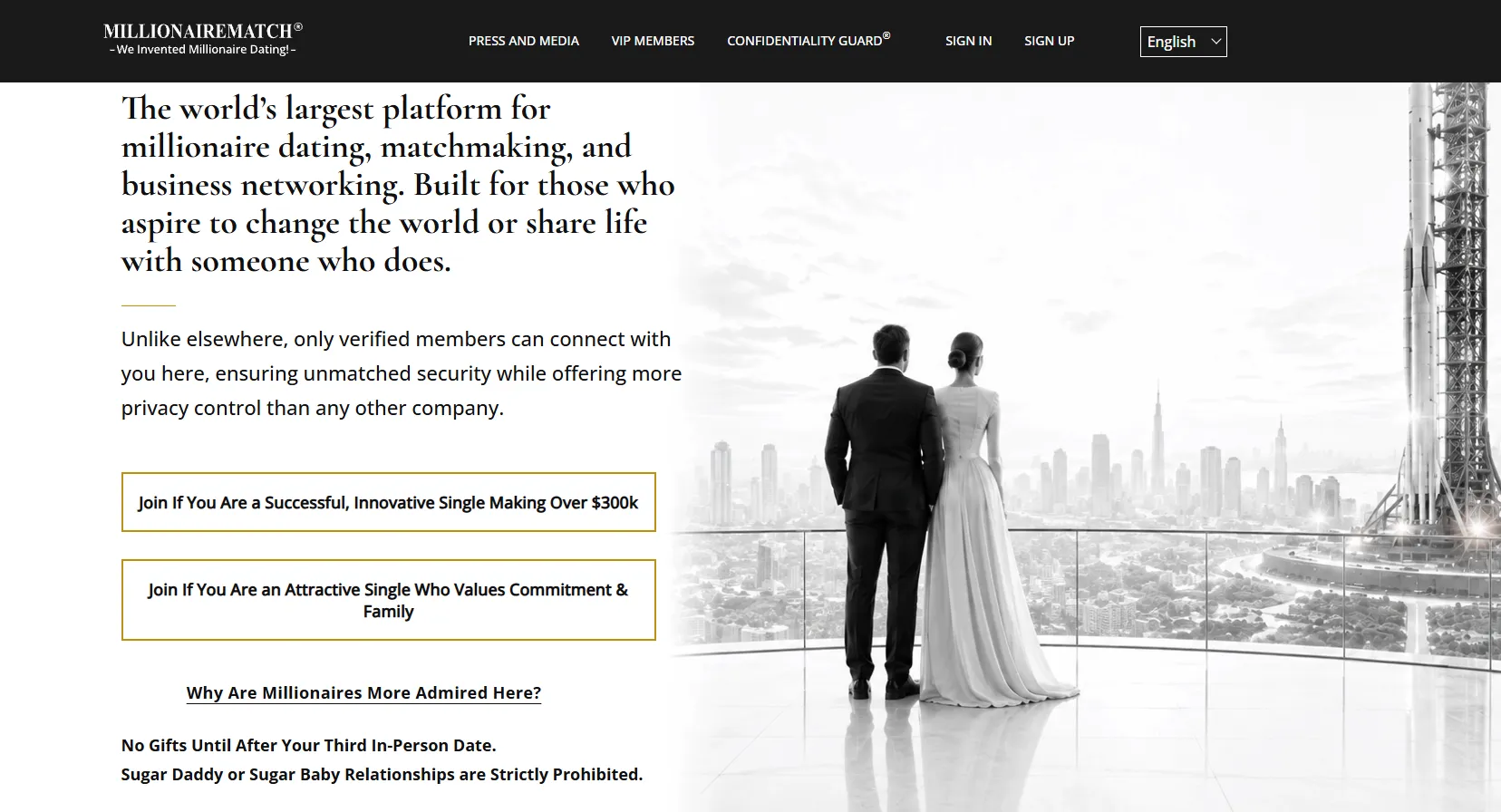
MillionaireMatch caters to high earners and professionals, maintaining explicit rules against transactional or sugar-dating arrangements.
Its primary feature is the Certified Millionaire program. Per the platform’s service agreement, this badge is voluntary and based on member-submitted documentation (such as tax returns or asset statements).
Crucially, the company’s terms disclaim independent guarantees regarding the accuracy of those records, noting that the badge is neither a background check nor a character endorsement. Treat wealth strictly as an economic preference—never as a substitute for trust or marriage readiness.
Marriage Fit Matrix
This matrix is an editorial comparison of platform structure, not a marriage-success score. “Strong” means the feature is a defining part of the platform experience reviewed for this guide; “Moderate” means it is useful but not the platform’s main differentiator. Labels in the Demographic Fit column describe the audience focus rather than a stronger or weaker rating.
| Platform | Intent Clarity | Deal-Breaker Control | Profile Depth | Demographic Fit | Pre-Paywall Visibility |
|---|---|---|---|---|---|
| eharmony | Strong | Moderate | Strong | Broad | Moderate |
| Match | Moderate | Strong | Moderate | Mainstream | Moderate |
| EliteSingles | Moderate | Moderate | Strong | Career | Moderate |
| OurTime | Moderate | Moderate | Moderate | 50+ | Moderate |
| ChristianCafe | Strong | Moderate | Strong | Christian | Moderate |
| CatholicMatch | Strong | Strong | Strong | Catholic | Moderate |
Tawkify and MillionaireMatch are intentionally excluded from the matrix because they solve different problems: Tawkify is a human-led matchmaking service, while MillionaireMatch is included for a specific socioeconomic preference rather than marriage specialization.
The Smart Buyer’s Playbook: Three Checks Before You Pay
Protect your capital and vetting time by running these diagnostic checks on any platform before subscribing.
Test 1: The Marriage Intent Check
Move past ambiguous phrases like “seeing where things go”. Early in conversation, weave in natural questions that address practical, non-negotiable boundaries:
| Topic | Ask Something Like |
|---|---|
| Marriage | “When you talk about finding a long-term relationship, is legal marriage an essential milestone for you?” |
| Family | “What are your concrete expectations around children—starting a family, expanding one, or remaining childfree?” |
| Location | “Are your family or professional commitments permanently rooted here, or would you relocate for the right partnership?” |
| Faith | “What role do shared beliefs or religious involvement play in your daily household?” |
Clarifying marriage, children, location, and spiritual alignment early prevents good chemistry from obscuring irreconcilable life goals.
Test 2: The 48-Hour Local Pool Check
This check is an empirical rule of thumb: Never commit to a six-month contract based on marketing claims.
- Register for a free account.
- Set your actual location and an acceptable commuting radius (e.g., 25–40 miles).
- Apply your target age range and top one or two deal-breakers.
- Track profile activity over 48 hours.
What you are looking for: Are there sufficient active, detailed profiles meeting your baseline? Or does applying one mandatory filter deplete the local directory down to inactive accounts? If the local pool is stagnant during a free trial, upgrading to a paid tier will not solve the underlying supply problem.
Test 3: The Before-You-Pay Subscription Firewall
Before completing checkout, audit these seven billing parameters:
| Check | What to Verify |
|---|---|
| Total upfront charge | Verify the lump sum billed today versus the advertised monthly rate. |
| Commitment period | Confirm whether you are agreeing to a 3-, 6-, or 12-month billing lock. |
| Auto-renewal language | Locate the exact renewal date, renewal rate, and cancellation lead time. |
| Billing channel | Note whether you are paying directly via the web, Apple App Store, or Google Play, as cancellation pathways differ. |
| Cancellation workflow | Confirm the actual settings path required to disable recurring billing before finalizing payment. |
| Refund terms | Digital dating subscriptions rarely issue prorated refunds once past the statutory window. |
| Feature utility | Ensure you are paying to unlock essential functionality, such as messaging, rather than cosmetic add-ons like read receipts or profile boosts. |
See what you can actually do before paying.
Marriage Intent Is Not a Safety Credential
A stated intention to marry is not a certificate of integrity. Fraudulent actors deliberately target marriage-oriented platforms because users looking for serious commitments are often more trusting.
Maintain strict boundaries regardless of how genuine a profile appears:
- Paid tiers do not screen character: A paid subscription proves financial liquidity, not emotional stability or honesty.
- Niche communities require normal vetting: Shared theological or professional affiliations do not remove the risk of bad actors.
- Verification badges are limited: Profile or wealth badges do not screen for criminal history, hidden debts, or domestic issues.
If a match introduces cryptocurrency schemes, investment propositions, emergency travel requests, or asks for funds before you have met in person, terminate contact immediately and report the account.
For more detail, read our Dating Profile Verification guide, Online Dating Safety Checklist, and guide to spotting a fake dating profile.
Frequently Asked Questions
Why aren’t Hinge and Bumble included in the primary picks?
Both apps can lead to marriage, but this guide focuses on services featuring structured compatibility algorithms, granular database filters, demographic specialization, or explicit religious alignment. If you want a mobile-first, swipe-based experience, Hinge remains an effective option within our broader serious relationships guide.
Does paying for a dating site ensure finding more serious matches?
No. A paid subscription confirms that a user spent money to access communication tools. It does not ensure honesty, emotional maturity, or readiness for marriage.
Which platform is best for singles who do not want children?
Match provides the most direct utility for childfree singles due to its precise search filters, allowing you to exclude profiles that have or want children. eharmony addresses family planning within its onboarding assessment, though its algorithmic delivery offers less manual search control. Conversely, if you already have children and are looking to build a stable blended family, see our breakdown of the best dating apps for single parents.
If a match stops responding, does that indicate an abandoned or fake profile?
Not necessarily. Delays often stem from platform tier structures. On platforms like CatholicMatch, free-tier members face specific waiting periods before they can read or reply to inbound messages. Disinterest or personal schedules are also common factors.
Should I widen my geographic search radius when dating for marriage?
Only if relocation is realistic. Broadening your radius makes sense if your criteria are narrow, such as specific theological convictions, but finding a compatible partner hundreds of miles away is unproductive if neither party can realistically move.
Match your platform choice to the specific screening assistance you need. Use eharmony for guided compatibility, Match for self-directed filtering, EliteSingles for professional alignment, OurTime for mid-to-later-life dating, and ChristianCafe or CatholicMatch when shared faith is foundational. If you want to delegate initial vetting entirely, explore Tawkify, and keep MillionaireMatch in reserve only if socioeconomic standing is an explicit baseline. The platform narrows the search, but direct communication and mutual commitment determine whether an initial match becomes a lasting marriage.

Related Reviews & Guides
Explore our independent audits, pricing breakdowns, and relationship guides: