EliteSingles Review 2026: Is It Worth Paying For?
 Published under the pen name Julian Hayes
The 1-Minute Verdict
EliteSingles works best as a niche dating platform for people who care a lot about education level, professional direction, and long-term relationship intent. It is slower, narrower, and more curated than mainstream platforms, which is exactly why some users prefer it.
The upside is relevance. You spend less time sorting through casual daters, low-effort profiles, and people whose lifestyle or priorities do not align with yours. The downside is scale. EliteSingles does not give you the same depth of inventory or manual search freedom you get on Match, and it can feel restrictive if you live outside a strong metro market.
Our take: EliteSingles is worth considering if you want a more filtered, compatibility-led dating experience and are comfortable trading volume for focus. It is much less appealing if you want open browsing, faster momentum, or a cheaper dating app with a bigger pool.

- Positioning strongly emphasizes education and professional compatibility
- Matching is shaped by a personality-led compatibility framework
- High-intent user base designed for serious commitment
Who Should Try EliteSingles — And Who Should Skip It
Best For
Skip It If
Pros and Cons
The Pros
The Cons
What It’s Actually Like to Use EliteSingles
EliteSingles does not feel like a casual dating app. It feels more like a platform that expects you to slow down, think clearly about what you want, and let the system narrow the field.
The first signal comes during onboarding. The personality questionnaire is substantial, and that alone changes the tone of the experience. You are not in and out in five minutes. The platform is intentionally slower and more deliberate.
Once your profile is live, the experience revolves around curated suggestions more than open browsing. You receive a limited set of recommended profiles, review them, and decide whether there is enough alignment to like or message someone. There is additional discovery beyond the core daily suggestions, but EliteSingles still feels much more controlled than Match.
That is the main trade-off: less noise, less freedom.
If you are the kind of user who gets overwhelmed by giant dating pools, that can be a relief. If you like hunting manually, testing filters, and browsing for an hour at a time, it can feel restrictive very quickly.
The platform also works better when your expectations are realistic. EliteSingles is not built for entertainment. It is built for narrowing. If you judge it by the standards of swiping apps, it will feel slow. If you judge it by how efficiently it filters for professional, relationship-minded users, it makes more sense.
Features That Matter in Real Dating
The Personality Test
This is still the heart of the platform. EliteSingles uses a long personality questionnaire to help shape your profile and compatibility-led matching. That is what gives the site its slower, more analytical feel.
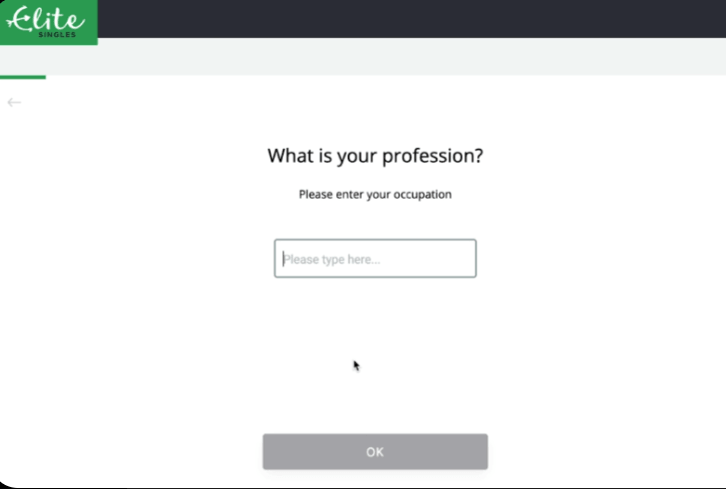
During setup, you cannot just skip through. You are required to input your specific profession. This data isn't just for show; it directly feeds into their matchmaking algorithm to help ensure alignment in lifestyle and career phases.
Daily Match Suggestions
EliteSingles still revolves around a limited recommendation model rather than an open-search marketplace. That makes the platform feel more curated, but also more dependent on the quality of the algorithm and the strength of your local pool.
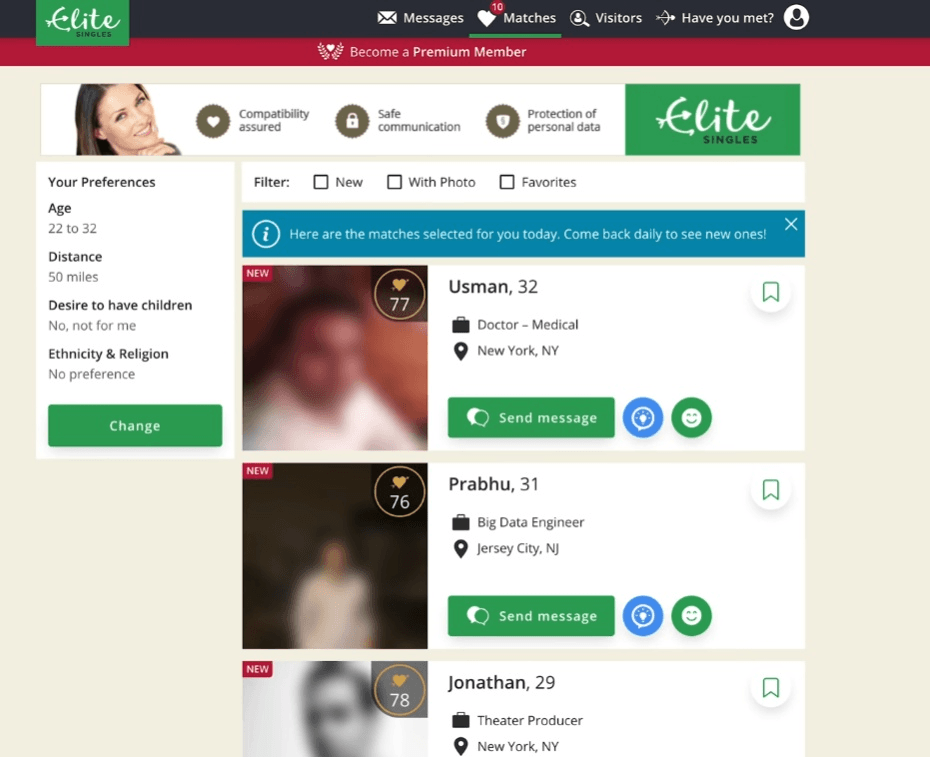
Notice the occupation tags in the match feed: "Doctor - Medical" and "Big Data Engineer." If you are looking for an intellectual equal, the platform aligns with its core premise.
Discover / Have You Met?
This is the main pressure-release valve for users who want more than the core daily suggestions. It gives you additional profile exposure beyond the main feed, but it still does not turn EliteSingles into a wide-open browsing platform.
Premium Preferences and Visibility Tools
If you pay, the real value is less about “unlocking dating” and more about improving your control over match quality, visibility, and efficiency. That distinction matters. The free experience can be useful for evaluation, but Premium still makes a noticeable difference if you want stronger filtering and clearer signals.
Is EliteSingles Worth Paying For?
Yes, if filtering itself is the thing you value. No, if you mainly want volume, speed, or manual control.
That is the cleanest way to think about it.
EliteSingles is not a dating app you pay for because it has the biggest pool or the flashiest features. You pay for it because you want a narrower dating environment and are willing to sacrifice volume for better alignment.
That trade can make sense for busy professionals, divorced daters re-entering the market, and people who are tired of screening out obvious mismatches. But it only works if your area has enough qualified local users to keep the recommendation engine useful.
So the platform is not universally worth it. It is worth it for a fairly specific user: someone who would rather see fewer, more filtered suggestions than spend hours managing a giant open feed.
Can You Use EliteSingles for Free?
Yes, but the free version works best as an evaluation layer, not as the strongest long-term version of the product.
The free experience is useful for testing the local pool, reviewing the platform’s overall tone, and deciding whether the narrower positioning actually matches your standards.
But evaluation is not the same thing as strong ongoing use.
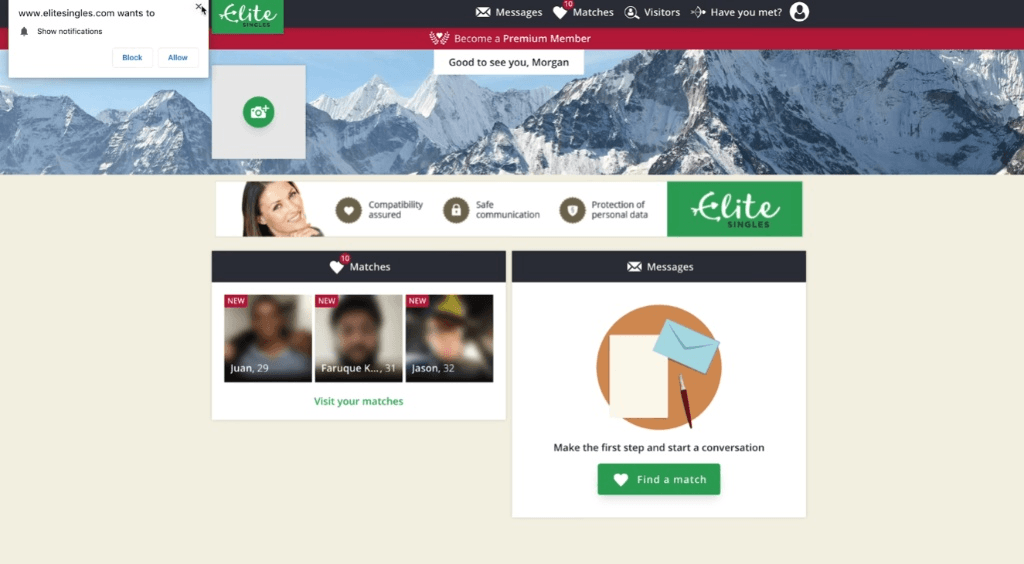
As a free user, profile photos are heavily blurred (as seen in our screenshot above), and communication remains very limited. For most users who want to engage with the platform seriously, upgrading to Premium is where the experience becomes functional.
Premium still matters if you want the full version of the platform’s filtering and visibility advantages. So the real question is not whether EliteSingles is technically usable for free. It is whether the free tier gives enough value for your specific dating goals.
For most serious users, the answer is still: not quite.
Pricing and Value
EliteSingles should be evaluated as a premium-filter dating product, not a mass-market bargain app.
That matters because many users ask the wrong question. They ask, “How much does EliteSingles cost?” when the more useful question is, “Is the narrower pool saving me enough time and screening effort to justify the premium?”
If you live in a major metro area and your biggest pain point is profile quality, the answer can be yes. EliteSingles can save time by reducing how often you deal with people who are clearly off-target.
If you live in a thinner market, the answer becomes much less convincing. A premium subscription feels harder to justify when your daily options are limited from the start.
EliteSingles is typically sold through tiered plans, and pricing can vary by term length, promotions, and optional upgrades. In practice, the real cost is not just the base subscription — it is whether the narrower pool and stronger filtering actually improve your results enough to matter.
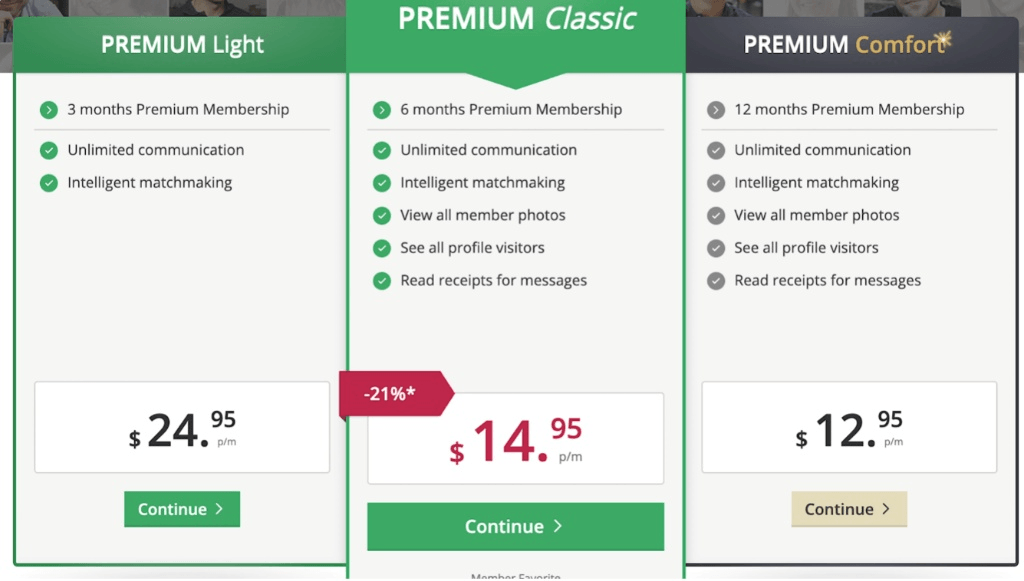
Above: An illustrative desktop pricing screen captured during our page review.
See all profile photos
Read receipts included
Value Verdict
EliteSingles is strongest as a time-saving filter for serious, professional daters in stronger markets. It is weak value for users who need scale, flexibility, or a lot of daily choice.
Safety, Privacy, and Fake Profile Risk
No serious dating platform is completely free from low-quality accounts, inactive users, or people who misrepresent themselves. EliteSingles is not an exception.
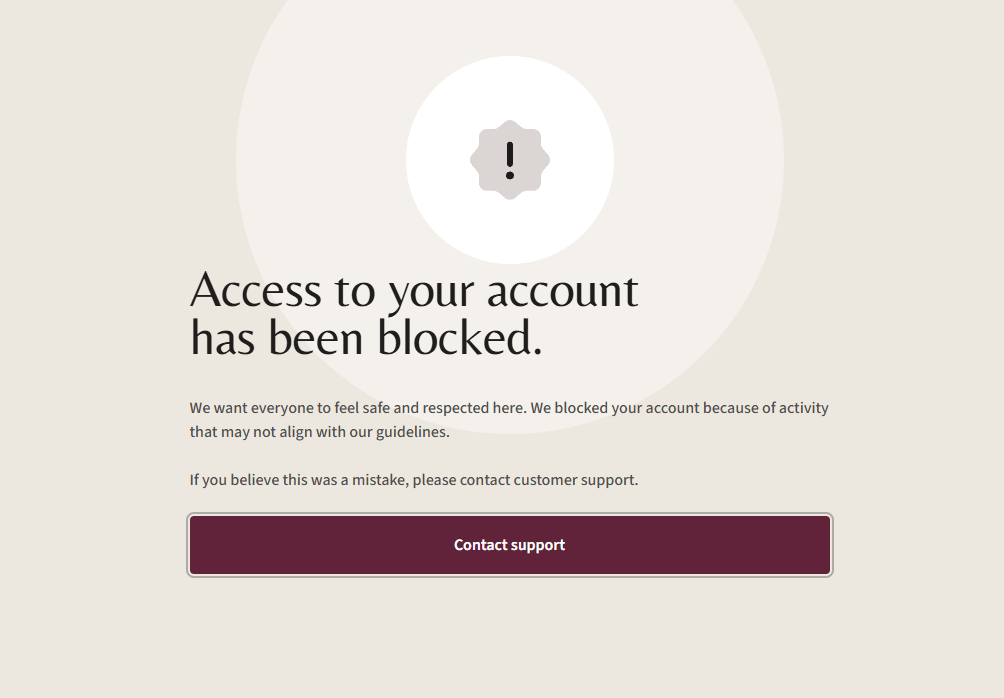
During a recent registration check, we observed the platform react quickly to unusual setup behavior and restrict the account. That suggests EliteSingles may run a stricter account-trust system than many swipe-first apps, although no platform is completely free from low-quality profiles.
What it does have working in its favor is a more structured environment. The platform positions itself around profile quality, a more deliberate onboarding process, and a less chaotic user experience than fully casual swipe apps.
Still, the most common frustration is not necessarily obvious scam volume. It is the smaller-pool problem: when the inventory is more limited, older or less active profiles can feel more noticeable.
In practice, EliteSingles often feels cleaner than chaotic swipe apps, but it is not magically self-cleaning. You still need to screen carefully, move conversations forward intelligently, and treat profile quality as something to verify rather than assume.
EliteSingles vs. Other Dating Platforms
EliteSingles vs. eHarmony
Choose EliteSingles if education level, professional direction, and a narrower user profile matter heavily to you.
Choose eHarmony if you want a more mainstream serious-dating pool with stronger scale and a compatibility-led system that is less narrowly branded around educated professionals.
EliteSingles vs. Match
Choose EliteSingles if you want the platform to filter harder for you.
Choose Match if you want more manual control, broader inventory, and more freedom to browse and search on your own.
EliteSingles vs. Tinder
Choose EliteSingles if you care more about filtering and long-term fit than speed and volume.
Choose Tinder if you want a faster, casual, more entertainment-driven experience.
Final Verdict
Based on our analysis, EliteSingles fulfills its core premise, but only for a specific type of user.
If you want a more filtered, compatibility-led dating experience and care strongly about education level, career direction, and serious intent, EliteSingles still has a real place in the market. It is not trying to be the biggest app. It is trying to be a narrower one.
That is both its advantage and its weakness.
For the right user, the smaller pool is not a bug. It is the reason to join. For the wrong user, the same thing makes the product feel overpriced and overly restrictive.
So the honest conclusion is simple: EliteSingles is not a universal recommendation. It is a targeted one. If you are in a strong metro area and want filtering more than freedom, it is worth a look. If you want scale, speed, or open browsing, go elsewhere.
FAQ
It can be, but mainly for users who want a narrower dating pool focused on education, professional direction, and serious relationships. Its value depends heavily on your market size and how much you value filtering over volume.
Yes. The free version is useful for evaluation, but Premium still offers stronger filtering, visibility, and match-management advantages.
Yes. That is still its clearest use case. The platform is much better suited to long-term intent than to casual dating.
Not universally. EliteSingles is better if you want stronger built-in filtering and less browsing. Match is better if you want a larger pool and more manual control.
Usually yes. That is one of the clearest fit categories for the product.
Often less so. In larger markets, the filtered model has more room to work. In smaller areas, the pool can thin out quickly, which makes the value proposition harder to justify.
Users in sparse areas, people who want casual dating, and anyone who prefers open browsing over curated suggestions.