Match Review 2026: Is It Worth Paying For?
 Published under the pen name Julian Hayes
The 1-Minute Verdict
Match is a solid option for people who want a relationship-focused dating platform without giving all the control to an algorithm. It feels more intentional than swipe-first apps, more flexible than heavily curated services, and works reasonably well for users who are willing to search, filter, and initiate conversations themselves.
That said, Match is not the right dating app for everyone. If you want a completely free experience, you will hit limitations quickly. And if you prefer the platform to do most of the sorting for you, alternative compatibility-led platforms may offer a cleaner fit.
Our take: Match remains one of the more practical middle-ground dating platforms for serious daters, especially those over 30, but it typically feels most worthwhile if you plan to be proactive.
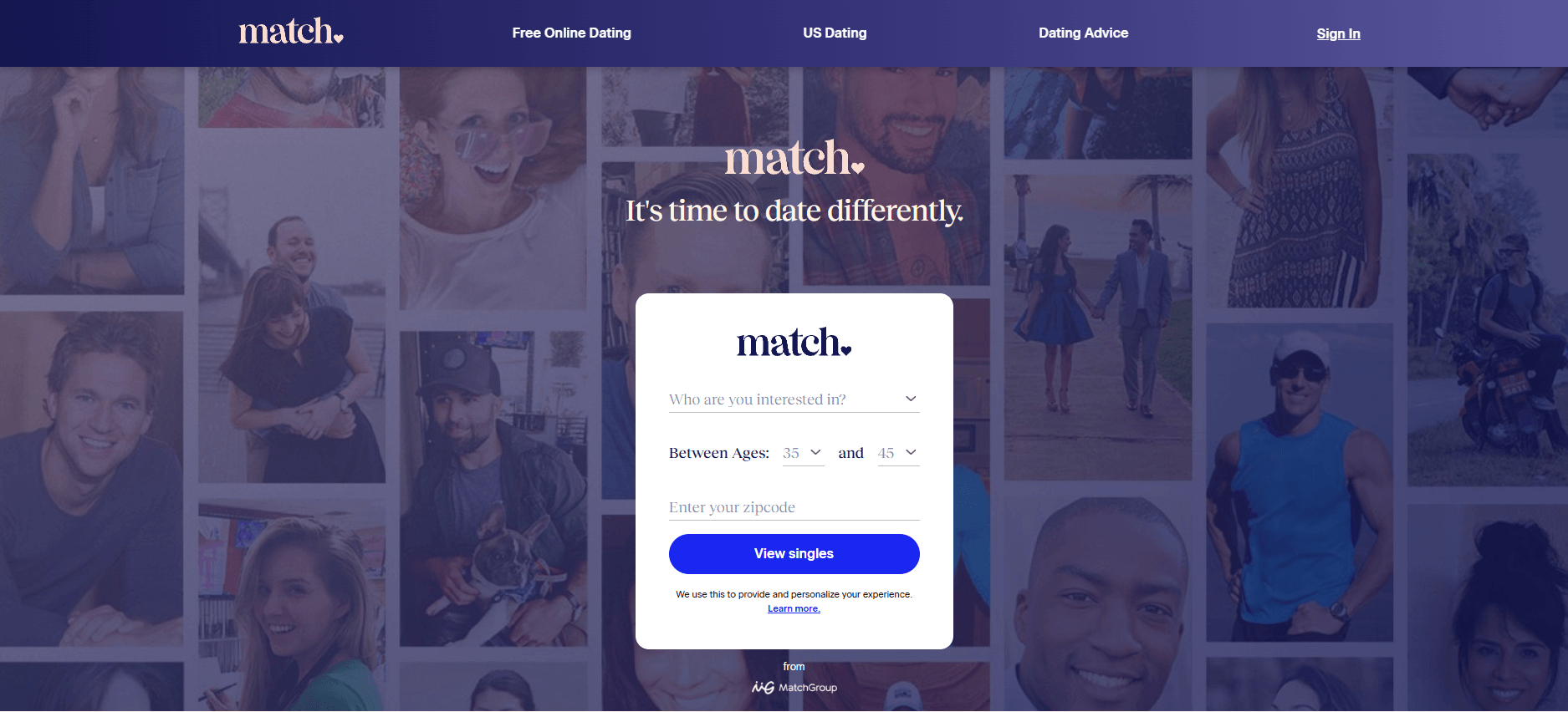
- Highly established mainstream user base
- Self-directed search with manual filtering capabilities
- Relationship-oriented browsing with extensive profile depth
Who Should Try Match — And Who Should Skip It
Best For
Skip It If
Pros and Cons
The Pros
The Cons
What It Is Actually Like to Use Match
Match sits in an unusual part of the dating market. It is not as rigid as old-school compatibility systems, but it is also not built for mindless swiping. The experience makes the most sense once you understand that Match tends to reward active effort.
The setup process is straightforward: create a profile, upload photos, fill in your bio, define preferences, and start browsing. From there, the platform provides a lighter discovery flow, but its real utility still comes from profile browsing and filters.
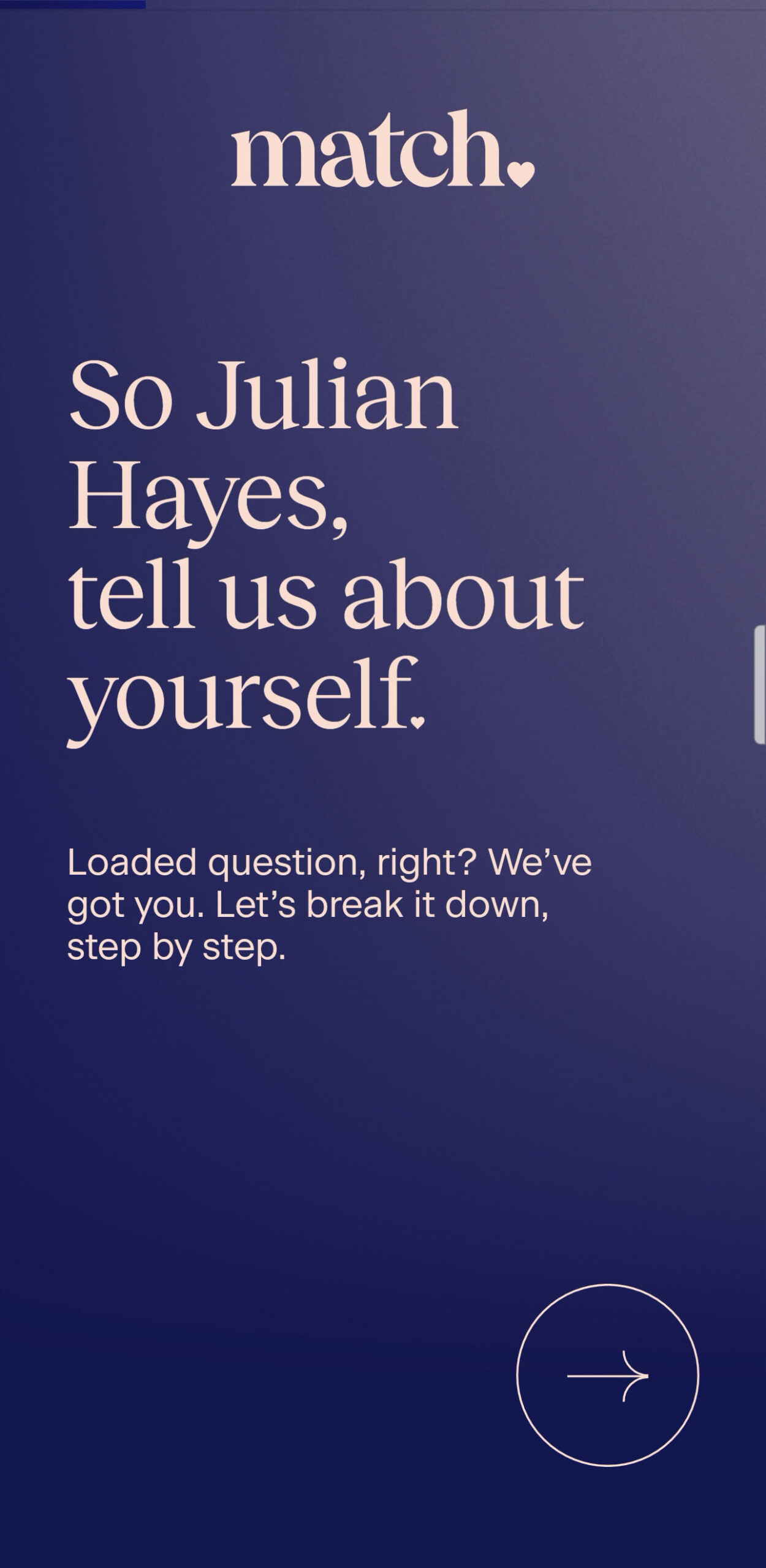
Unlike some casual apps, Match takes a moment to personalize the setup flow based on your inputs.

Users answer open-ended prompts (like "One thing I'm working on..."). This may help improve profile quality and act as an icebreaker.
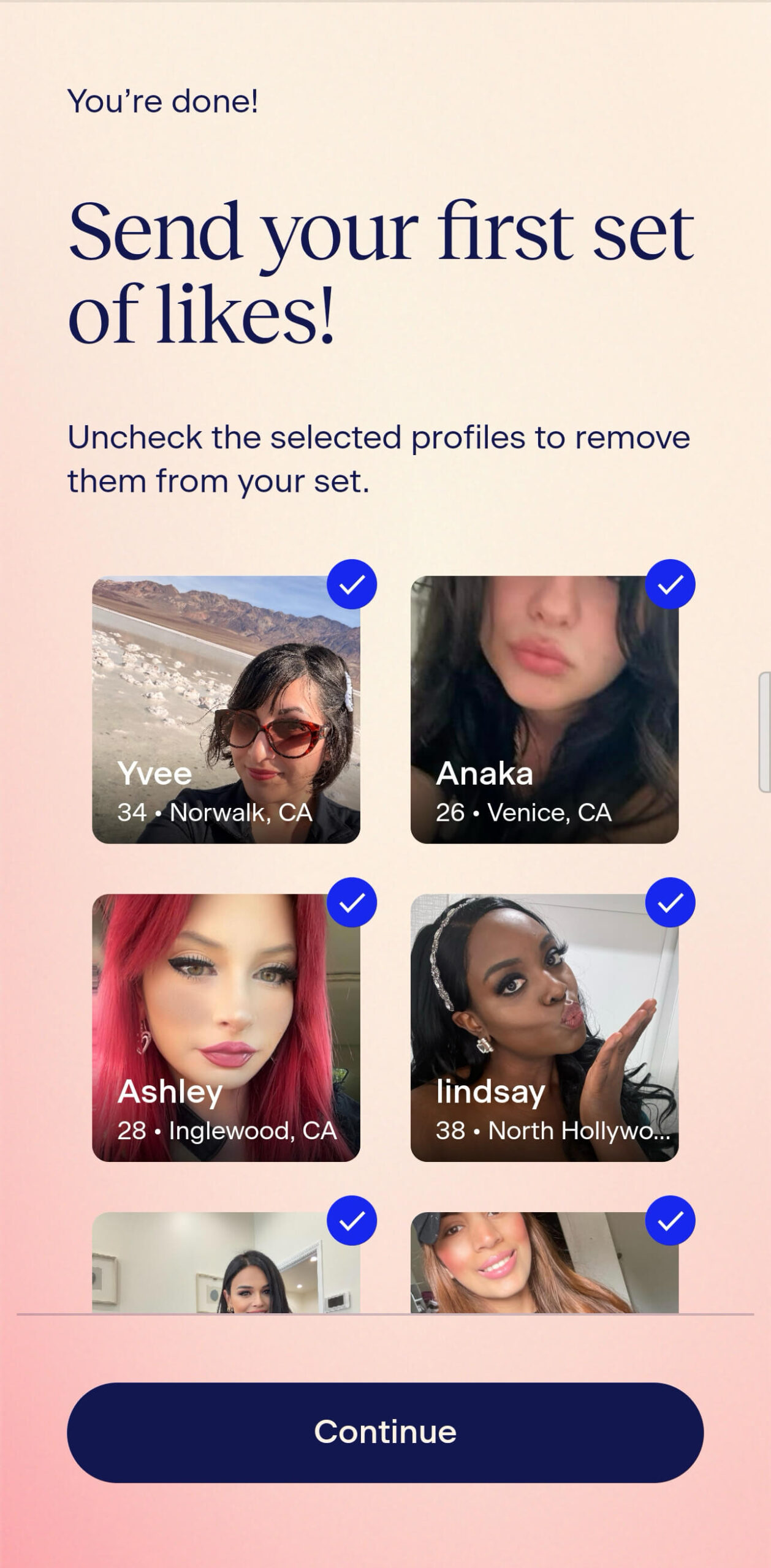
Right after setup, the system provides an initial batch of suggested local profiles, helping to start the experience.
That is where Match separates itself. If you know what you want, manual search can help narrow choices. If you do not, it can turn into extensive sorting.
That tradeoff is central to whether Match will work for you. If you are the kind of dater who likes evaluating profiles carefully, using filters strategically, and sending intentional first messages, Match is a reasonable option. If you want dating to feel entirely automated, it probably will not fit.
Features That Matter in Real Dating
Search and Filtering
This remains one of the core reasons users lean toward Match. The platform allows you to narrow the field based on lifestyle, dating preferences, and compatibility signals instead of waiting for the app to guess what you want.
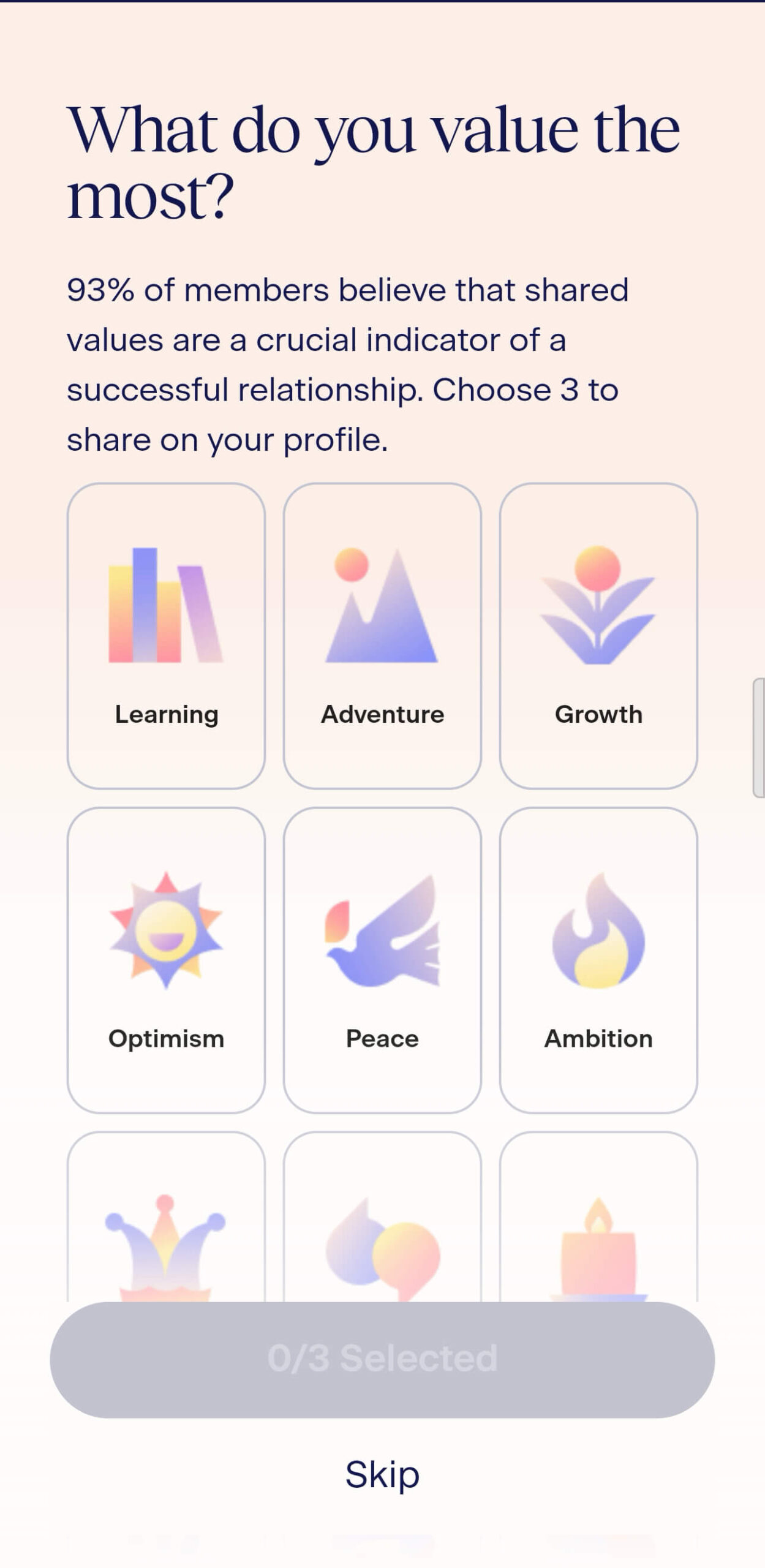
Discover and Matching
If you prefer quicker sorting, Match also provides a more modern discovery flow. This adds variety to the experience, but the real utility typically comes from moving past surface-level browsing and into profile-based filtering.
Introductions and Messaging
The free experience is useful for platform evaluation, but it falls short of a full dating experience. There is a meaningful gap between exploring the platform and utilizing its communication tools as a paying subscriber.
Private Mode and Visibility Tools
For users who care about privacy, Match offers options that let you control who can see your profile. That is useful for professionals, recently divorced users, or anyone who does not want broad visibility while browsing.
Is Match Worth Paying For?
It can be, provided you plan to use it actively. If you prefer to sit back and hope the platform does the heavy lifting, the subscription may feel less worthwhile.
Match is typically not a good value for passive users. If you rarely check the app, avoid sending first messages, and rely on algorithms to create momentum, the cost can be hard to justify.
However, if you are going to search manually, optimize your profile, send thoughtful openers, and respond consistently, Match becomes much easier to defend. You are paying for access, search control, and a dating environment that generally skews more relationship-minded than casual swipe apps.
Can You Use Match for Free?
You can use Match for free, but the better question is whether the free version is functional enough for dating. For most serious users, it is generally considered an evaluation tool.
A free account helps you get a feel for the platform, browse profiles, check local inventory, and decide whether the overall pool matches your standards.
If your goal is to actively converse and schedule dates, Match makes much more sense as a paid product. The free experience helps you decide whether to join; it is less effective as a long-term strategy.
Pricing and Value
Match is best understood as a tiered subscription platform. The practical question is not just “How much does Match cost?” It is “What do you actually unlock at each level?”
A cheaper plan may not be a good value if it lacks the features you need to connect. A more expensive plan may be defensible if it helps you filter faster and manage your visibility.
- Lower tiers help you participate more seriously than a free user, but may limit some visibility and filtering advantages.
- Higher tiers make more sense for people who want stronger search control, more visibility tools, or premium communication features.
- Add-ons can improve the experience, but they also raise the total cost quickly.
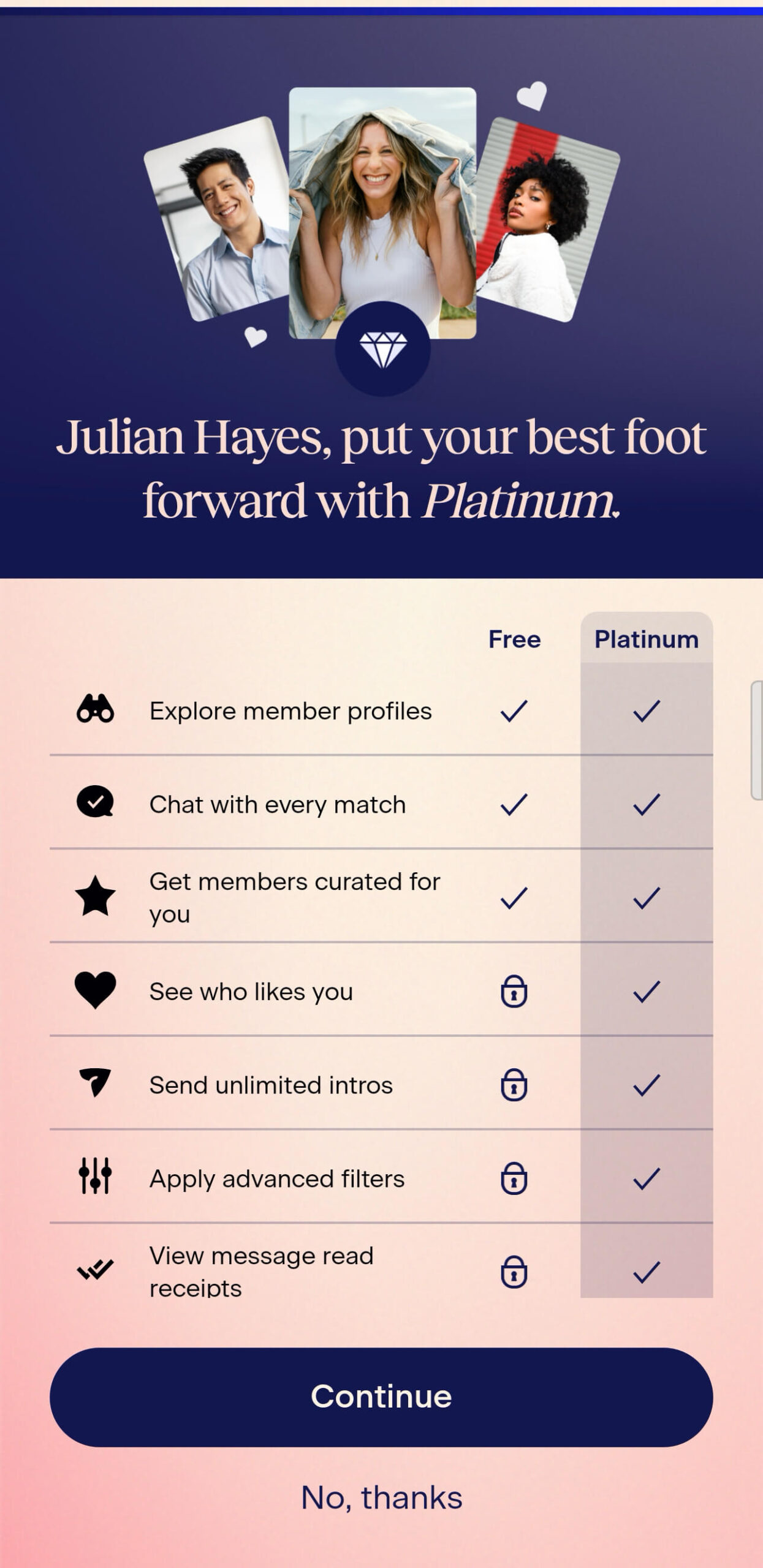
Above: An example of the feature paywall. Notice how messaging and advanced filters are locked for free users.
*Cannot chat or see who likes you
Advanced Filters Unlocked
Value Verdict
Match is fairly priced for active, relationship-focused users in decent-size markets. It may feel like poor value for passive users or people who expect the platform to carry the conversation for them.
Safety, Privacy, and Fake Profile Risk
No mainstream dating platform is completely free from fake profiles, low-effort accounts, or abuse. Match is not an exception.
What it does have is the advantage of maturity. It has had time to build moderation systems, reporting tools, and privacy controls that help add structure to the platform.
That does not mean every profile is high quality. It means the environment may feel slightly more managed than fully free dating apps where the barrier to entry is minimal.
In practice: Match attempts to reduce noise, but it does not eliminate the need for user screening. You still need to judge profile quality, watch for inconsistency, and move carefully before sharing personal details.
Match vs. Other Dating Platforms
Match vs. eHarmony
Choose Match if you want to browse, filter, and make your own decisions.
Choose eHarmony if you want a more guided system that does more of the sorting for you.
Compare Match vs eHarmony side by side →Match vs. EliteSingles
Choose Match if you want a broader pool and more flexibility.
Choose EliteSingles if education level, professional background, and a more niche positioning matter heavily to your selection process.
Final Verdict
Match remains a relevant option in 2026, provided you fall into its target demographic.
If you want a serious relationship, prefer manual control, and are willing to pay for a more structured dating environment, Match is still one of the more comprehensive mainstream options. It offers practical control over your dating search.
If self-directed dating sounds like your style, Match is worth considering. If you prefer dating to feel more passive, more automated, or entirely free, you will likely be happier exploring other alternatives.
FAQ
You can join and explore Match without paying, but functional use typically requires a subscription. The free tier is best for testing the platform, not replacing a paid plan.
Yes, that remains its clearest use case. Match generally attracts users looking for a relationship rather than a casual swipe-first experience.
For serious dating, often yes. For speed, casual discovery, and lower commitment, Tinder may be a more straightforward fit.
For many users, yes. Match tends to align well with users who prioritize intent, profile detail, and filtering over volume and speed.
Yes. Search and filtering remain among Match’s more practical features.
It depends heavily on local inventory. In larger markets, the search-and-filter model works well. In smaller areas, the value may drop as the user pool thins out.